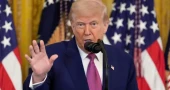
U.S. President Donald Trump
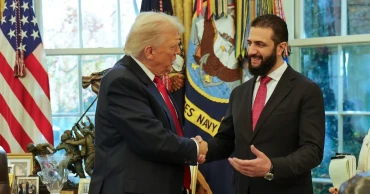
Trump's proposal for Syria to confront Hezbollah raises concerns in Lebanon and Israel
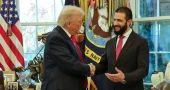
U.S. President Donald Trump's suggestion that Syria should take on Hezbollah instead of Israel has sparked concern in both Lebanon and Israel, despite Syria insisting it has no plans to intervene.
As the White House has become increasingly critical of Israel's prolonged military campaign against the Iran-backed Hezbollah group in Lebanon, Trump has repeatedly argued that Syria's new Islamist-led government would be better suited to deal with the militant organization.
Speaking on the sidelines of the G7 summit earlier this month, Trump said Israel's war against Hezbollah had gone on for too long and resulted in too many civilian deaths.
"You don't have to knock down an apartment house every time you're looking for somebody," Trump said, adding that Syria could "do a better job" of handling Hezbollah.
He later repeated the idea in an interview with Fox News, saying he was considering letting Syria take over the task because he believed Syrian President Ahmad al-Sharaa's government could carry out more targeted operations.
The White House declined to provide further details, referring to Trump's previous public remarks.
Syria, however, quickly rejected suggestions that it was preparing for any military action in Lebanon.
In a speech in Damascus on June 13, al-Sharaa said reports claiming Syria planned to intervene were false. Instead, he said Syria supports a permanent end to the fighting, stronger Lebanese state institutions and closer economic cooperation between the two countries.
In a later interview with Emirati broadcaster Al Mashhad, al-Sharaa said Trump's comments had been misunderstood.
He said Syria had proposed peaceful solutions to Washington focused on ending the conflict and helping stabilize both Lebanon and Syria through political, economic and social measures, not military action.
Although al-Sharaa previously led insurgent forces fighting former Syrian President Bashar Assad during Syria's civil war, his government has repeatedly said since taking power in December 2024 that it is focused on rebuilding the country rather than seeking revenge against Hezbollah, which had supported Assad during the conflict.
Syria also stayed out of the recent war involving Israel, the United States and Iran, while reinforcing its border with Lebanon to prevent weapons smuggling and avoid the conflict spilling across its territory.
At one point in March, Syria accused Hezbollah of firing artillery shells into Syrian territory, an allegation the Lebanese group denied. The tensions later eased after mediation efforts by Turkey, according to Turkish Foreign Minister Hakan Fidan.
Al-Sharaa has also said he remains open to dialogue with Hezbollah and even offered to help mediate discussions among Lebanon's political factions over the future of the group's weapons.
Despite Syria's denials, Trump's proposal has revived old fears in Lebanon, where many people still remember Syria's military presence in the country that lasted until 2005. There are also concerns that sectarian violence in Syria could spread across the border.
Analysts have questioned the practicality of Trump's proposal.
Randa Slim, director of the Middle East Program at the Washington-based Stimson Center, said the idea reflected a poor understanding of the situation on the ground.
She said Syria is still struggling to rebuild after years of war, while its security forces remain fragmented and include foreign Islamist fighters with uncertain loyalties.
Israel is also watching developments closely. Since al-Sharaa came to power, Israeli forces have taken control of a strip of southern Syria and remain wary of the country's new leadership. Israeli officials are also monitoring growing competition between Israel and Turkey, a key supporter of Syria's new government, over influence in Syria.
An Israeli official, speaking on condition of anonymity, said senior security officials met this week to discuss the situation. While Israel is concerned about Syria potentially regaining political influence in Lebanon, the official said its main security focus remains Hezbollah.
3 months ago
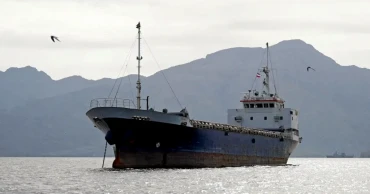
Iran reimposes restrictions on Strait of Hormuz amid US tensions
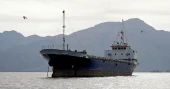
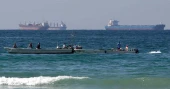
Iran has reimposed restrictions in the Strait of Hormuz, backtracking on its earlier move to reopen the vital shipping lane and warning that transit would remain blocked as long as the U.S. blockade on Iranian ports continues.
In a statement, the country’s joint military command said, “control of the Strait of Hormuz has returned to its previous state ... under strict management and control of the armed forces.”
It also cautioned that passage through the strategic waterway would continue to be restricted while the U.S. blockade remains in place.
Trump warns of renewed attacks if Iran ceasefire ends without deal
The development came a day after U.S. President Donald Trump said the U.S. blockade “will remain in full force” until Tehran reaches an agreement with Washington, including on its nuclear programme.
5 months ago
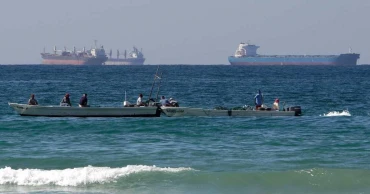
Trump urges allies to help reopen Strait of Hormuz
U.S. President Donald Trump said he has asked about seven countries to send warships to keep the Strait of Hormuz open as Iranian strikes continued across Gulf countries on Monday.
Trump said Washington is negotiating with countries heavily dependent on Middle Eastern crude to join a coalition to patrol the strategic waterway, through which about one-fifth of the world’s traded oil normally passes, but he did not name the countries.
American efforts to protect Strait of Hormuz continue, US military commander says
The head of U.S. Central Command, Brad Cooper, said American forces are targeting Iran’s threats to ships carrying oil and natural gas through the strategic Strait of Hormuz in the Persian Gulf.
In a video posted on X on Monday, he said the U.S. will continue efforts to weaken Iran’s ability to threaten navigation in the key waterway.
Trump urges global support to keep Strait of Hormuz open
Italy signals reluctance to Trump’s call to help open Strait of Hormuz
Italy has responded cautiously to Donald Trump’s call for allies to help reopen the Strait of Hormuz.
Antonio Tajani, Italy’s Foreign Minister, told reporters in Brussels on Monday that Rome supports strengthening EU naval missions in the Red Sea but said they cannot be extended to the Strait of Hormuz, as the missions are mainly defensive and anti-piracy operations.
Starmer says UK seeks ‘viable’ plan to open Strait of Hormuz
Keir Starmer, Britain’s Prime Minister, said the UK is working with allies on a plan to reopen the Strait of Hormuz but “will not be drawn into the wider war.”
Speaking after Donald Trump called on allies to send warships, Starmer said Britain is exploring the use of mine-hunting drones in the region but is unlikely to deploy a warship.
Iran thanks Pakistan for ‘solidarity’ amid US-Israel attacks
Iran says Strait of Hormuz is closed only to US, Israel and their allies
Iran’s top diplomat says the key Strait of Hormuz is only cut off for vessels of the United States, Israel and their allies.
German minister says US-Israeli aims need clarity
Johann Wadephul, Germany’s Foreign Minister, said Monday that the U.S. and Israel must clarify when their military objectives are achieved.
Speaking before an EU meeting in Brussels, he warned that Iran poses a serious threat to regional security, shipping, and the global economy, and said he would support sanctions against those blocking the Strait of Hormuz.
China has no comment on Trump’s Strait of Hormuz request
A Chinese government spokesperson did not directly answer questions about Donald Trump’s request for military support from several countries to reopen the Strait of Hormuz.
At a daily briefing in Beijing, Lin Jian of the Foreign Ministry reiterated China’s call to end the fighting, highlighting its impact on energy and trade.
6 months ago
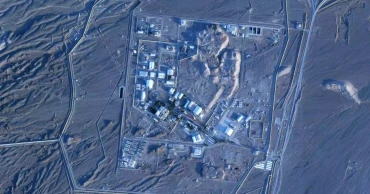
Satellite images show new activity at Iran nuclear sites amid protest tensions
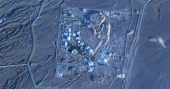
Satellite imagery has revealed renewed activity at two major Iranian nuclear facilities damaged in airstrikes last year, raising fresh concerns as tensions escalate over Tehran’s violent crackdown on nationwide protests.
Images released by Planet Labs PBC show newly constructed roofs covering heavily damaged structures at Iran’s Natanz nuclear enrichment site and the Isfahan Nuclear Technology Center. Analysts say the coverings appear designed to block satellite surveillance, potentially allowing Iran to inspect or recover remaining materials out of international view.
The activity marks the first significant construction detected at Iran’s bombed nuclear sites since Israel’s 12‑day conflict with Iran in June, followed by U.S. strikes. Iran has denied inspectors from the UN’s International Atomic Energy Agency (IAEA) access to the facilities since the attacks.
Experts caution the work does not suggest reconstruction of the sites. Instead, it may indicate efforts to assess whether sensitive assets — including stocks of highly enriched uranium — survived the strikes.
Read More: China successfully launches new test satellite
“These roofs are likely meant to obscure recovery operations rather than rebuild,” said analysts monitoring Iran’s nuclear program.
Natanz, Iran’s primary uranium enrichment hub, previously enriched uranium up to 60% purity — close to weapons-grade levels. The above-ground Pilot Fuel Enrichment Plant was severely damaged by Israeli strikes, with subsequent U.S. bunker-busting bombs targeting underground halls.
At Isfahan, which produces uranium gas used in enrichment, a similar roof now covers a damaged structure near the site’s northeast corner. Satellite images also show tunnel entrances nearby being filled or reinforced, possibly to protect against future attacks.
Iran has not commented publicly on the new construction. The IAEA also declined to respond.
Meanwhile, U.S. President Donald Trump has warned Iran to negotiate over its nuclear program, as Washington increases its military presence in the Middle East. Analysts warn the ongoing crisis carries significant nuclear risks.
8 months ago
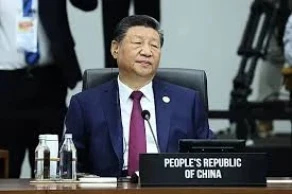
Xi vows to defend free trade at APEC as Trump skips key summit
Chinese President Xi Jinping pledged to defend global free trade at the Asia-Pacific Economic Cooperation (APEC) summit on Friday, where he took center stage after U.S. President Donald Trump skipped the meeting.
The annual regional forum, held this year in the South Korean city of Gyeongju, opened a day after Trump departed the country. His earlier meeting with Xi had produced agreements aimed at easing the trade tensions that have rattled the global economy.
Although the two leaders’ talks dominated attention, Trump’s absence from APEC underscored his continued rejection of large multilateral gatherings. Critics warn that this could further damage America’s reputation in a forum representing almost 40% of the global population and more than half of world trade.
Xi Calls for Unity and Open Trade
Addressing APEC’s opening session, Xi urged member nations to strengthen cooperation amid global uncertainty.
“The more turbulent the times, the more we must work together,” he said, noting that the world faces “rapid changes and increasing volatility.”
He emphasized the importance of stable supply chains, countering U.S. efforts to separate from China economically. Xi also called for deeper collaboration in green industries and clean energy.
Read more: Xi, Carney meet in South Korea to rebuild strained China-Canada ties
In a written message to the APEC CEO summit, Xi reaffirmed that China remains open to investment and committed to the multilateral trading system.
“Those who establish a presence in the Chinese market will seize key opportunities in global competition,” he wrote. “Investing in China means investing in the future.”
Representing Trump, U.S. Treasury Secretary Scott Bessent said Washington’s efforts to rebalance trade were aimed at ensuring “fair and reciprocal” terms, and at creating more resilient production networks that reduce dependence on vulnerable sectors.
Xi’s Diplomatic Meetings
The summit marked Xi’s first visit to South Korea in 11 years. On the sidelines, he met with Japanese Prime Minister Sanae Takaichi, Canadian Prime Minister Mark Carney, and Thai Prime Minister Anutin Charnvirakul.
During talks with Takaichi, Xi called for a “constructive and stable relationship for a new era,” while Takaichi expressed hopes of addressing bilateral issues and building a stronger personal rapport with Xi.
Xi is also expected to meet South Korean President Lee Jae Myung on Saturday, with discussions likely to include North Korea’s nuclear program.
APEC’s Growing Challenges
Founded in 1989 to promote free and open trade across the Asia-Pacific, APEC now faces mounting challenges, including U.S.-China rivalry, supply chain disruptions, aging populations, and the impact of artificial intelligence on employment.
Under Trump, Washington has shifted from cooperation to competition with Beijing, with tariff hikes and an “America First” agenda unsettling global markets and challenging decades of globalization.
Read more: WHO: Militia Assault on Darfur hospital came in multiple waves
Opening the summit, host President Lee urged members to focus on solidarity and shared prosperity.
“We may not always stand on the same side, but we can unite around our common goal of mutual growth,” he said.
Canada’s Carney echoed that sentiment, announcing plans to double his country’s non-U.S. exports within a decade, citing “one of the most profound global shifts since the fall of the Berlin Wall.”
Despite the positive tone after Trump and Xi’s meeting, experts warn that tensions could flare again as both nations vie for dominance in manufacturing and emerging technologies like AI.
“Bringing the two largest economies together to ease tariff and export disputes helped avert the worst outcomes for global trade,” said Leif-Eric Easley, professor at Ewha Womans University. “But APEC should be more than a platform for trade truces — it must advance cooperation on sustainable and digital trade.”
South Korea Seeks Consensus
As host, South Korea is pushing for all 21 member economies to adopt a joint statement — a goal that eluded APEC in 2018 due to U.S.-China friction.
Foreign Minister Cho Hyun recently said that while a strong pro–free trade statement may be difficult, Seoul hopes for a broader declaration highlighting regional peace and prosperity.
This year’s agenda also prioritizes collaboration on artificial intelligence and demographic challenges.
Read more: Have deep relations with US, extensive economic ties with China: Touhid Hossain
11 months ago
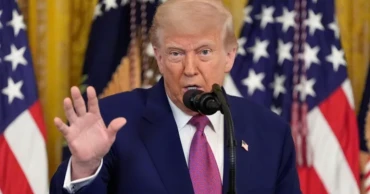
Trump announces Israel-Iran truce after attack on US base in Qatar
U.S. President Donald Trump has announced that Israel and Iran have agreed to a "complete and total" ceasefire, expected to take effect within hours.
His announcement on Monday followed an Iranian missile strike targeting Al Udeid Air Base in Qatar, which hosts American forces. In a social media post, Trump stated, "Assuming all goes as planned — and it will — I want to commend both Israel and Iran for their Stamina, Courage, and Intelligence in ending what should be called ‘THE 12 DAY WAR.’"
He added, “This is a war that could have lasted for years and devastated the entire Middle East. But it hasn’t — and it never will. God bless Israel, God bless Iran, God bless the Middle East, God bless the United States of America, and GOD BLESS THE WORLD!”
However, neither Iran nor Israel has officially confirmed the ceasefire.
According to Trump, Iran would halt its attacks on Israel several hours before Israel is expected to end its military operations.
Reporting from Tehran, Al Jazeera’s Tohid Asadi pointed out that more than an hour after Trump’s declaration, there was still no formal confirmation. “Just minutes ago, explosions were heard due to air defense systems being activated here in the capital,” he reported, suggesting ongoing Israeli airstrikes that could trigger further Iranian retaliation.
Iran launches missiles at US military base in Qatar
Middle East analyst Omar Rahman told Al Jazeera that key details were missing from Trump’s message, including whether any negotiations would follow the ceasefire. He accused Trump of previously misleading statements supporting Israel and noted that the U.S. president had spoken about diplomacy just hours before Israel's initial attack on Iran.
Last week, Trump mentioned he would decide within two weeks whether to join the war, but ended up authorizing strikes on Iran just two days later.
Rahman also warned that if Israel carries out a major operation — including the potential assassination of Iranian Supreme Leader Ayatollah Ali Khamenei — it could collapse the ceasefire entirely. “Would that end the war? Of course not,” he said.
Israel launched a large-scale offensive on Iran in the early hours of June 13, claiming it was a “preemptive” move to target Iran’s missile and nuclear programs. The unprovoked assault killed hundreds, including several high-ranking Iranian generals.
Iran condemned the attack as a violation of the UN Charter and responded with a barrage of missiles that caused extensive damage within Israel.
On Saturday, Trump authorized U.S. strikes on three Iranian nuclear sites. In response, Iran fired missiles at Al Udeid Air Base in Qatar. Trump brushed off the retaliation, calling it “weak” and indicating that the U.S. would not respond militarily.
Qatar, Saudi condemn Iran’s attack
Liqaa Maki of the Al Jazeera Media Institute suggested that the U.S. might refrain from counterattacks unless its forces suffer casualties. He emphasized that the U.S. should now convert its military success into a diplomatic agreement.
Maki also noted that despite setbacks, Iran still possesses enriched uranium and the technical expertise to rebuild its nuclear program. “In two to three years, Iran could resume its nuclear activities without inspections and possibly develop a bomb undetected,” he warned.
The extent of the damage to Iran’s nuclear infrastructure remains uncertain. While Iran maintains that it is not pursuing nuclear weapons, Israel is widely believed to possess an undeclared nuclear arsenal.
Source: Al Jazeera
About 250 Americans have been evacuated from Israel, official says
The U.S. has evacuated some 250 American citizens and their immediate family members from Israel by government, military and charter flights that began over the weekend, a State Department official says.
Since June 21, the official says the U.S. has organized seven flights, most of which have to gone to Athens, Greece, but also to Rome, Italy, and Larnaca, Cyprus.
Other Americans, including nonessential embassy staff and their families, have left via land to Jordan and Egypt, while others have departed Israel by ship. The official did not have statistics for those departures, which do not necessarily involve U.S. government assistance.
There are roughly 700,000 American citizens, most of them dual U.S.-Israeli citizens, believed to be in Israel.
Source: AP
1 year ago
.jpg)
Trump pardons Flynn despite guilty plea in Russia probe
President Donald Trump pardoned his former national security adviser Michael Flynn on Wednesday, ending a yearslong prosecution in the Russia investigation that saw Flynn twice plead guilty to lying to the FBI and then reverse himself before the Justice Department stepped in to dismiss his case.
5 years ago
.jpg)
Can Trump win with 'fantasy' electors bid? State GOP says no
Republican leaders in four critical states won by President-elect Joe Biden say they won’t participate in a legally dubious scheme to flip their state’s electors to vote for President Donald Trump. Their comments effectively shut down a half-baked plot some Republicans floated as a last chance to keep Trump in the White House.
5 years ago
.jpg)
Trump tweets his outrage in all caps
For 40 hours, President Donald Trump fumed in private and tweeted his grievances in all caps.
5 years ago
.jpg)
Trump predicts ‘lot of litigation’ in fight to keep his job
WASHINGTON (AP) — President Donald Trump is looking at a political map in which he might have to persuade the Supreme Court to set aside votes in two or more states to prevent Joe Biden from becoming president.
5 years ago