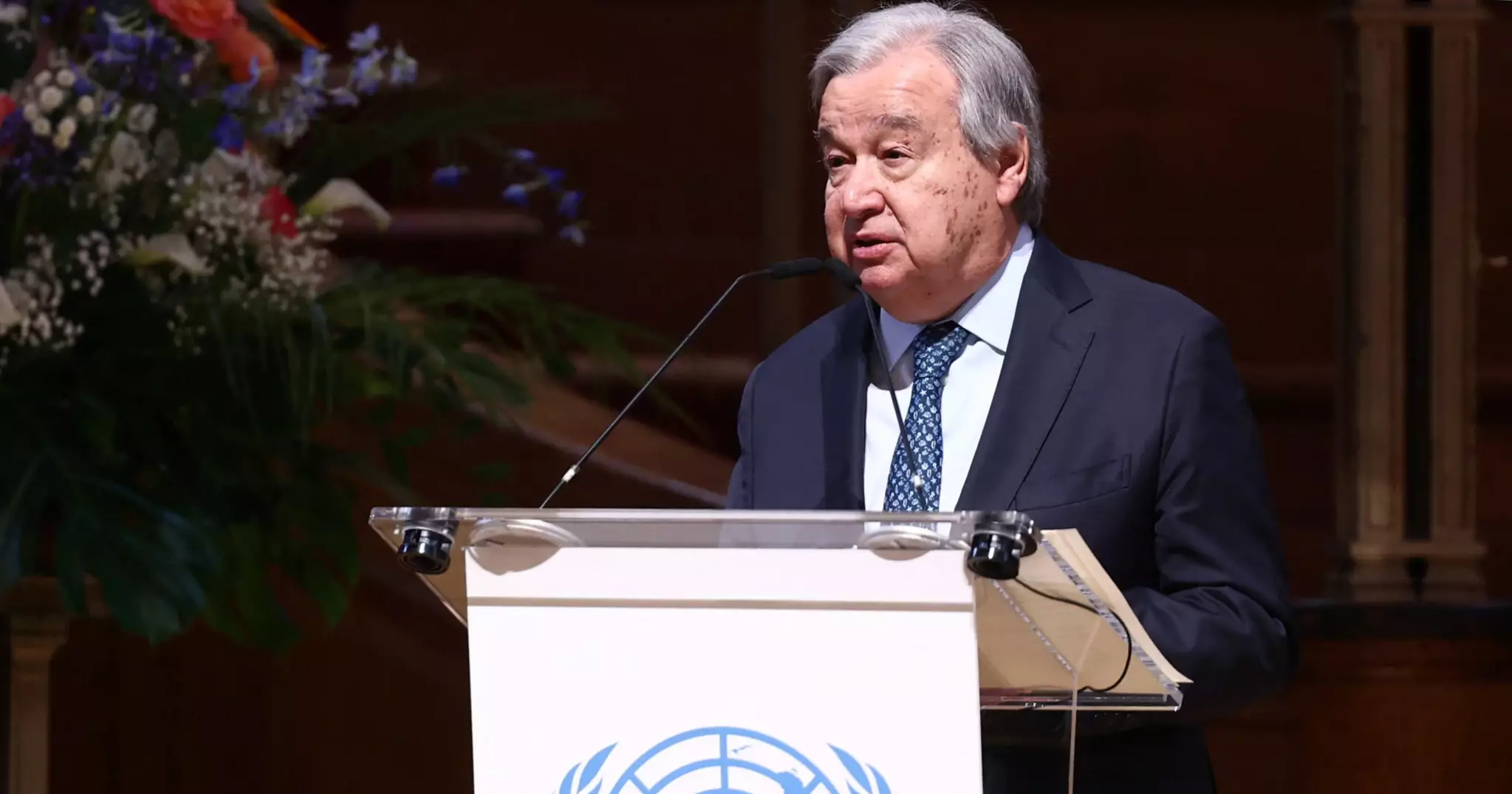
The United Nations is facing the danger of an “imminent financial collapse” as several member states fail to pay their mandatory contributions, UN Secretary General António Guterres has warned.
In a letter sent to all 193 member states, Guterres said the organisation’s financial crisis was worsening and now “deepening, threatening programme delivery”, with funds potentially running out by July. He urged countries either to pay their assessed contributions in full or to reform the UN’s financial rules to avert collapse.
The warning comes as the United States, the UN’s largest contributor, has declined to pay into the organisation’s regular and peacekeeping budgets and has withdrawn from multiple UN agencies, describing them as a “waste of taxpayer dollars”. Several other countries are also in arrears or have refused to pay their dues.
Although the UN General Assembly approved limited changes to the financial system in late 2025, the organisation remains under severe cash strain. The situation is compounded by a rule requiring the UN to refund unspent funds even when the money was never received in the first place.
At the UN’s Geneva headquarters, notices highlighting the financial crisis have been widely displayed. Cost-cutting measures are visible, with escalators frequently shut down and heating reduced in an effort to conserve funds.
Guterres wrote that while the UN had experienced financial difficulties before, the current crisis was “categorically different”. He noted that “decisions not to honour assessed contributions that finance a significant share of the approved regular budget have now been formally announced,” without naming specific countries.
Read More: 12th DU National Model United Nations set to begin on May 29
He stressed that the “integrity of the entire system” relies on members fulfilling their obligations under the UN Charter to pay their “assessed contributions”. According to the secretary general, only 77 percent of total dues were paid in 2025, leaving an unprecedented amount outstanding.
Guterres also criticised a financial rule that forces the UN to return unused programme funds, describing it as a “double blow” in which the organisation is “expected to give back cash that does not exist”.
“I cannot overstate the urgency of the situation we now face. We cannot execute budgets with uncollected funds, nor return funds we never received,” he wrote.
As a result, the UN is now refunding millions of dollars it never had. The letter stated: “Just this month, as part of the 2026 assessment, we were compelled to return $227m [£165m] – funds we have not collected.”
“The bottom line is clear,” Guterres added. “Either all member states honour their obligations to pay in full and on time – or member states must fundamentally overhaul our financial rules to prevent an imminent financial collapse.”
UN agencies often struggle to secure full funding for humanitarian responses, but the past year has been especially challenging. The US did not pay its contribution to the UN’s regular budget in 2025 and provided only 30 percent of its expected funding for peacekeeping missions, reports BBC.
Read More: Kofi Annan was the United Nations
In January, President Donald Trump withdrew the US from dozens of international bodies, including 31 UN agencies, aiming to “end American taxpayer funding and involvement in entities that advance globalist agendas over US priorities”. Although Washington pledged $2 billion (£1.5 billion) for UN humanitarian work in late December, it warned the organisation must “adapt or die”, a sharp drop from the $17 billion it provided in 2022.
Other major donors, including the UK and Germany, have also announced significant cuts to foreign aid, further affecting UN operations.
Guterres had earlier cautioned that the organisation was in its most fragile financial position in years, blaming unpaid contributions and warning in October of a “race to bankruptcy”.
Meanwhile, Trump has faced criticism over proposals to replace some UN functions with his proposed Board of Peace to oversee reconstruction in Gaza. Although he said the initiative would work “in conjunction with the United Nations”, he previously suggested otherwise, saying: “Well, it might.”