The administration of President Donald Trump on Wednesday moved to strengthen U.S. control over Venezuela’s oil sector by seizing additional sanctioned tankers and announcing plans to loosen certain sanctions so Washington can manage the sale of Venezuelan oil worldwide.
Following the removal of President Nicolás Maduro in a surprise overnight operation, the Trump administration said it intends to oversee all Venezuelan oil exports. While the U.S. continues to enforce its oil embargo, the Energy Department said that any oil entering or leaving Venezuela must pass through channels approved by the United States and aligned with its legal and national security priorities.
Such authority over the world’s largest proven crude reserves could give Washington significant leverage over global oil supplies and prices. The moves underscore the administration’s resolve to shape Venezuela’s future through control of its oil wealth, echoing Trump’s statement that the U.S. would effectively “run” the country.
Vice President JD Vance said the U.S. could pressure Venezuela by determining where and how its oil is sold. By controlling energy resources, he said, Washington can allow sales only when they serve American interests, applying strong pressure without military force.
Secretary of State Marco Rubio indicated that oil seized from sanctioned tankers in the Atlantic and Caribbean would be included in a new agreement announced Tuesday, under which Venezuela would supply up to 50 million barrels of oil to the United States. Rubio said Venezuela’s interim authorities recognize that cooperation with Washington is the only way to export oil and avoid economic collapse.
Additional tanker seizures
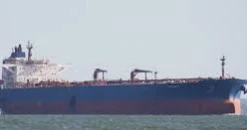
U.S. European Command reported that the tanker Bella 1 was seized in the North Atlantic for violating U.S. sanctions after attempting to evade enforcement efforts. Homeland Security Secretary Kristi Noem said U.S. forces also took control of the M Sophia in the Caribbean, noting that both vessels had recently docked in Venezuela or were headed there.
These ships join at least two others seized last month. The Bella 1 had abruptly changed course in December after an earlier tanker seizure, later renaming itself Marinera and reflagging to Russia. U.S. officials said the crew even painted a Russian flag on the ship’s hull.
Russia’s Foreign Ministry protested the seizure, saying Russian nationals were among the crew and demanding their rights be respected. A senior Russian lawmaker denounced the action as piracy. Meanwhile, the U.S. Justice Department said it is investigating crew members for failing to comply with Coast Guard orders and warned that similar enforcement actions may follow against other vessels.
The tanker had previously been sanctioned over allegations it smuggled oil for a company linked to Hezbollah.
Sanctions eased to allow oil sales
At the same time, the administration said it would selectively lift sanctions to permit Venezuelan oil shipments to global markets. Initial sales of 30 to 50 million barrels are expected to begin immediately and continue indefinitely. Proceeds will be held in U.S.-controlled bank accounts and distributed at the discretion of the U.S. government.
Venezuela’s state oil company PDVSA confirmed it is negotiating with Washington, describing the arrangement as a commercial transaction similar to existing deals with foreign firms. Acting President Delcy Rodríguez downplayed the development, calling it a normal step in Venezuela’s international economic relations.
The U.S. also plans to authorize imports of oilfield equipment and services to boost Venezuela’s production, currently about 1 million barrels per day, and has signaled possible investment in the country’s power grid to support economic recovery.
Shadow fleet concerns
U.S. officials said the seized ships were part of a “shadow fleet” used to smuggle oil for sanctioned countries such as Venezuela, Russia, and Iran. The U.K. military assisted in tracking the Marinera, with British officials describing it as part of a sanctions-evasion network fueling conflict and instability.
The M Sophia, which had stopped transmitting location data months earlier, was carrying an estimated 1.8 million barrels of crude worth about $108 million. Maritime analysts said at least 16 tankers departed Venezuela’s coast in recent days amid the unfolding U.S. operation.