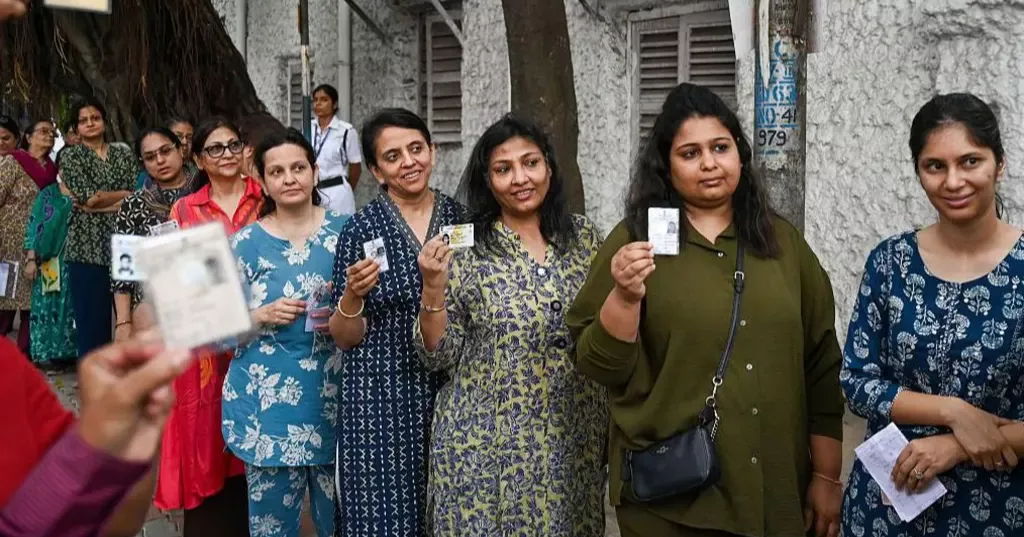
Vote counting is underway across four Indian states—West Bengal, Tamil Nadu, Kerala and Assam—along with the union territory of Puducherry, in a set of elections seen as a crucial political barometer ahead of India’s 2029 general election.
The results are being closely watched as an early test of support for Prime Minister Narendra Modi and his Bharatiya Janata Party (BJP). The party is aiming to retain control in Assam while expanding its presence in southern states, particularly Tamil Nadu and Kerala.
However, the sharpest focus remains on West Bengal, where the BJP is attempting to unseat the ruling Trinamool Congress (TMC) in what is widely seen as a closely contested race. The campaign in the state has been marked by controversy, particularly over revisions to electoral rolls that led to the removal of millions of voters.
Counting is expected to continue throughout the day, with early trends likely to emerge within hours.
For the BJP, West Bengal represents a long-standing political objective dating back to the late 1980s, when leaders such as L. K. Advani and Atal Bihari Vajpayee identified the state as a key ideological frontier. A victory here would not only secure a major eastern stronghold but also signal the party’s transformation into a truly pan-Indian force.
The state holds particular ideological significance due to its legacy of intellectual liberalism, leftist politics and strong regional identity. A win for the BJP would validate years of political mobilisation and organisational expansion, reinforcing Modi’s dominance.
West Bengal has emerged as the central battleground among the states that voted in April. After 15 years in power, Chief Minister Mamata Banerjee and her TMC are facing what is seen as their toughest challenge yet from an ascendant BJP.
The stakes extend beyond the state. A BJP victory could reshape the political landscape in eastern India, while a TMC win would underscore the resilience of regional parties against central authority.
The contest has been further intensified by a controversial voter roll revision that excluded nearly three million potential voters, alongside high turnout, polarised campaigning, strong welfare-focused politics and tightly contested exit polls—factors that have made West Bengal the most closely watched race in the current election cycle.
Source: BBC