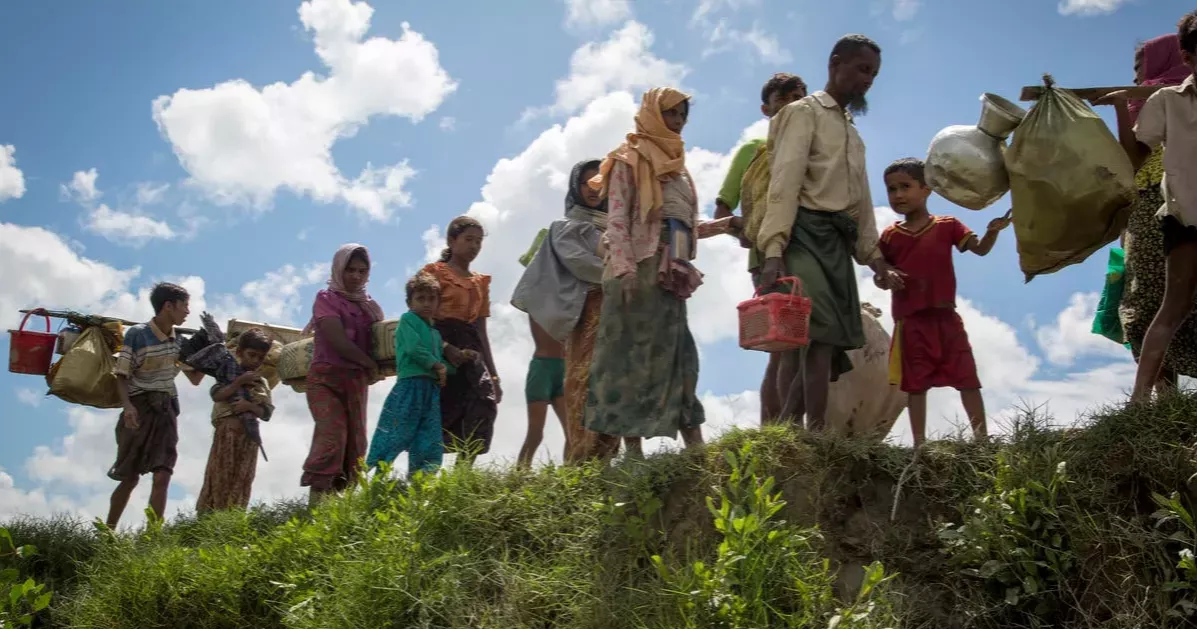
UNHCR, the UN Refugee Agency, on Friday said essential services for the whole Rohingya population are at risk of collapsing due to acute global funding crisis, noting that 150,000 Rohingyas entered Bangladesh over the last 18 months.
With the acute global funding crisis, UNHCR spokesperson Babar Baloch said, the critical needs of both newly-arrived refugees and those already present will be unmet.
This movement of Rohingya refugees into Bangladesh, spread over months, is the largest from Myanmar since 2017, when some 750,000 fled the deadly violence in their native Rakhine State.
Bangladesh is now hosting over 1.3 million Rohingyas in Cox’s Bazar and Bhasan Char.
The UNHCR and humanitarian partners are mobilizing to respond to the needs of up to 150,000 Rohingya refugees who have arrived in Cox’s Bazar in Bangladesh over the last 18 months.
UNHCR and humanitarian partners also called on the international community to stand in solidarity with Bangladesh and other countries in the region hosting Rohingya refugees.
"Until there is peace and stability in Myanmar’s Rakhine State, conducive to safe and voluntary return, the international community must continue to support efforts to provide life-saving assistance to Rohingya forced to flee," said Baloch.
Among the new arrivals, nearly 121,000 had been biometrically identified by the end of June, with more believed to be residing informally in the already overcrowded refugee camps.
The overwhelming majority are women and children.
More humanitarian support is urgently required as the new arrivals are largely dependent on the solidarity of those living in the camps, overstretching severely diminished resources, the UN agency said.
Biometric identification has allowed humanitarian partners in Bangladesh to provide the new arrivals with basic services, including food, medical care, education and essential relief items.
However, this will soon dry up without an immediate injection of funds. Access to shelter and other key necessities is also insufficient in the face of limited resources.
Unless additional funds are secured, health services will be severely disrupted by September and essential cooking fuel (LPG) will run out.
BSF pushes 31 people, including 14 Rohingyas into Sylhet
"By December, food assistance will stop. Education for some 230,000 children – including 63,000 new arrivals – is at risk of being discontinued," UNHCR Spokesperson said.
"Refugees in the camps have already felt the impact of these reductions. They fear more cuts are looming," Baloch mentioned during the media briefing in Geneva.
This is fuelling a sense of desperation and anxiety, and driving some to embark on dangerous sea journeys to other countries in search of safety and a more dignified life for their families, the UNHCR thinks.
The border between Bangladesh and Myanmar remains "officially closed" and under surveillance by Border Guard Bangladesh.
UNHCR and humanitarian partners are "grateful" that the government of Bangladesh has authorized newly-arrived Rohingya refugees to access emergency assistance and key services in the camps in Cox’s Bazar.
"As the conflict in Myanmar continues unabated, however, we are advocating with the Bangladeshi authorities to provide managed access to safety and asylum for civilians fleeing the conflict," Baloch said.
Over the years, the Spokesperson said, the generous support from Bangladesh and the international community has been critical in meeting Rohingya refugees’ most basic needs and providing protection.
Every aspect of the refugee response is affected by the funding scarcity, Baloch said.
Targeted violence and persecution in Rakhine State and the ongoing conflict in Myanmar have continued to force thousands of Rohingya to seek protection in Bangladesh.
Bangladesh has generously hosted Rohingya refugees for generations.