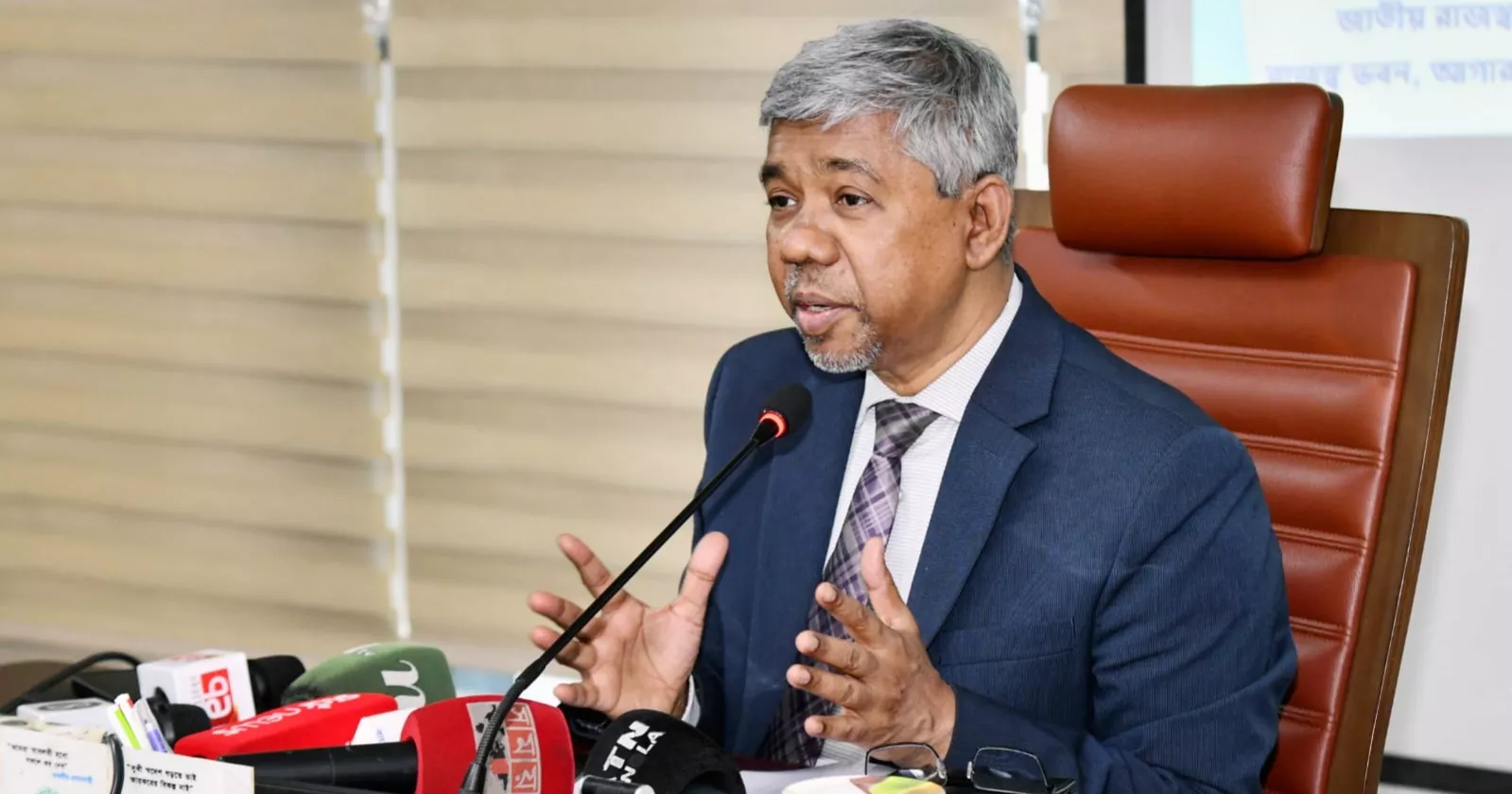
National Board of Revenue (NBR) Chairman Md Abdur Rahman Khan on Sunday said the authority is prioritising trade facilitation, quicker cargo clearance and greater transparency through a broad set of customs reforms.
The ultimate objective is to simplify procedures for compliant taxpayers while taking strict action against misdeclaration, under-invoicing and other forms of revenue leakage, he said at a meet-the-press programme ahead of International Customs Day.
A major reform initiative is underway to bring discipline to customs valuation with assessments to be conducted mainly on the basis of invoice value.
As part of this effort, a risk-based physical examination system is nearing completion.
“If we can operationalise the software, the Risk Management Commission will identify high-risk consignments for verification, while low-risk goods will not require physical inspection,” the NBR chairman said.
He said NBR is placing more emphasis on post-clearance audit to ensure faster release of goods from ports.
He acknowledged that testing requirements involving multiple government agencies often cause delays and said steps are being taken to streamline the process.
Under the new arrangement, laboratory samples will be collected seven days a week and importers will be allowed to use both government and recognised domestic or foreign laboratories for testing.
Compliant taxpayers will benefit from faster clearance, while Authorised Economic Operators (AEOs) will receive additional facilities, including green channel clearance and post-clearance audits, he said.
On Monday, NBR will issue licences to three more AEOs either as new entrants or through upgraded compliance levels.
The chairman also highlighted renewed efforts to strengthen pre-arrival customs processing, noting that although the system already exists, it is not being fully utilised.
He said NBR is examining why declarations are often submitted after goods arrive at ports despite the opportunity to file them earlier to save time.
Read More: Govt setting up incubation centers to develop startup ecosystem: Faiz Ahmad Taiyeb
NBR is also working to integrate its ASYCUDA system with port automation platforms to further speed up cargo clearance.
The National Single Window system has already issued around 900,000 certificates, licences and permits, with more than 80 percent processed within one hour of submission.
He said customs bond automation has been fully implemented since January, significantly reducing paperwork and congestion at bond commissionerates, with bond-related activities now completed remotely.
NBR is also working with Bangladesh Bank to integrate commercial invoice data with customs and foreign exchange systems to reduce valuation disputes and improve monitoring of under- and over-invoicing.
International market price catalogues are being procured to enable more accurate assessment of import prices and detection of irregularities.
On revenue trends, the chairman said Bangladesh is gradually moving away from heavy reliance on import duties, with income tax and VAT contributing a growing share of total revenue. Strengthening income tax and VAT collection is essential for redistribution and sustainable development, he added.
He stressed that customs administration plays a crucial role not only in revenue collection but also in preventing money laundering and protecting the country from harmful imports.
Responding to questions, he said import data is not confidential and will be published on the NBR website after filtering to protect taxpayer identities.
He also said VAT refunds have begun under the automated system, while work is underway to introduce a fully automated income tax refund mechanism to minimise direct contact between tax officials and taxpayers.
Read More: Bangladesh Bank to ease rules, give banks more freedom: Governor
On tariff policy, he said duties on essential commodities, including fruits, dates, edible oil, onions and rice, have been reduced, prioritising public interest over revenue considerations.