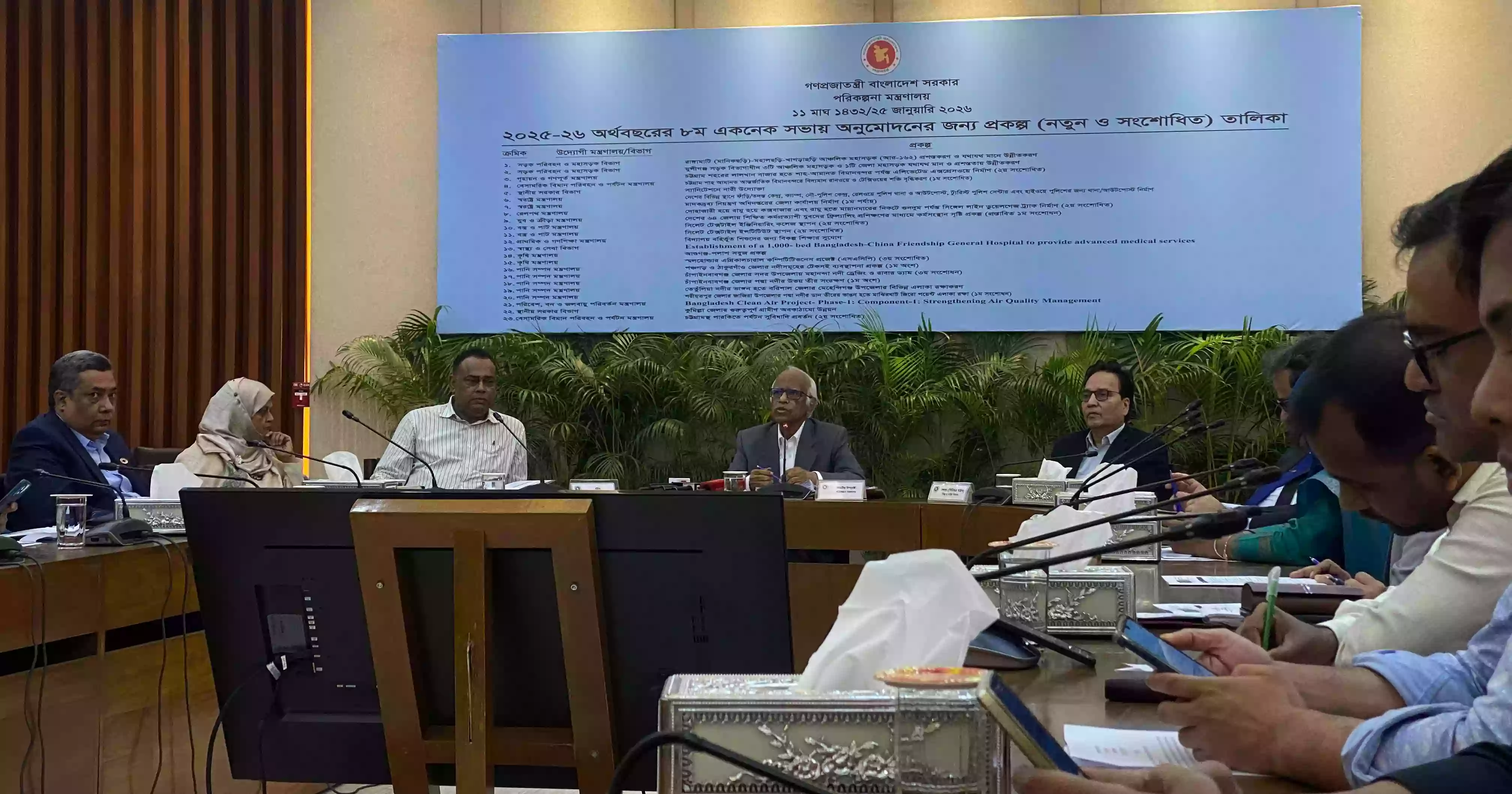
Planning Adviser Dr Wahiduddin Mahmud on Sunday said poor planning, inflated cost estimates and repeated delays are causing large-scale wastage of public resources.
“From the very beginning, we have faced problems in implementing development projects. In almost all cases, projects had to be sent back for scrutiny and re-examination,” he told reporters after a meeting of the Executive Committee of the National Economic Council (ECNEC).
He said almost all development projects required re-verification after submission, exposing fundamental flaws in the country’s project preparation capacity.
The adviser said such verification revealed significant scope for cost savings with savings reaching as high as Tk 3,000 crore in some projects.
Read More: Ongoing development projects won't be paused for election: Wahiduddin Mahmud
“This made me realise why almost every project initially includes excessive costs which later turn into wastage. Once a project is approved, the allocated cost is usually spent in full. But when we reviewed the projects, it became clear that many of them could have been scaled down,” he said adding that this is one of the biggest sources of government waste.
The Planning Adviser also pointed to the longstanding problem of managing too many projects at the same time, a situation he described as the ‘tyranny of too many projects’.
“When a large number of projects are ongoing simultaneously, it becomes impossible to ensure proper financing and implementation at the desired pace. There is a clear capacity constraint,” he said.
He explained that excessive numbers of projects often leave project directors overstretched as many of them are placed in charge of several small projects at once, affecting monitoring and overall quality of implementation.
Read More: Govt statistics not manipulated but sometimes misused: Wahiduddin
Wahiduddin said one of his key objectives was to reduce the number of ongoing projects but acknowledged that the government had not succeeded in doing so.
“Although we approved fewer new projects compared to previous years many projects that were supposed to be completed by July last year, December last year or June this year were not finished,” he said.
He added that several projects nearing completion had applied for time extensions which the government was compelled to approve as work was already at the final stage.
As a result, the total number of ongoing projects has not declined and has instead increased slightly, despite efforts to limit the approval of new ones.
“This has happened not because we took too many new projects but because the projects that should have been completed were not finished,” he said.
The adviser said the same implementation-related problems cited by ministries to justify delays were also being used to explain why projects could not be completed on time.
To address the issue, he said the government has decided to issue strict instructions to all ministries, making project completion deadlines mandatory.
“Projects for which ministries have committed to completion by June or December this year must be completed within those deadlines. Otherwise, funding for those projects will be stopped,” he said.
He added that a formal directive conveying this decision would be sent to all ministries to enforce accountability and improve discipline in project implementation.