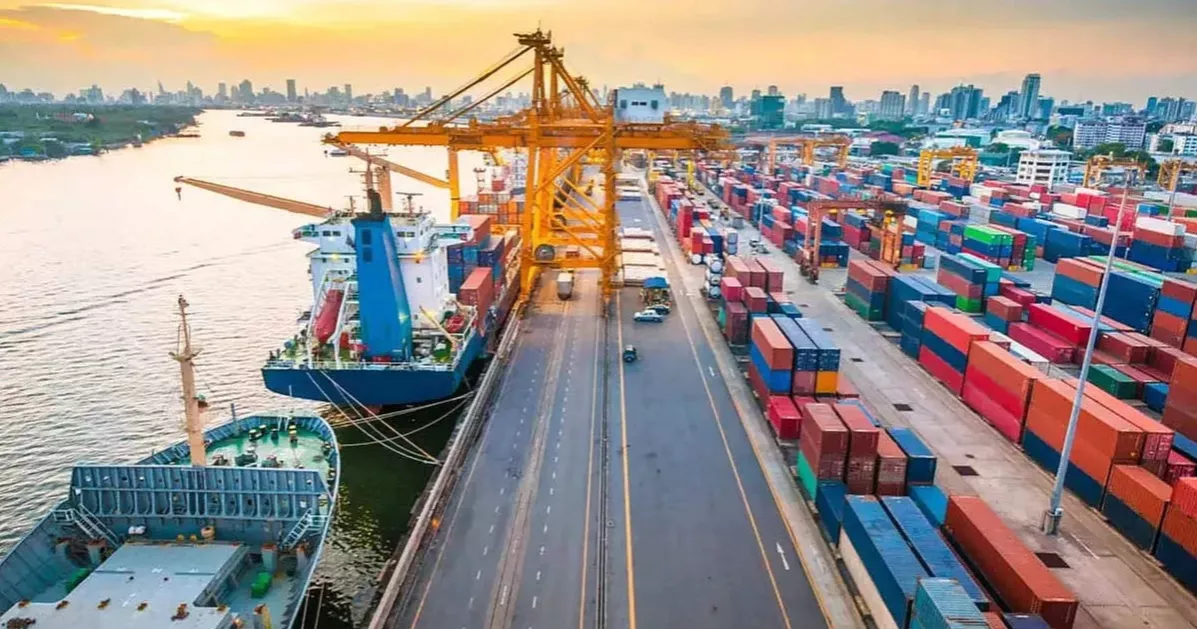
Operations at Chattogram Port, the country’s busiest trade hub, have come to a standstill as a strike by port workers and employees drags on, triggering significant delays in imports and exports, as talks are underway between labour representatives and port authorities to resolve the crisis.
The strike continued for the fourth consecutive day on Wednesday protesting the plans to lease the New Mooring Container Terminal (NCT) to global port operator DP World.
As a result, import-export trade has come to a standstill, inflicting losses worth several hundred crore taka on shipping lines.
Read More: Chattogram Port workers plan 24-hour walkout as NCT leasing dispute deepens
The workers of Chattogram Port have been observing work stoppages for eight hours a day over the past three days from Saturday to Monday while they observed a 24-hr strike from Tuesday morning.
Amid the worsening situation, port-related business leaders have sat in an emergency meeting with labour leaders in a bid to resolve the crisis around 2 pm on Wednesday at a hotel in Agrabad area of the Chattogram port city and it continued until the filing of this report.
Labour leaders said port workers and employees went on an eight-hour strike protesting the agreement with a foreign company to operate the New Mooring Container Terminal (NCT) from Saturday.
As their demands were not met, they announced a 24-hour strike from Wednesday.
The protesters also alleged that although the NCT is a self-sustaining and profitable terminal built with the port’s own funds, steps are being taken to hand it over to a foreign company.
They also claimed that the decision could threaten national sovereignty and lead to job losses for many workers.
The labour leaders also demanded to withdraw the decision to hand over the New Mooring Container Terminal (NCT) to global port operator DP World.
Meanwhile, the port authorities said the process of signing a contract with a foreign company to operate the NCT is underway to make Chattogram Port more dynamic and modern.
The matter has not yet been finalised. Moreover, a writ petition was filed against the contract which had already been dismissed by the High Court.
Read More: Strike at Chattogram port enters 2nd day over NCT lease
Severe Impact on Trade
Nearly 92% of the country’s import-export cargo is transported through Chattogram Port. Due to the work stoppage, port operations have almost come to a halt.
More than 10,000 export-laden containers have piled up, while queues of vessels waiting at jetties and outer anchorage continue to grow.
Omar Faruk, director (admin) of Chittagong Port Authority (CPA) said the ongoing movement is having only a limited impact on import-export trade.
He urged the protesters not to disrupt cargo handling and delivery operations.
Already 16 workers involved in leading the movement were transferred to Dhaka as a disciplinary measure, he said.
Business leaders said Chattogram Port is the heart of the country’s economy and the severe agitation must be stopped to keep it operational. Any delay, they warned, would force the entire economy to pay a heavy price.
Bangladesh Garments Manufacturers and Exporters Association (BGMEA) Director Rakibul Alam Chowdhury said unrest has prevailed at Chattogram Port for the last four days centring on an appeal hearing at the High Court that declared the operation of NCT by Dubai-based DP World lawful.
Read More: Strike at Chattogram port enters 2nd day over NCT lease
Processions, rallies, blockades and mass transfers have heightened tensions in the port area, severely hampering import-export operations at jetties, yards and terminals, he said.
Besides, the ready-made garment sector has suffered the most due to the strike, he added.
Head of operations of MSC Shipping, Azmir Hossain Chowdhury said delays in unloading and loading cargo due to the strike have forced shipping lines to pay demurrage of at least $15,000 per vessel per day on average.
If the situation continues, losses could multiply, he warned.
Additional costs for fuel, crew management and port usage are also rising, while the port’s international reputation is being harmed, he said.
Meanwhile, Ruhul Amin Sikder Biplob, General Secretary of Bangladesh Inland Container Depots Association (BICDA), said import and export activities largely depend on 21 private inland container depots (ICDs) or off-docks around Chattogram Port.
On average, more than 3,500 import containers and around 3,000 export containers—about 6,500 containers in total—are transported daily between the port and these off-docks.