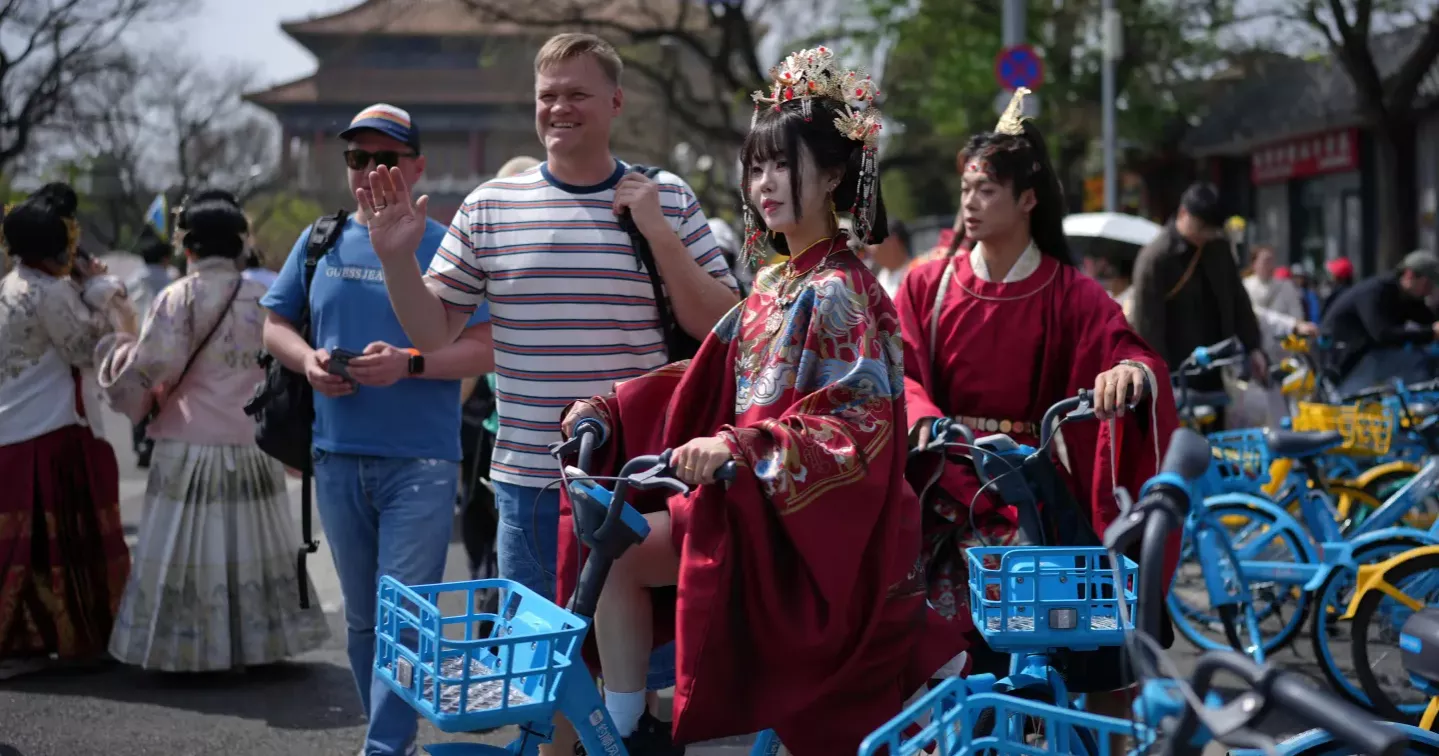
A new social media trend dubbed “becoming Chinese” is gaining global attention, with young people increasingly embracing elements of Chinese lifestyle and culture.
In recent months, many users in their 20s have been posting videos showing how they are adopting habits seen as typically Chinese. These include drinking hot water with goji berries, eating dumplings, wearing slippers indoors, or visiting China and praising its modern cities. The trend, often referred to as “Chinamaxxing,” has attracted millions of views online.
China has long tried to boost its global influence through cultural diplomacy, but this viral trend appears to be achieving what official efforts could not. Even Chinese Ambassador to the United States Xie Feng recently mentioned the phenomenon while promoting a visa-free transit policy and encouraging Americans to visit China.
The trend reflects a broader rise in the global popularity of Chinese culture, products and everyday practices. Experts say this growing appeal shows how China is gaining “soft power” — influence through culture and lifestyle rather than politics or military strength.
Shaoyu Yuan, a professor at New York University, said Chinese culture is becoming more familiar and widely accepted worldwide through entertainment, consumer products and daily habits.
China’s influence is supported by its strong position in industries such as manufacturing, social media and consumer goods. Its tech platforms, including the algorithms behind TikTok, and competitive local brands are helping spread Chinese culture globally.
However, the trend has also sparked debate, particularly among Chinese communities in the West. Some say the sudden popularity of Chinese culture does not erase past discrimination.
Elise Zeng, a Chinese American from New York, said many people still remember facing racism, especially during the COVID-19 pandemic when Asians were targeted over the virus. She said such experiences cannot be overlooked simply because Chinese culture is now considered trendy.
Others see the trend more positively. Sherry Zhu, a social media user whose videos helped popularize the meme, said cultural exchange can help reduce misunderstandings and build greater appreciation over time.
The growing interest in Chinese culture is also linked to the success of its entertainment and consumer industries. Products like Labubu dolls, music by Chinese artists and major releases such as the animated film “Ne Zha 2” and the video game “Black Myth: Wukong” have gained international popularity.
Digital tools like Chinese map apps are also attracting attention for their advanced features, further boosting the country’s cultural reach.
While China’s government has long promoted its global image through initiatives like the Belt and Road project and Confucius Institutes, these efforts have faced criticism in some countries.
Experts say cultural influence is more effective when it spreads naturally rather than through official promotion.
“Cultural influence travels further when people choose it themselves,” Yuan said.