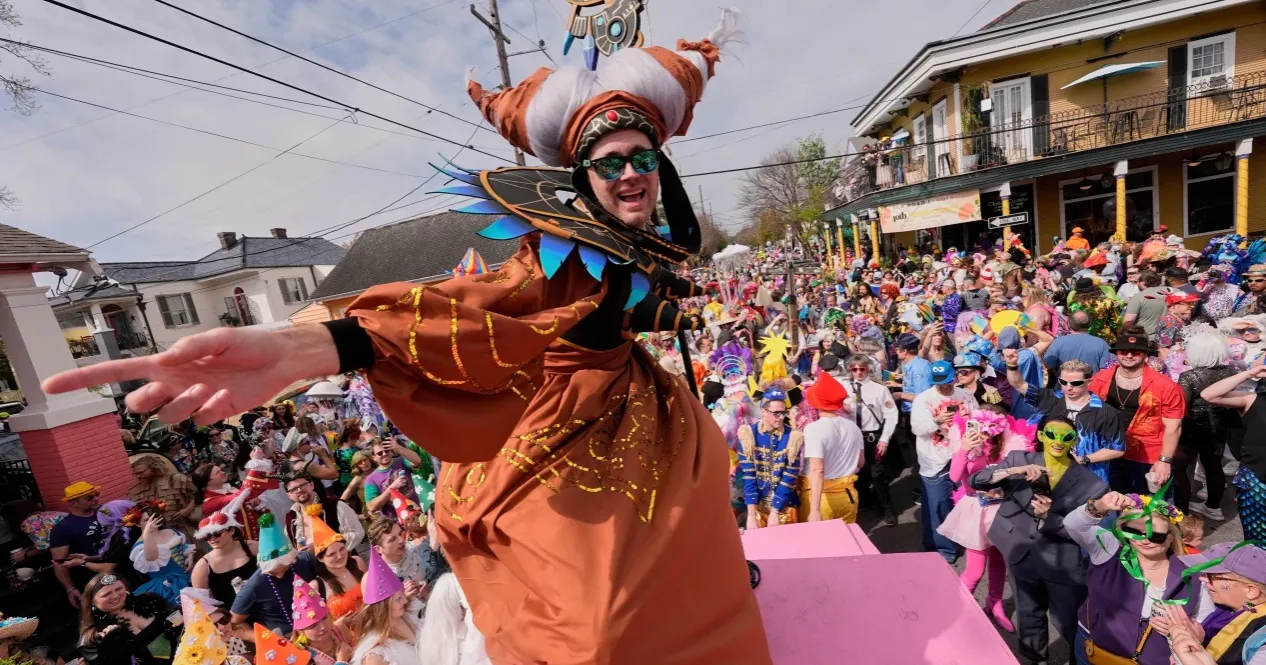
As people in much of the US. pack away holiday decorations and settle back into normal routines after New Year’s, Louisiana is doing the opposite gearing up for its most anticipated season of the year.
Across the state, preparations are underway for Carnival, a festive, weeks-long celebration held before Lent. The season is marked by rich food, lavish balls and an ongoing lineup of large parades that take over city streets.
Carnival is known for excess and spectacle: elaborate costumes, nonstop celebrations and countless strings of colorful plastic beads draped around revelers’ necks. It’s a time devoted to enjoyment before the more reflective period of Lent begins.
Origins of Carnival
Carnival has deep roots in Christian, particularly Roman Catholic, traditions. It represents a time of eating, drinking and celebration leading up to Ash Wednesday, which signals the start of Lent a season of fasting and spiritual preparation for Easter.
Every year, more than a million visitors join Louisiana locals in New Orleans for the world-famous festivities. But Carnival isn’t confined to the city. Celebrations take place throughout Louisiana and across the Gulf Coast, including in Mobile, Alabama, home to what is considered the oldest Mardi Gras celebration in the U.S. Similar events are also held internationally, especially in parts of Europe and Brazil.
Carnival vs. Mardi Gras
While the terms are often used interchangeably, Carnival and Mardi Gras are not the same. Carnival refers to the entire season leading up to Lent. Mardi Gras or Fat Tuesday is a single day that marks the final celebration before Lent begins.
Mardi Gras always falls on the day before Ash Wednesday and serves as the grand finale of Carnival, offering one last chance for indulgence.
Length of the Season
Carnival officially begins on Jan. 6, known as Epiphany or Twelfth Night in the Catholic calendar. The season concludes on Mardi Gras, but the date changes each year because it depends on when Easter occurs. Mardi Gras can fall anytime between early February and early March. This year, Fat Tuesday lands on Feb. 17, making the Carnival season last 43 days.
King Cake Tradition
The start of Carnival also signals the return of king cake, a beloved seasonal dessert. Bakeries known for their king cakes often draw long lines as people eagerly await the treat.
The cake, typically made from sweet, brioche-style dough, is shaped like a ring and flavored with cinnamon. It’s decorated with purple, green and gold icing — the traditional Mardi Gras colors — and may be filled with fruit, nuts or cream cheese.
Hidden inside is a small plastic baby figurine. Tradition holds that whoever finds it in their slice is responsible for buying the next cake or hosting the next party, keeping the celebrations going.
Over time, king cake has evolved beyond tradition. Creative versions now include unconventional fillings such as boudin sausage or even sushi-inspired designs.
Parades and “Throws”
Carnival is perhaps best known for its spectacular parades. More than 80 parades are scheduled in and around New Orleans this season, many lasting several hours.
These parades feature lively marching bands, dancers in costume and towering floats adorned with imaginative, handcrafted designs. Each parade has its own theme and personality — from all-women krewes and political satire to sci-fi themes featuring costumed characters. Some parades boast thousands of riders and dozens of floats, while others are charmingly small, with floats built from shoeboxes.
Members of krewes the social organizations that organize parades — invest significant time and money preparing for the season. Their efforts are rewarded as crowds line the streets, often dressed in costumes themselves.
Spectators eagerly reach for “throws,” the trinkets tossed from floats. These include beads, candy, cups and toys, along with prized items like decorated coconuts, hand-painted shoes and even glitter-covered plungers. One of the largest krewes, Endymion, estimates it distributes more than 15 million throws each year, living by its motto: “Throw ’til it Hurts.”
Other Carnival Traditions
While parades and formal balls dominate popular images of Carnival, many communities observe unique traditions.
In rural central Louisiana, people participate in the Courir de Mardi Gras, a Cajun French custom where masked revelers travel through the countryside singing, performing and asking for ingredients. They may even chase live chickens, all to gather supplies for a communal gumbo at the day’s end.
Chinese Embassy holds ‘Happy Chinese New Year Festival’ Temple Fair at Gulshan Society Lake Park
In New Orleans, another powerful tradition is practiced by Mardi Gras Indians — African Americans who create intricate suits adorned with beads and feathers. They parade through neighborhoods singing, dancing and drumming. This tradition dates back to at least the late 19th century and honors Native Americans who aided Black communities and escaped slaves. It also emerged during an era when segregation excluded Black residents from white-only parades.