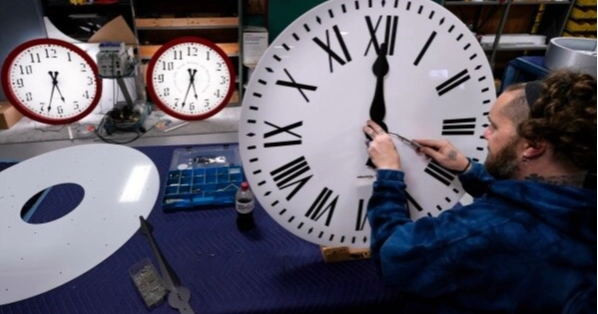
Most Americans will "spring forward" for daylight saving time this Sunday, losing an hour of sleep a change that can leave people tired, irritable, and even impact their health.
The shift in daylight darker mornings and longer evenings can disrupt the body’s internal clock, potentially causing sleep problems for days or weeks. Research shows a slight increase in heart attacks and strokes immediately after the March time change.
Daylight saving time begins at 2 a.m. Sunday, and clocks will “fall back” on Nov. 1. Hawaii, most of Arizona, Puerto Rico, American Samoa, Guam, and the U.S. Virgin Islands do not observe the spring switch. Globally, many countries also follow daylight saving time, though start and end dates vary.
Experts recommend getting morning sunlight to help reset the circadian rhythm, which regulates sleep and alertness. The extra evening light from daylight saving time delays melatonin release, making it harder to fall asleep. Sleep deprivation can affect heart health, metabolism, stress levels, and cognitive functions.
The change also temporarily increases risks on the road, with more fatal crashes reported in the days after the shift, particularly in the morning. Heart attacks and strokes also see a small rise, possibly due to disrupted circadian rhythms combined with existing risk factors.
To adjust, sleep specialists suggest morning sunlight, shifting daily routines like meals and exercise earlier, avoiding late naps and caffeine, and reducing evening exposure to screens.
Although there have been repeated calls to end the time change including former President Donald Trump’s promise health experts recommend sticking with standard time year-round, which better matches human biology and supports more consistent sleep.