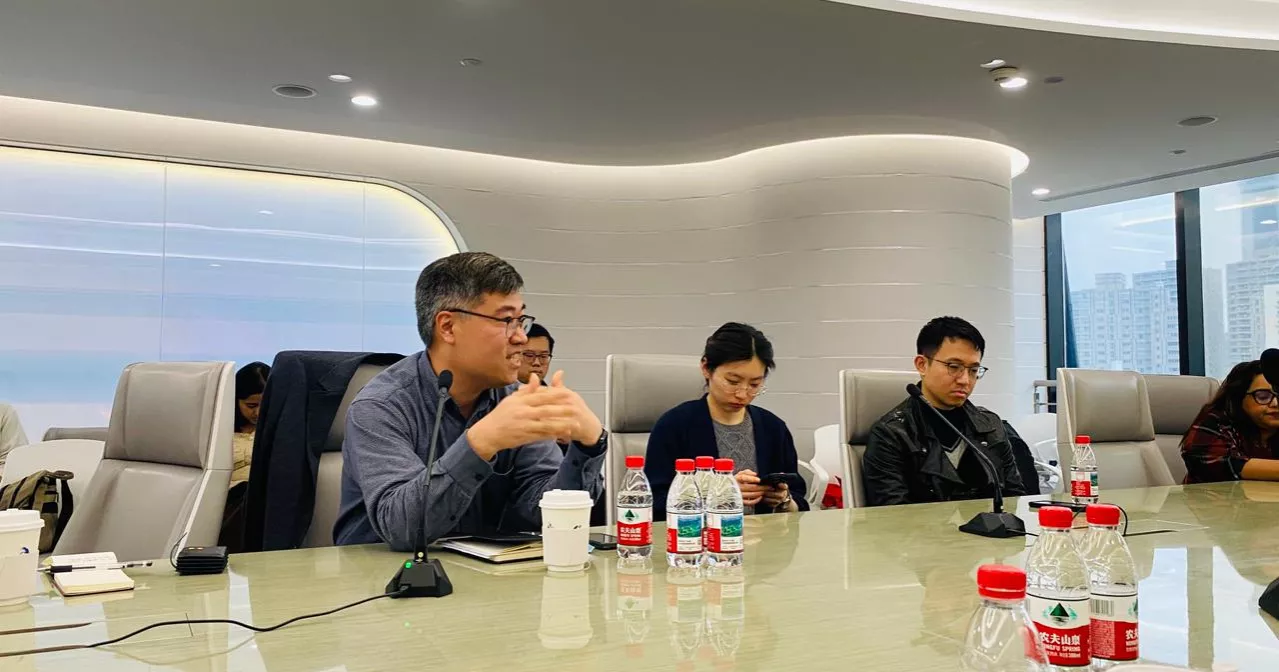
Wu Ting, an editorial board member and publisher of the Shanghai-based media outlet The Paper, has highlighted the delicate balance Chinese media maintain between adhering to state policy and addressing public demand, while emphasising the role of think tanks and diversified sourcing in shaping their coverage of international affairs, including issues related to Bangladesh.
During a discussion with a visiting Bangladeshi media delegation in Shanghai, Wu Ting on Monday explained that when the government makes decisions that experts or the public might find questionable, there are multiple channels for feedback beyond direct media criticism.
China’s economy grows 5% in Q1, shows resilience despite Iran war impact
He noted that think tanks play a significant role by holding discussions and producing papers that offer different perspectives to policymakers.
While acknowledging that media organizations in China must respect the law and Communist Party rules, Wu Ting emphasized that they also strive to meet the demands of a diverse audience, particularly intellectuals.
He described their editorial process as an effort to raise critical issues while remaining responsible and constructive. He added that they must navigate carefully to avoid the pitfalls of “spicy” misinformation that attracts traffic but lacks accuracy.
Addressing differences between the political systems of Bangladesh and China, Wu Ting explained that while they operate within a one-party system, there is sufficient room to explore diverse voices on global issues such as climate change and geopolitics.
He cited climate change coverage as an example, noting that reporters often focus on non-governmental actors to provide a broader perspective beyond official policy.
When questioned about how The Paper collects information on Bangladesh, Wu Ting highlighted a multi-layered approach to sourcing. He identified Xinhua News Agency as a primary and reliable source for context and background, but clarified that they do not rely on a single narrative.
To ensure accuracy, the organization also monitors international news agencies such as AP, Reuters, and The New York Times, while cross-referencing information with specialists.
This includes consulting experts from Chinese international studies institutions and engaging directly with academics and contacts within Bangladesh to understand the local reality, he added.
Wu Ting expressed a commitment to high standards and objectivity, stating that the goal is to provide multiple perspectives to readers, an approach he believes is why audiences choose their platform as a primary news source.