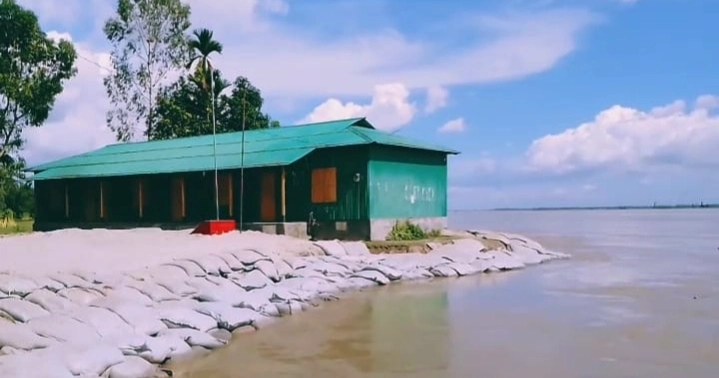
In remote char areas of Kurigram, hope has long ebbed away with the shifting currents of the Brahmaputra and its tributaries.
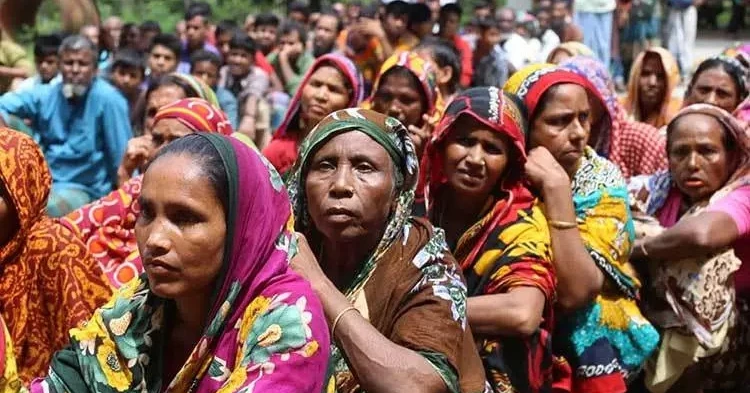
As the national elections draw near, residents of these flood-prone lands say they see little reason to vote as their faith in politics washed away by years of unmet promises and unchanging hardship.
For the people of these transient islands, politics has become an empty word. Votes come, but no change comes in our lives, said several villagers, echoing a sentiment shared across Kurigram’s char communities.
Home to some of Bangladesh’s most impoverished citizens, Kurigram remains at the bottom of the country’s development index.
Sand syndicates tighten grip on Bangladesh's northern region
Government data show that 70.8 percent of its population lives below the poverty line, while 53.2 percent are categorised as extremely poor. Around 60 percent of residents are landless and 57 percent suffer from various diseases.
Life in the char areas is defined not by political boundaries but by rivers -- the Brahmaputra, Dharla, Teesta, and Dudhkumar -- which constantly redraw the map of existence here.
Spanning roughly 800 square kilometres, the chars shelter about 550,000 people, many of whom lose their homes and livelihoods each year to relentless river erosion.
Aminur Rahman, a farmer from Kodalkati Union in Char Rajibpur upazila, spoke with quiet resignation, “During elections, everyone comes smiling, promising roads and work. But when the floods come and the houses are washed away, no one shows up. We don’t have time to think about voting — we spend our days worrying about food.”
Naogaon farmers face uncertainty as unseasonal rain hits early crops
For Rahimullah of Kalir Alga Char in Jatrapur Union, elections have become meaningless. “What will happen if we vote? The river breaks, houses are destroyed, there’s no work and no food. Voting doesn’t change any of that.”
Mozammel of Kheruar Char in Nayarhat Union, Chilmari upazila, shared a similar view. “We are people of the river — politics does not touch us. When elections come, people arrive to take pictures, but no one stays afterward.”