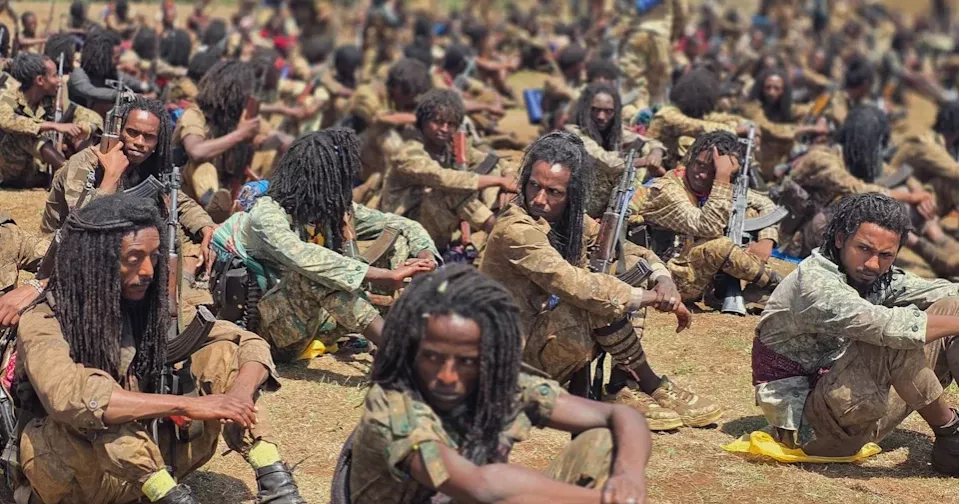
Sought by the Ethiopian government, Oromo rebel commander Jaal Marroo remains on the move to evade drone surveillance targeting him from the air.
Marroo heads the Oromo Liberation Army (OLA) from a network of remote forest hideouts in Oromia, Ethiopia’s largest region, home to an estimated 40 million people.
The government has labelled the former student a terrorist, accusing the OLA of carrying out ethnically driven attacks that have killed civilians. However, speaking in a rare interview from one of his concealed locations, Marroo denied allegations that his forces deliberately target civilians.
“Our war is not against the people,” he told The Associated Press. “It is against the brutal regime that has occupied and oppressed the nation for generations.”
The Oromo Liberation Army (OLA) has been fighting Ethiopia’s federal government since 2018, although the conflict has often been overshadowed by other crises, including the 2020–2022 war in the northern Tigray region. U.N. investigators have accused the group of grave abuses such as killings, rape and abductions.
Human rights organizations, while documenting violations by the OLA, say government forces have also committed serious abuses. Indiscriminate drone strikes, extrajudicial killings and enforced disappearances are described as key features of the counterinsurgency campaign.
“The research that we conducted puts both the OLA and the government forces in the middle of the conflict in terms of summary executions, in terms of torture, in terms of abductions, in terms of rape of women,” said Sarah Kimani, Amnesty International’s regional spokesperson. “Our report is able to point to both groups having been responsible for the atrocities that are being carried out in the Oromia region and that continue to be carried out against civilians in the region,” she told the AP.
Read More: Eritrea withdraws from regional bloc as UN expresses concern over tensions with Ethiopia
Civilians report widespread fear and displacement. Ayantu Bulcha said members of her family were killed after being accused of supporting the OLA, while others described harassment, extortion and ransom demands by armed groups.
“Movement from place to place has become increasingly restricted,” said Lensa Hordofa. “It’s almost impossible to travel.”
Access restrictions have limited reporting from Oromia, where aid delivery has been disrupted, schools closed and health facilities looted or destroyed. Analysts say insecurity persists despite recent government gains, leaving civilians trapped between multiple armed actors.
“Oromia is very insecure,” said International Crisis Group’s Magnus Taylor, citing criminal groups alongside the insurgency.