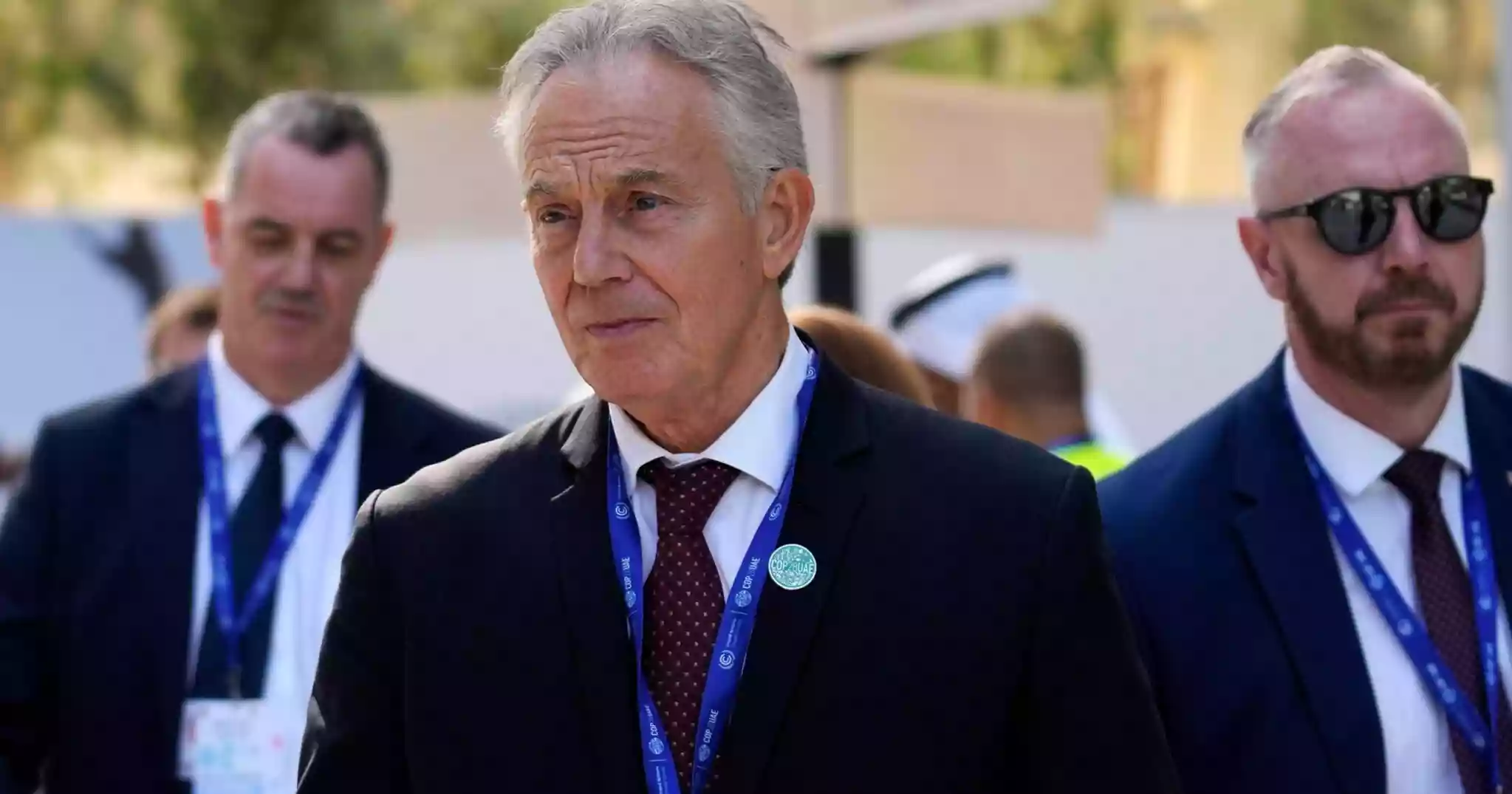
Former British Prime Minister Tony Blair has re-emerged as a central figure in Middle East peace efforts after a new U.S. plan to end the Israel-Hamas war assigned him a key role in overseeing Gaza’s post-war administration and reconstruction.
The plan, announced by U.S. President Donald Trump alongside Israeli Prime Minister Benjamin Netanyahu in Washington on Monday, would place Gaza under international control. It calls for a multinational security force and a “Board of Peace” led by Trump and Blair to supervise governance and rebuilding in the territory of more than 2 million people.
Hamas said Tuesday it would review the proposal internally and with other Palestinian factions before giving a response.
Mixed legacy
Blair’s involvement is contentious. Supporters highlight his long experience in the region, while critics point to his role in the U.S.-led 2003 invasion of Iraq. As prime minister from 1997 to 2007, Blair took Britain into the war despite public opposition. A 2016 inquiry concluded the decision was based on flawed intelligence, but stopped short of declaring the war illegal.
Hamas to review Trump’s Gaza peace plan as global support builds
Blair has defended his stance, saying he acted in good faith, believing Saddam Hussein held weapons of mass destruction. The conflict killed 179 British troops, 4,500 U.S. personnel and hundreds of thousands of Iraqis.
Mideast envoy years
After leaving office, Blair became Middle East envoy for the Quartet — the U.S., European Union, Russia and United Nations. Expectations were high, but progress was limited, and critics described his tenure as ineffective. He stepped down in 2015 with little movement toward Palestinian statehood.
Still, Blair has been engaged in recent high-level talks on Gaza’s future. He has praised Trump’s peace plan as “bold and intelligent” and said it offers “the best chance” to end the war, though he has not publicly confirmed his own role.
Reactions divided
U.K. Prime Minister Keir Starmer welcomed the U.S. plan but avoided comment on Blair’s involvement. Within Britain, Blair remains a polarizing figure — credited with winning three elections and helping secure the 1998 Good Friday Agreement in Northern Ireland, but discredited by Iraq.
Health Secretary Wes Streeting acknowledged doubts about Blair’s suitability but said his peacebuilding experience could still be valuable. Analyst Michael Stephens of the Royal United Services Institute said Blair’s return “has rings of 2003 about it,” but added that if it leads to a ceasefire, “it may not be the worst option.”
Mass protest in Berlin demands end to Israel-Hamas war
In Gaza, however, Blair is widely distrusted. “Blair is rejected by the people,” said Hussein Dhaher, displaced from Beit Hanoun. “This man has the blood of Iraqis on his hands.” Umm Mohammed, a Gaza City teacher, questioned why Palestinians were not chosen to lead. “He is hated in the region. He will not bring anything good for us,” she said.
Source: AP