Anti-Corruption Commission
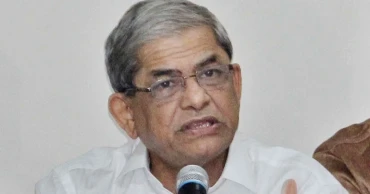
Investigation into Tk 3,825-cr EVM project underway: LGRD Minister
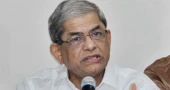
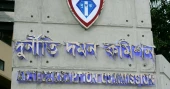
Local Government, Rural Development and Cooperatives Minister Mirza Fakhrul Islam Alamgir on Monday told Parliament that the Anti-Corruption Commission (ACC) continues its investigation into alleged anomalies in the Tk 3,825-crore Electronic Voting Machine (EVM) project.
“A project was implemented for the period of July 2018 to June 2024 at an estimated cost of Tk 3825.34 crore for procurement of 1.5 lakh EVMs under the Election Commission Secretariat,” he said.
The minister said this, replying to a scripted question from treasury bench lawmaker Md. Shamsur Rahman Simul Biswas (Pabna-5).
Earlier, the parliamentary session resumed at 3:00pm with Speaker Hafiz Uddin Ahmad, Bir Bikram, in the chair.
The LGRD Minister said The EVM project was completed in June, 2024 and the Project Completion Report (PCR) was sent to the Implementation Monitoring and Evaluation Division on May 13, 2025, but the evaluation report has not been received till date, he said
“Audit objections regarding the EVM project have been raised by the audit directorate, which have not been resolved yet. An investigation is underway under the Anti-Corruption Commission regarding the project,” he said.
Mirza Fakhrul Islam said the Election Commission at a meeting on July 10, 2025 decided that EVMs will not be used in any national and local level elections.
Currently, the EVMs are stored in various godowns, Bangladesh Machine Tools Factory (BMTF) and the basement of the Election Commission Secretariat, he said.
5 months ago
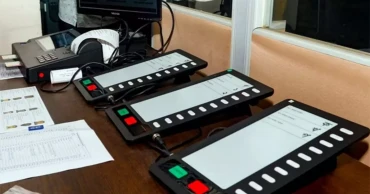
Graft-tainted EVMs turn burden; experts push for disposal after probe
Around 150,000 Electronic Voting Machines (EVMs), procured at a cost of Tk 3,825.34 crore to modernise Bangladesh’s election system during the Awami League regime, have now become a burden for the Election Commission, with experts calling for their disposal after most of the devices fell into disrepair.
Officials say the majority of these machines are no longer usable – with only a few thousand currently functional, raising serious concerns over the effectiveness of the project and the use of public funds.
The EVM project has also been hit by allegations of massive corruption and irregularities.
Experts have questioned the quality of the machines, excessive expenditure and their overall usability, with some claiming that the devices were procured in a way that could allow manipulation in elections.
According to findings, audit objections have been raised over the procurement of the machines and related equipment. Investigators believe that irregularities in the purchase process contributed to significant financial losses.
Bangladesh first introduced EVMs on a trial basis in 2010 under the leadership of then Chief Election Commissioner ATM Shamsul Huda. The machines were used for the first time in a ward during the Chattogram City Corporation election in 2011, using devices developed by the Bangladesh University of Engineering and Technology.
However, technical problems soon became evident. In the 2013 Rajshahi City Corporation election, a malfunction in one centre prevented the announcement of results, prompting the then commission to step back from using EVMs.
The initiative was revived after a new Election Commission took charge under KM Nurul Huda, with plans to expand the use of EVMs in elections. In 2017, the machines were again used on a trial basis in several polling rooms in a ward during the Rangpur City Corporation election.
From the beginning, the introduction of EVMs remained politically controversial. While the then ruling Awami League promoted the system as a modern and transparent method of voting, opposition parties, including the BNP, raised doubts about its neutrality.
Election experts, observers and civil society members also expressed concerns, but critics say these views were largely ignored.
From digital dream to dumping dilemma: EVM project falters
Ahead of the 2018 national election, the government approved a project worth Tk 3,825 crore to procure 150,000 EVMs. However, the project reportedly did not clearly mention where the machines would be stored or how they would be maintained.
Now, the Election Commission is facing a dilemma over what to do with the machines, many of which have already exceeded their usable life. Officials are considering disposal, but the process has been stalled due to ongoing investigations into alleged corruption in procurement.
The Anti-Corruption Commission is currently probing the allegations, while audit objections from the Comptroller and Auditor General’s office remain unresolved.
Officials said the machines cannot be disposed of at this stage, as doing so could create further complications during the investigation.
In addition, any disposal process would require clearance from the Department of Environment, adding another layer of complexity to the situation.
As a result, the costly EVM project now stands as a major challenge for the Election Commission, with unresolved questions over accountability, financial loss and the future of electronic voting in Bangladesh.
One of the key issues highlighted by auditors relates to the pricing of the machines.
ACC finds defects in EVMs, questions experts' endorsement
According to the Comptroller and Auditor General’s office, each EVM was purchased at around Tk 2.34 lakh, significantly higher than the estimated market price. The audit suggests that the total cost could have been limited to about Tk 343 crore, indicating excess expenditure of more than Tk 3,000 crore.
Experts have also questioned the procurement method, noting that the machines were acquired without an open tender process. Instead, a direct procurement approach was followed, limiting competition and raising concerns about transparency and accountability.
Besides, the machines were supplied with only a one-year warranty. After the warranty period expired, further public funds were required to maintain and repair the equipment. Despite an expected lifespan of at least 10 years, many machines reportedly developed faults within a short period.
The ACC has launched an investigation into the project, focusing on procurement procedures, cost irregularities and the quality of the machines. Officials said the probe would also examine possible irregularities in training and operational expenses.
Contacted, election expert Dr Abdul Alim said the EVMs used in Bangladesh were fundamentally flawed as they lacked an internationally recognised verification system.
In many countries, he noted, EVMs are equipped with a Voter Verifiable Paper Audit Trail (VVPAT), which produces a paper slip after a vote is cast showing the chosen symbol.
Riding the rough ride: ADB projects modest growth for Bangladesh
The slip is then deposited in a sealed box and can be counted alongside the machine results in case of any dispute or audit. “This dual system ensures transparency and allows verification if confusion arises,” Alim said.
He said Bangladesh’s EVMs did not have such a provision, making the results difficult to independently verify.
The election expert also alleged that the machines were unusually expensive despite being locally produced with technology developed by BUET and manufactured at the Bangladesh Machine Tools Factory.
“Our EVMs are among the costliest in the world, which raises questions about possible corruption in the project,” he said.
Referring to the procurement, Alim claimed the initiative was associated with Tarique Ahmed Siddique, former military adviser to ousted Prime Minister Sheikh Hasina, alleging that the project was mainly designed to misappropriate public money.
He said the machines are currently unused but the government is still spending public funds to store them.
The expert suggested that after completing investigations and preserving a small number of machines as samples for legal or court purposes, the rest should be destroyed to avoid further wastage of taxpayers’ money.
Election Reform Commission Chairman and noted election expert Dr Badiul Alam Majumdar also criticised the EVM project, saying there are allegations that the machines were procured at several times the price of similar machines used in India.
Cleared today, occupied tomorrow! Why can’t Dhaka keep its footpaths free?
He described the machines as low-quality and unsuitable for ensuring credible elections, noting that many of them have already become damaged and unusable.
Badiul Alam said there are allegations that the procurement was carried out with the intention of facilitating the misappropriation of public funds.
He emphasised that a neutral and independent investigation should be conducted into the purchase of the EVMs and that anyone found responsible should face exemplary punishment.
The election expert said the machines are unlikely to be used again in Bangladesh’s elections and have effectively become a financial burden, making it necessary for the authorities to take a clear and lawful decision regarding their future.
6 months ago
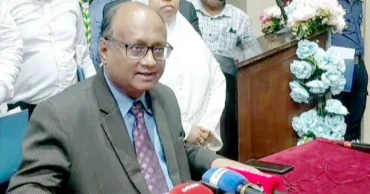
ACC Chairman, two commissioners resign
Anti-Corruption Commission (ACC) Chairman Mohammad Abdul Momen and two commissioners have resigned.
The ACC commissioners are Miah Muhammad Ali Akbar Azizi and Brigadier General (retd) Hafiz Ahsan Farid.
Commissioner Miah Mohammad Ali Akbar Azizi told reporters on Tuesday afternoon that he along with the Chairman and the other commissioners have submitted resignation letters.
When asked about his resignation, Abdul Momen declined to comment, saying, “Not here, go to the office.”
Earlier, the Chairman and the commissioners arrived at the Secretariat.
They were seen entering the Cabinet Division’s building No. 1 at 2:36 pm and submitted their resignation letters.
The President appointed the ACC Chairman and the two commissioners on Dec 10, 2024.
Their appointments were made in accordance with the Anti-Corruption Commission Act, 2004.
Under the law, the ACC is formed with three commissioners one of whom serves as chairman. The term of a commissioner is five years.
7 months ago
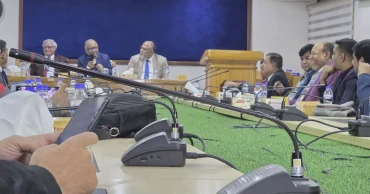
ACC to rigorously scrutinise affidavits of all election candidates: Dr Momen
The Anti-Corruption Commission (ACC) has begun closely examining the election affidavits of all candidates participating in the 13th national parliamentary election, ACC Chairman Dr Mohammad Abdul Momen said on Monday (January 05, 2026).
“The asset declarations submitted by the candidates would be thoroughly scrutinised to identify any inconsistencies or suspicious information,” he said while addressing a views-exchange meeting with the newly elected committee of Reporters Against Corruption (RAC) at the ACC headquarters in the capital as the chief guest.
Dr Momen said the commission would independently scrutinise candidates’ affidavits, request the Election Commission to flag any suspicious assets, and, if necessary, prioritise this task over other activities.
He also urged journalists to play an active role by analysing and verifying affidavit information and bringing credible findings to public attention.
No election campaign before symbol allocation: EC to parities
Responding to a question about the newly-enacted law, Dr Momen reiterated the ACC’s zero-tolerance stance against corruption.
“Our position is very clear—there will be no compromise with corruption. If any provision in the new law suggests compromise, we will maintain our previous stance and, if necessary, discuss the matter with the government,” he said.
Speaking at the meeting, ACC Commissioner (Investigation) Mia Muhammad Ali Akbar Azizi said the commission would assist judges by presenting strong and credible evidence to prove corruption cases.
Under the law, he said, the ACC has the authority to take into cognisance verified information published in newspapers and urged journalists to ensure their reports are fact-based and properly verified rather than based on hearsay.
ACC Commissioner (Investigation) Brigadier General (retd) Hafiz Ahsan Farid said the ACC and RAC are closely intertwined in the fight against corruption.
“If RAC closes its eyes for a day, the ACC will become blind for a week,” he said, adding that RAC’s credibility is not only its own honour but also the honour of the ACC.
Election disruption attempts to be met with iron hand: Home Adviser
The meeting began with a welcome address by ACC Secretary Mohammad Khaled Rahim.
RAC President Shafi Uddin Ahmed and General Secretary Tabarul Haque spoke on behalf of the organisation, pledging to work as partners of the ACC in anti-corruption efforts.
Former RAC President Alauddin Arif also addressed the meeting.
The event, moderated by ACC Director General (Prevention) Md Akhtar Hossain, was attended, among others, by senior ACC officials, members of the newly elected RAC executive committee and other RAC members.
9 months ago

TIB expresses frustration as ACC Ordinance approved without key reform provision
Transparency International Bangladesh (TIB) has expressed deep disappointment and indignation over the Advisory Council’s final approval of the Anti-Corruption Commission (ACC) Ordinance ‘ignoring strategically important recommendations.’
The recommendations were essential for ensuring transparency, accountability and institutional independence of the anti-graft body, it said in a statement on Friday (November 28).
The exclusion of “Selection and Review Committee” from the final ordinance despite being included in the July Charter is not only disappointing, but also indicates that like almost all other cases of reform proposals the state reform agenda has become hostage to the conspiracies of anti-reform circles within the government, it added.
TIB also questions whether by denying the provision to make ACC accountable as much as independent, the Chief Adviser, as the head of the consensus commission and the groundbreaking decision-maker to form the 11 reform commissions, is trying to send a message to all including political parties, that ‘state reforms are just a rhetoric for the Government.’
Read more: ACC’s year of mixed outcomes: 249 cases closed, yet acquittals dominate
Noting that the ACC Reform Commission had recommended the formation of a “Selection and Review Committee” considering the experience of the past two decades, the opinions of all stakeholders, international best practices, and the political and bureaucratic context of Bangladesh in order to ensure that the ACC does not continue to function as a tool of protection of those in power and harass political or other opponents, TIB Executive Director Dr. Iftekharuzzaman said.
“This proposal was made to overcome the dire situation of ACC as the institution has been suffering from a lack of public trust since its inception, as a puppet of vested quarters, it has become a tool of protection for those in power and harassment of opponents,” he said.
It is regrettable that the government has failed to understand the strategic value of this recommendation to transform the ACC into a truly accountable, independent, and impartial institution through half-yearly reviews, public hearings, and recommendations by the proposed committee, he said.
ACC’s year of mixed outcomes: 249 cases closed, yet acquittals dominate
“For a government responsible for state reforms, this is a self-contradictory and anti-reform precedent,” he added.
Dr. Zaman further said the matter is even more disappointing because according to reliable sources, at least seven Advisors have opposed this proposal at the Cabinet meeting.
“Yet they know that all the political parties that signed the July Charter have fully agreed on this provision. Before creating such a bad precedent of violating the July Charter, why the government does not realise that through this the Government is by itself actually encouraging political parties to violate the July Charter? Why then unprecedented bloodletting sacrifices were made? What kind of state reform is it that blocks the way to effectively curb corruption?” he questioned.
The draft of the ordinance that TIB had the opportunity to review seemed to be in some ways of a higher standard than the existing law for which the organization commends the government, it said.
TIB calls for full disclosure of agreements with foreign cos on Laldia, Pangaon terminals
However, the TIB Executive Director has expressed deep disappointment and regret as according to reliable sources, in addition to the mentioned issue several other important strategic recommendations on which political consensus was achieved have been omitted.
“This can be nothing but a corruption-enabling and anti-reform stance of vested interests and influential quarters within the government,” he added.
10 months ago
ACC’s year of mixed outcomes: 249 cases closed, yet acquittals dominate
Over the past 11 months, Bangladesh’s anti-graft landscape has unfolded with a mix of progress, as the Anti-Corruption Commission (ACC) has wrapped up 249 cases since December 2024, but with more than half ending up in acquittal.
From December 2024 to October 2025, 512 cases were filed against corrupt people both at home and abroad, including money launderers, state fund embezzlers, loan defaulters and various government, private and political figures.
During the same period, 249 pending cases were resolved, resulting in convictions in 126 cases and acquittal in 123.
The ACC also reported recovering fines amounting to Tk 5,058 crore and confiscating assets worth Tk 321 crore.
Read more: Recovered gold not only Hasina’s, includes family members too, says ACC
According to 11 months of case and charge sheet statistics, the ACC received 11,630 complaints, but only 960 were accepted for inquiry.
Meanwhile, 798 enforcement operations were conducted, of which 188 are under investigation, 28 have resulted in cases, and four people were caught red-handed through traps. Besides, 23 public hearings were held.
During this period, the ACC says, a total of 512 cases were filed implicating 2,191 accused individuals. Charge sheets were submitted in 315 cases, naming 1,078 accused. A total of 73 cases were exempted under FRT (final report).
Following the fall of the Awami League government amid mass protests on August 5 last year, the ACC began investigating corruption by top politicians, businessmen and institutions. The commission found evidence of money laundering and corruption, prompting a series of cases and subsequent court orders to freeze and confiscate assets — a process that continues.
In the aftermath of the mass uprising, the ACC claimed it had achieved record success in its crackdown on corrupt individuals, confiscating and freezing unprecedented amounts of movable and immovable assets.
Between December 2024 and October 2025, the ACC seized and froze assets worth more than Tk 26,013 crore belonging to over 300 individuals and entities involved in corruption, embezzlement and money laundering.
By comparison, the total value of confiscated and frozen assets in all of 2024 was only Tk 361 crore. In the five years from 2020 to 2024, the combined figure stood at roughly Tk 3,450 crore, highlighting the dramatic surge in asset seizures over the past 11 months.
According to ACC’s asset management division and court sources, Tk 3,457 crore 83 lakh worth of assets were confiscated within the country during this period.
Besides, domestic bank and financial accounts containing Tk 22,226 crore 79 lakh were frozen, along with Tk 328 crore 38 lakh frozen abroad. In total, around Tk 26,013 crore 2 lakh 93 thousand in assets were confiscated or frozen both domestically and internationally.
Commenting on the overall development, ACC Commissioner Miah Muhammad Ali Akbar Azizi said, “I want to emphasise that the ACC is empowered with substantial legal authority. To expedite judicial proceedings, more special courts are required.”
Read more: ACC approves chargesheet against former IGP Benazir Ahmed
ACC has not yet become the fully empowered institution it needs to be, said its Chairman Mohammad Abdul Momen.
Responding to a question on whether the ACC is a ‘toothless tiger’, he said, “The ACC has both teeth and claws — though they may need further sharpening. The teeth are not as sharp as they need to be. The claws have not fully grown yet. We are somewhere in the middle stage.”
When asked whether the ACC faces political or external pressure, the chairman issued a strong warning, saying that anyone attempting to hinder corruption inquiries or investigations in the future will have their names publicly disclosed.
He emphasised that combating corruption is not solely the responsibility of the ACC.
Each government, autonomous, and private institution must strengthen their own audit mechanisms. “If institutions took action against corrupt officials based on their internal audit reports, many cases would not even need to come to the ACC,” he said.
Sharing data on recent ACC activities, Momen noted that an analysis of the 11 months from December 2024 to October 2025 shows that politicians account for the lowest number of ACC cases. During this period, 151 cases were filed against politicians, while only 28 cases resulted in charge sheets.
The chairman’s comments underline both the structural limitations of the ACC and the growing expectation for greater transparency, especially with the new warning to expose those who attempt to exert undue influence.
Read more: ACC to reveal names if pressure exerted to obstruct probe: Chairman
10 months ago
Harassment, corruption shadow Begum Rokeya University
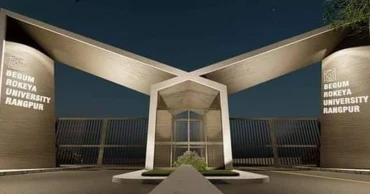
Begum Rokeya University (BRUR) in Rangpur, long hailed as a leading higher education institution in northern Bangladesh, has recently come under intense scrutiny over allegations of sexual harassment, nepotism and corruption.
Sources at the university report that since its establishment, 33 students, faculty members and staff have fallen victim to sexual misconduct, raising serious concerns among educationists and civic society leaders.
Fahkrul Anam Benju, an educationist in Rangpur and president of the Sujon Forum, voiced deep apprehension over the situation, saying, “When students in a leading university feel unsafe, words fail us. We are both angry and disappointed.”
The issue came to public attention following allegations against Dr Shakibul Islam, an associate professor in the Disaster Science and Management Department, who has been relieved of all departmental duties.
A notice issued by the department head, Professor Md Imdadul Haque, cited urgent action in response to complaints from students of the 2020–21 academic year.
Dr Islam has been barred from supervising or examining fourth-year, second-semester courses, including DSM4207 (Research Project).
Read more: BRUR Prof Rashidul Islam suspended over harassment allegation
Several victims have claimed that their pursuit of higher education has placed their personal safety at risk.
University Vice-Chancellor Prof Dr Showkat Ali described the situation as both ‘embarrassing’ and ‘shameful’.
Meanwhile, separate allegations of corruption and nepotism have resurfaced involving five former university officials, including a previous Vice-Chancellor. Two of the accused were suspended at one point, while three others remain in their positions, with no visible administrative action taken.
The Anti-Corruption Commission (ACC) had filed a case 12 years ago against former VC Prof Dr Muhammad Abdul Jalil Miah over alleged financial irregularities, recruitment malpractice, and nepotism. The university’s anti-corruption mancha first reported the VC’s alleged misconduct to the ACC on 5 March 2013, triggering an investigation.
Abdul Karim, then Deputy Director of ACC Rangpur, confirmed that a case was filed on 12 December 2013 against the former VC and two others at Kotwali Police Station. Another accused was then-Registrar Md Shahjahan Ali Mondal.
Over the course of a nearly three-year investigation, ACC Deputy Assistant Director Md Akbar Ali found further involvement of university officials, including Planning and Development Deputy Director ATGM Golam Firoz, Assistant Registrar Md Morshed Ul Alam Roni and Finance and Accounts Assistant Director Khandakar Ashraful Alam.
The investigation revealed irregularities in appointments: Golam Firoz was promoted from an ad hoc Grade-9 position to Grade-5 Deputy Director without the required experience. Md Morshed was appointed Assistant Registrar within two years of completing his postgraduate degree, falling short of the mandatory five-year experience.
Khandakar Ashraful was initially hired on an ad hoc basis and later regularised as Assistant Director (Budget) without meeting standard protocols.
Read more: Panel formed to settle BRUR teacher Mahmudul’s seniority, promotion
In July 2017, former VC Jalil and Registrar Shahjahan surrendered to the court and were sent to jail, while arrest warrants were issued for the other three officials. The university syndicate suspended Shahjahan, Firoz, Md Morshed, and Khandakar Ashraful.
However, in October 2017, the court granted temporary relief to the three officials, allowing for administrative discretion by the university in case of questionable appointments. Later, the orders were mysteriously revoked, and their positions were regularised.
The ACC appealed, and the High Court subsequently nullified the lower court’s relief, ordering the formation of charges. The case remains pending, with hearings delayed due to adjournments requested by the accused.
VC Showkat Ali said, “The administration had not informed me about these issues. After learning of them through investigations, I inquired further. No department had brought this to my notice, so I could not take action. The corruption case involving the former VC and others is extremely important.”
He added, “I am consulting with their lawyers and will act according to legal procedures. If departmental action is possible, it will be taken. I have never compromised on integrity, and any measures will be transparent.”
The ongoing controversies at BRUR, ranging from sexual harassment to allegations of nepotism and corruption, underscore the urgent need for accountability and systemic reform in one of northern Bangladesh’s flagship universities.
Read more: Rokeya University teacher Mahamud gets bail; OC transferred
11 months ago
Businessman Mithu held in health sector graft:ACC
Motazzarul Islam Mithu, known as a central figure in health sector corruption during the Awami League government, has been taken to court following his arrest.
Detectives from the Dhaka Metropolitan Police (DB) detained him late Wednesday night from the capital’s Gulshan area.
After his arrest, Mithu was brought to the Anti-Corruption Commission (ACC) for interrogation on Thursday before being produced before court.
Confirming the matter, ACC Director General Md Akter Hossain said, “Mithu, arrested on charges of amassing wealth beyond known sources of income, has been taken to court. The investigating officer may seek remand if necessary.”
According to the ACC investigation report, Mithu, owner of two firms — Lexicon Merchandise and Technocrat — illegally accumulated vast sums of wealth.
His immovable assets (purchase of farmland, land leases, plots, flats, and house construction) stood at Tk 18.40 crore
while movable assets (shares and investments in different companies, cars, bank deposits, gold ornaments, furniture, and electronic goods) is found Tk 57.44 crore.
City Corporation shut for 40 days, yet millions spent on fuel: ACC Raid
1 year ago

ACC files case against ex-minister Asaduzzaman Noor over illegal wealth, suspicious transactions
The Anti-Corruption Commission (ACC) has filed a case against former cultural affairs minister Asaduzzaman Noor on charges of amassing illegal wealth worth over Tk 5.37 crore and being involved in suspicious transactions of around Tk 159 crore.
ACC Deputy Director Md Akhtarul Islam said the case was filed against the former minister on Tuesday.
According to the case statement, Noor accumulated assets worth around Tk 5.38 crore which are inconsistent with his known sources of income.
CID freezes over Tk 17.39 crore in accounts of former MP Bahar, his daughter
Besides, a total of Tk 85.72 crore was deposited and Tk 73.05 crore withdrawn from 19 bank accounts opened under his name—leading to suspicious transactions amounting to Tk 158.78 crore.
Following the fall of the Awami League government, Noor—who served as a Member of Parliament for five consecutive terms—was arrested on September 15 last year.
1 year ago
ACC files graft cases against Shamim Osman and family; over Tk 500 Cr suspicious transactions found
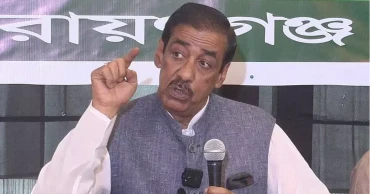
The Anti-Corruption Commission (ACC) on Tuesday filed two separate cases against former Narayanganj-4 MP and ruling Awami League leader Shamim Osman and his wife, Salma Osman, over allegations of amassing illegal wealth and engaging in suspicious financial transactions worth over Tk 500 crore.
According to the case documents, Shamim Osman is accused of abusing his power while serving as a public representative to illegally acquire Tk 6.67 crore in unexplained assets. In addition, the ACC flagged suspicious transactions totaling Tk 439.82 crore across nine bank accounts in his name.
His wife, Salma Osman, is similarly accused of amassing Tk 3.09 crore in assets beyond known sources of income. Authorities also discovered suspicious bank transactions amounting to Tk 24.66 crore under her name.
The cases have been filed under Section 27(1) of the Anti-Corruption Commission Act 2004, Sections 4(2) and 4(3) of the Money Laundering Prevention Act 2012, and Section 5(2) of the Prevention of Corruption Act 1947.
After the horse has bolted: Travel ban issued against Shamim Osman, his family members
Meanwhile, their son Imtinan Osman and daughter Labiba Joha have also come under the ACC’s radar. Based on preliminary findings of illicit asset accumulation, the commission has issued notices to them under Section 26(1) of the ACC Act 2004, ordering them to submit detailed statements of their wealth.
ACC officials have stated that a thorough investigation is underway, and appropriate legal action will follow based on evidence regarding the sources and flow of these funds.
1 year ago