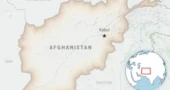
earthquake in Afghanistan
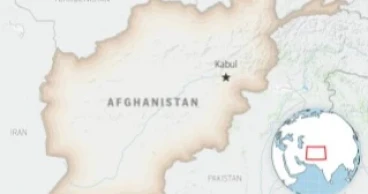
Powerful 6.3-magnitude quake strikes northern Afghanistan, at least 20 dead
A powerful, 6.3 magnitude earthquake shook northern Afghanistan before dawn Monday, killing at least 20 people and injuring more than 300 others, a health official said.
The U.S. Geological Survey said the quake's epicenter was located 22 kilometers (14 miles) west-southwest of the town of Khulm, and that it struck at 12:59 a.m. at a depth of 28 kilometers (17 miles).
Sharafat Zaman, a spokesperson for the Ministry of Public Health, said the quake killed at least 20 people and injured 320 others.
Yousaf Hammad, a spokesman for Afghanistan’s disaster management agency, said most of the injured suffered minor wounds and were discharged after receiving initial treatment.
In the Afghan capital of Kabul, the Ministry of Defense announced that rescue and emergency aid teams have reached the areas affected by last night’s earthquake in the provinces of Balkh and Samangan, which suffered the most damage, and have begun rescue operations, including transporting the injured and assisting affected families.
Afghanistan earthquake kills over 2,200, Taliban reports
The Taliban government’s chief spokesman, Zabihullah Mujahid, in a post on X platform said the earthquake hit Afghanistan's Balkh, Samangan and Baghlan provinces, causing casualties and financial loss. He expressed his sorrow and grief over the losses and said relevant governmental organizations were busy trying to get needed help to the people affected by the quake.
According to the Afghan officials, the earthquake was also felt in Mazar-e-Sharif, the capital of northern Balkh province.
In Mazar-e-Sharif, footage circulating on social media showed damage to the historic Blue Mosque. Several bricks had fallen from the walls but the mosque remained intact. The centuries-old site is one of Afghanistan’s most revered religious landmarks and a major gathering place during Islamic and cultural festivals.
The quake was felt in Kabul and several other provinces in Afghanistan. The Defense Ministry said in a statement that a rockslide briefly blocked a main mountain highway linking Kabul with Mazar-e-Sharif, but the road was later reopened. It said some people who were injured and trapped along the highway were transported to the hospital.
The United Nations in Afghanistan said on X that Monday's earthquake came just weeks after a deadly earthquake struck eastern Afghanistan. The U.N. said its teams are on the ground assessing needs and delivering urgent aid.
“We stand with the affected communities and will provide the necessary support,” the post said.
Afghanistan has been rattled by a series of earthquakes in recent years and the impoverished country often faces difficulty in responding to such natural disasters, especially in remote regions. Buildings tend to be low-rise constructions, mostly of concrete and brick, with homes in rural and outlying areas made from mud bricks and wood, many poorly built.
A magnitude 6.0 earthquake hit eastern Afghanistan on Aug. 31 near the border with Pakistan, killing more than 2,200 people. On Oct. 7, 2023, a magnitude 6.3 quake followed by strong aftershocks left at least 4,000 people dead, according to the Taliban government.
Read more: Earthquake Safety: Do’s and Don’ts during an Earthquake
Source: AP
11 months ago
.jpg)
Death toll from Afghanistan’s quake rises to 1,150 people
The death toll from a devastating earthquake in Afghanistan continued to climb days after it turned brick and stone homes into rubble, killing 1,150 people and wounding scores more, according to the latest figures carried in state media on Friday.
The country of 38 million people was already in the midst of a spiraling economic crisis that had plunged millions deep into poverty with over a million children at risk of severe malnutrition.
The magnitude 6 quake has left thousands without shelter. State media reported that close to 3,000 homes were destroyed or badly damaged in Wednesday’s earthquake.
Aid organizations like the local Red Crescent and World Food Program have stepped in to assist the most vulnerable families with food and other emergency needs like tents and sleeping mats in Paktika province, the epicenter of the earthquake, and neighboring Khost province.
Still, residents appeared to be largely on their own to deal with the aftermath as their new Taliban-led government and the international aid community struggle to bring in help. Villagers have been burying their dead and digging through the rubble by hand in search of survivors.
The Taliban director of the state-run Bakhtar News Agency said Friday the death toll had risen to 1,150 people from previous reports of 1,000 killed. Abdul Wahid Rayan said at least 1,600 people were injured.
Also Read: India sends team to help with deadly Afghanistan earthquake
The United Nations Office for the Coordination of Humanitarian Affairs has put the death toll at 770 people.
It’s not clear how death toll counts are being reached, given the difficulties of accessing and communicating with the impacted villages. Either grim toll would make the quake Afghanistan’s deadliest in two decades.
In the district of Gayan, at least 1,000 homes were damaged by the earthquake. Another 800 homes in the Spera district of Khost province were also damaged. While modern buildings withstand magnitude 6 earthquakes elsewhere, Afghanistan’s mud-brick homes and landslide-prone mountains make such quakes more dangerous.
In villages across Gayan district, toured by Associated Press journalists for hours Thursday, families who had spent the previous rainy night out in the open lifted pieces of timber of collapsed roofs and pulled away stones by hand, looking for missing loved ones. Taliban fighters circulated in vehicles in the area, but only a few were seen helping dig through the rubble.
There was little sign of heavy equipment — only one bulldozer was spotted being transported. Ambulances circulated, but little other help to the living was evident.
Many international aid agencies withdrew from Afghanistan when the Taliban seized power last August. Those that remain are scrambling to get medical supplies, food and tents to the remote quake-struck area, using shoddy mountain roads made worse by damage and rains. U.N. agencies are also facing a $3 billion funding shortfall for Afghanistan this year.
Germany, Norway and several other countries announced they were sending aid for the quake, but underscored that they would work only through U.N. agencies, not with the Taliban, which no government has officially recognized as of yet.
Trucks of food and other necessities arrived from Pakistan, and planes full of humanitarian aid landed from Iran and Qatar. India humanitarian relief and a technical team to the capital, Kabul, to coordinate the delivery of humanitarian assistance. India says its aid will be handed over to a U.N. agency on the ground and the Afghan Red Crescent Society.
In Paktika province, the quake shook a region of deep poverty, where residents scrape out in a living in the few fertile areas among the rough mountains. Roads are so difficult that some villages in Gayan District took a full day to reach from Kabul, though it is only 175 kilometers (110 miles away.)
One 6-year-old boy in Gayan wept as he said his parents, two sisters and a brother were all dead. He had fled the ruins of his own home and took refuge with the neighbors.
4 years ago