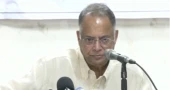
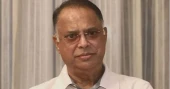
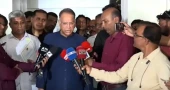
energy minister
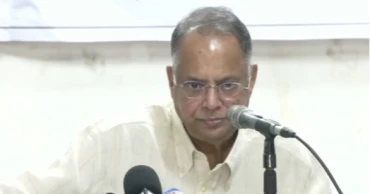
Dhaka’s ground cabling, smart meter projects riddled with corruption: Energy Minister
Power, Energy and Mineral Resources Minister Iqbal Hassan Mahmood on Monday said massive corruption took place in Dhaka's ground cabling project and the Rural Electrification Board's (REB) smart meter project undertaken during the Awami League government's tenure.
“The previous government took a loan of Tk 20,000 crore from China for the ground cabling project. But the loan money has run out while the project remains incomplete. This project was undertaken solely for the purpose of corruption,” the minister said while addressing a citizens' dialogue on the ‘National Renewable Energy Development Strategy Paper (2026-2030)’ organised by the Consumers Association of Bangladesh (CAB) at Dhaka Reporters Unity as the chief guest.
The minister said 60-65 sub-stations were built under the ground cabling project, many of them in areas with no human settlement, meaning electricity demand will take a long time to reach those locations.
He said the project's policy stipulated that no new work would be undertaken until 2041, even though a sub-station's lifespan is only 20 years.
With project funds exhausted but the work unfinished, he said, the current government now has to complete it, otherwise the entire Tk 20,000 crore would go to waste.
Regarding the REB's smart meter project, the minister said five lakh smart meters were supposed to be imported, of which the previous government imported only two and a half lakh, but these could not be synchronised, effectively wasting the money.
Another two and a half lakh meters have already been shipped, he said, adding that pulling out of the project is not possible even through litigation, while the benefits are also failing to reach ordinary people.
The minister said the previous government left behind Tk 56,000 crore in arrears in the power sector.
Eighty percent of electricity is currently generated by private companies, purchased at high prices, and that clearing these arrears while also meeting the shortfall has become a challenge for the current government, he added.
“Because of all the financial mismanagement left behind by the previous government, we now have to work relentlessly. Private power plants also need to import fuel, and if we don't clear the dues, they cannot buy fuel, and without fuel, the plants remain shut. The previous government undertook many unnecessary projects,” the minister said.
He added that the prime minister has taken up several social welfare initiatives that require substantial funds, and the government has been exploring ways to reduce dependence on loans while coordinating these priorities.
“We are in a very difficult situation. That is why we thought we must move toward renewable energy, so that the pressure of energy imports can be reduced,” he said.
Referring to his earlier stint at the ministry two decades ago, Iqbal said he is now in his “second innings” and recently decided, after a meeting, that the ministry should have a technical team.
He said a team has been formed with a former chairman of the Power Development Board (PDB) so that it can inspect power plants.
On rising electricity bills, the minister said middle-class and lower middle-class families are now installing air conditioners at home which can push up bills .
3 months ago
Power supply improves as two units resume operation: Minister
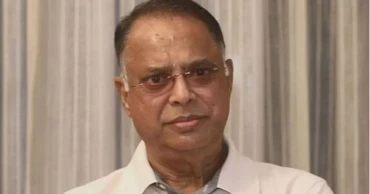
Energy Minister Iqbal Hassan Mahmood on Monday said two power generation units resumed operation reducing the country's power deficit and easing load-shedding.
Speaking in Parliament, the minister said two power generation units had gone offline, forcing the government to impose load-shedding on Sunday.
"Two of our power generation units had shut down, which is why we had to resort to load-shedding yesterday," he said.
The minister said the situation has improved significantly.
"By the grace of Allah, I am pleased to inform the House and the people that our current power generation stands at 14,500 megawatts, while demand is now 14,839 megawatts," he said.
He said the current shortfall has been reduced to 339MW, resulting in limited load-shedding in some areas.
"The load-shedding will now be 339 megawatts. We are trying to reduce even this 300MW-plus deficit. There will still be load-shedding in some places but we are making every effort to eliminate it," the minister said.
Referring to Sunday's power situation, Mahmood said the supply was under considerable pressure but has since improved.
"Yesterday's situation was difficult, but by the grace of Allah, we have managed to overcome it today," he told Parliament.
3 months ago
Energy minister meets PM, briefs him on fuel situation
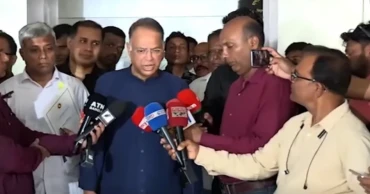
Power, Energy and Mineral Resources Minister Iqbal Hassan Mahmood and State Minister Aninda Islam Amit met Prime Minister Tarique Rahman at the Secretariat on Sunday and briefed him on the country’s fuel situation.
“They met the Prime Minister at his office at the Secretariat and informed him of the latest fuel situation,” said Prime Minister’s Additional Press Secretary Atikur Rahman Rumon.
After the meeting, the Energy Minister told waiting journalists that the government had no alternative but to hike the prices as fuel imports require foreign currency, and the adjustment was necessary to keep the situation at a tolerable level.
He said the country is going through a “wartime situation” amid global volatility in fuel prices. “Countries around the world have adjusted fuel prices. Even the United States has increased prices,” he said.
The minister, however, said Bangladesh has fixed prices at a level that is still below the actual import cost.
He said war always brings adverse impacts. “Not only Bangladesh, but the entire world has been affected, and we are also feeling that impact,” he said.
Replying to a question, Iqbal Hassan said the government will need to provide subsidies even after raising fuel prices.
Earlier, a meeting on water resources management was held at the Secretariat with the Prime Minister in the chair.
Tarique Rahman arrived at his office at the Secretariat at 12:05pm. The first programme of the day was a meeting of the water management committee.
Water Resources Minister Shahid Uddin Chowdhury Annie, State Minister Farhad Hossain Azad, water expert Ainun Nishat, and senior officials of the ministry attended the meeting.
Later, Annie said discussions were held on preparations to face the monsoon, including possible floods and waterlogging.
“We informed the Prime Minister of our plans and the measures needed in advance,” he said, adding that canal excavation programmes are ongoing, and the Prime Minister is expected to inaugurate such programmes in Jashore on April 27 and in Sylhet on May 2.
5 months ago
No real fuel shortage in Bangladesh, crisis artificially created: Energy Minister
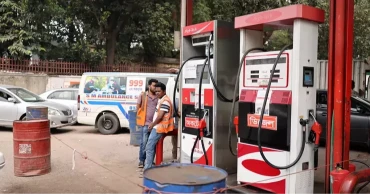
Power, Energy and Mineral Resources Minister Iqbal Hassan Mahmood on Sunday said unscrupulous traders are hoarding and black marketing fuel in different parts of the country, creating an artificial fuel crisis.
“An artificial crisis is being created due to panic buying and hoarding,” he said in response to a tabled question from opposition MP elected from Netrakona-5 Masum Mustafa in Parliament.
The Minister said that there is no fuel crisis in the country and the statement made by State Minister for Foreign Affairs Shama Obaed Islam in Parliament is correct.
The Minister said in order to maintain normal fuel supply, district, upazila administrations and Bangladesh Petroleum Corporation (BPC) tag officers have been appointed across the country.
Every day, he said that hoarders are being brought under law by magistrates and jail terms or fines are being imposed. “The law enforcement agencies are working to prevent hoarding and black marketing.”
Besides, awareness activities have been taken by local administrations, he added.
So far, the Minister said, 3,510 cases have been filed through mobile courts drives across the country, a fine of Tk 1.56 crore has been collected and 5.42 lakh liters of fuel have been seized.
He said that in order to bring greater transparency in fuel marketing at the consumer level, the government has introduced fuel cards on an experimental basis at some filling stations in Dhaka city.
“If the trials are successful, it will be implemented nationwide. The fuel card will store the information about the fuel oil collection of the customers.”
In response to a question from government party MP elected from Pabna-5 Md. Shamsur Rahman Simul Biswas, Iqbal Hassan said the country's LPG market is about 98.67 percent import-dependent.
“The LPG import situation is being monitored regularly to keep the supply of LPG normal in the country amid the ongoing war situation in the Middle East,” he added.
To this end, he said, the LPG import situation in the country is being regularly reviewed from the National Board of Revenue's Asycuda World System and if any abnormality is found, importers are being contacted.
Moreover, the Bangladesh Energy Regulatory Commission is being informed for taking action.
5 months ago
Bangladesh’s remaining gas reserve 7.63 TCF, enough for 12 years: Energy Minister
Minister for Power, Energy and Mineral Resources Iqbal Hassan Mahmood on Sunday told Parliament that Bangladesh currently has an estimated 7.63 trillion cubic feet (TCF) of natural gas remaining in its reserves which could meet the country’s demand for around 12 years at the present consumption rate.
Of the total reserve, 22.11 TCF of gas has already been extracted as of December 31, 2025, while 7.63 TCF remained in reserve as of January 1, 2026, he said in reply to a starred tabled question from ruling party lawmaker elected from Bogura-4 Md. Mosharraf Hossain in the House.
The Minister said the country currently has an estimated extractable natural gas reserve of 29.74 trillion cubic feet (TCF).
He said that if no new gas fields are discovered and the current daily supply rate approximately 1,700 million cubic feet is maintained, the remaining gas reserve will be sufficient to meet the country’s demand for around 12 years.
Listing various steps, the Minister said the government has undertaken a number of initiatives to explore new gas resources across the country.
Under Petrobangla’s drilling and workover programme, a total of 50 and 100 wells have been planned in phases, he said.
So far, 26 wells have been drilled and workover activities completed, while work on the remaining wells is progressing, he added.
In terms of seismic surveys, BAPEX has already conducted approximately 3,600 line kilometers of 2D seismic data acquisition in Blocks 7 and 9 and data processing is currently underway.
Bangladesh Gas Fields Company Limited (BGFCL) is set to begin 3D seismic surveys covering an area of 1,450 square kilometers in Habiganj, Bakhrabad, and Meghna fields.
Besides, plans have been taken to conduct 3D seismic surveys in several other areas including: 660 sq km in Char Fasson (Bhola) by BAPEX; 650 sq km in Jamalpur by BAPEX; 632 sq km in Titas, Habiganj, and Narsingdi areas by BGFCL; 882 sq km in Lamigao, Lalabazar, Gowainghat, Kailashtila South, and Fenchuganj West structures by SGFL.
5 months ago
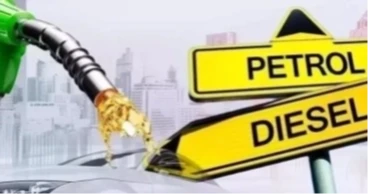
Bangladesh to raise fuel imports by 25% amid global supply concerns: Energy Minister
The government has decided to increase fuel imports by 25 percent in the course of the current year to tackle potential supply disruptions caused by the ongoing conflict in the Middle East, Energy Minister Iqbal Hassan Mahmood said on Monday.
“Despite global concerns over fuel supply, there is no immediate crisis in Bangladesh. As a precautionary measure, the government has decided to raise fuel imports by 25 percent,” Iqbal told reporters at his residence in Dhaka in the afternoon.
The minister said vessels carrying sufficient fuel supplies are arriving at ports, and the government is maintaining strict vigilance to ensure uninterrupted distribution across the country.
Highlighting the government’s subsidy efforts, the minister said fuel is being purchased at higher prices from the spot market but sold to consumers at lower rates.
“The duration of the conflict remains uncertain, the government will continue providing subsidies for as long as possible, considering people’s purchasing capacity,” he added.
Referring to disruptions in global supply routes, Iqbal noted that oil shipments through the Strait of Hormuz are facing challenges. “Ships are unable to move normally through the Strait of Hormuz and require special permissions, which is causing some disruptions to regular supply.”
On fuel reserves, the minister said stock levels are being managed based on demand, and uninterrupted supply has so far prevented any major crisis.
Urging the public to remain calm, he called on consumers to avoid panic buying. “Please refrain from panic buying. Purchase only what you need. Panic buying is increasing pressure on depots and fuel stations.”
Meanwhile, visits to several fuel pumps in the capital found vehicles waiting in long queues for fuel, while some stations were temporarily shut after running out of stock due to increased demand: further fuelling public anxiety.
6 months ago
.jpg)
With no fuel and no cash, Sri Lanka keeps schools closed
Cash-strapped Sri Lanka on Sunday extended school closures for one week because there isn't enough fuel for teachers and parents to get children to classrooms, and the energy minister appealed to the country's expatriates to send money home through banks to finance new oil purchases.
A huge foreign debt has left the Indian Ocean island with none of the suppliers willing to sell fuel on credit. The available stocks, sufficient for only several days, will be provided for essential services, including health and port workers, public transport and food distribution, officials said.
”Finding money is a challenge. It’s a huge challenge,” Power and Energy Minister Kanchana Wijesekera told reporters.
Read: Gas lines and scuffles: Sri Lanka faces humanitarian crisis
He said the government has ordered new fuel stocks and the first ship with 40,000 metric tons of diesel is expected to arrive on Friday while the first ship carrying gasoline would come on July 22.
Several other fuel shipments are in the pipeline. But he said authorities are struggling to find $587 million to pay for the fuel. Wijesekera said that Sri Lanka owed about $800 million to seven fuel suppliers.
Last month, schools were closed nationwide for a day due to fuel shortages and had remained closed for the last two weeks in urban areas. Schools will remain shut until Friday.
Authorities also announced countrywide power cuts of up to three hours a day from Monday because they can’t supply enough fuel to power generating stations. Sweeping power cuts have been a blight on Sri Lanka's economy for months, along with severe shortages of essentials including cooking gas, medicine and food imports.
Wijesekera said the main problem is the lack of dollars and appealed to some 2 million Sri Lankans working abroad to send their foreign exchange earnings home through banks instead of informal channels.
He said workers’ remittances, which usually stood at $600 million per month, had declined to $318 million in June.
According to the Central Bank, the remittances — the nation’s main foreign exchange earner — dropped from $2.8 billion in the first six months of 2021 to $1.3 billion in the same period this year for a decline of 53%.
Read: Senior US officials visit Sri Lanka to help resolve crisis
The drop came after the government last year ordered the mandatory conversion of foreign currency. It said that black-market premiums have led people to hoard foreign currency.
Sri Lanka's has been getting most of its fuel needs from neighboring India, which provided it with a credit line. The government said it was also negotiating with suppliers in Russia and Malaysia.
Sri Lanka has suspended repayment of about $7 billion in foreign loans due this year out of $25 billion to be repaid by 2026. The country’s total foreign debt is $51 billion.
The economic meltdown has triggered a political crisis with widespread anti-government protests erupting across the country. Protesters have blocked main roads to demand gas and fuel, and television stations showed people in some areas fighting over limited stocks.
In the capital, Colombo, protesters have been occupying the entrance to the president’s office for more than two months to demand President Gotabaya Rajapaksa's resignation. They accuse him and his powerful family that included several siblings holding top government positions of plunging the country into the crisis through corruption and misrule.
4 years ago