Venezuela
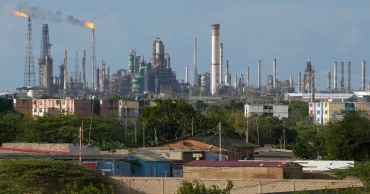
Trump’s Venezuela oil deal faces questions over investment, US stake
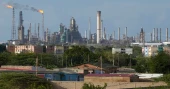
US President Donald Trump has announced what he called the “biggest oil deal in world history” involving Venezuela’s vast crude reserves, but many details of the agreement, including investment plans and the identity of a private operator, remain unclear.
The White House has released little information beyond Trump’s social media announcement Friday night. No full text of the agreement has been made public.
Venezuela’s acting President Delcy Rodríguez described the deal as an important step toward reviving and modernising the country’s oil industry. She said it would help generate jobs, improve wages and expand access to essential public services.
According to Rodríguez, the agreement covers the development of 17 oil fields with a proven potential of about 65 billion barrels. It could attract roughly $100 billion in investment and generate more than $209 billion in tax revenue for Venezuela.
Under the arrangement, the US government and an unnamed private operator have established a new company with rights to develop previously untapped oil fields for 100 years.
A US official, speaking anonymously because the details have not been publicly released, said the United States would receive an effective 55% share of the company’s output through an ownership stake and rights to purchase oil at cost.
Some of the oil bought by the United States would be directed to the country’s strategic petroleum reserves and the military, the official said. The new company could become the second-largest corporate holder of proven oil reserves after Saudi Aramco.
Trump has said the deal will eventually help lower gasoline prices in the United States. However, energy experts cautioned that Venezuela’s ageing and damaged oil infrastructure would require years and billions of dollars in investment before production could rise significantly.
Amy Myers Jaffe, an energy expert at New York University, said the agreement could be beneficial in the long term but would not have an immediate impact on US gasoline prices.
The average US gasoline price was around $4.08 per gallon Saturday, compared with $3.20 a year earlier, according to AAA.
Kevin Book of ClearView Energy Partners said Venezuela has substantial scope to increase production, noting that its output had previously been more than 2.5 million barrels per day higher than current levels. But he said deploying the necessary capital and increasing production would take years.
The agreement has also sparked criticism inside Venezuela. Some citizens view it as a reversal of the longstanding position that the country’s natural resources should remain under Venezuelan control.
At a market in eastern Caracas, resident Douglas Borjas criticised the deal, saying Venezuela’s resources should benefit its people rather than political elites.
Harvard professor and former Venezuelan planning minister Ricardo Hausmann also denounced the agreement, questioning the legitimacy of Rodríguez’s government to make such a long-term commitment.
The deal has drawn mixed reactions in Washington. Trump allies praised it as a major economic and strategic achievement, while Democratic lawmakers accused the administration of pursuing Venezuelan oil at the expense of US national interests.
Sen. Tim Kaine called the agreement “corruption at epic scale,” while Sen. Chris Van Hollen accused Trump of putting US service members at risk to secure Venezuelan oil.
Several key questions remain unanswered, including who will finance the massive infrastructure investment, which private company will operate the new venture and exactly how the US 55% effective share will be divided between ownership and oil purchases.
Chevron, the only US oil company currently producing in Venezuela, declined to comment. Exxon Mobil also declined to comment.
Analysts also warned that political uncertainty, security concerns and Venezuela’s deteriorated oil infrastructure could make it difficult to attract major US energy companies, even if legal protections are provided.
1 month ago
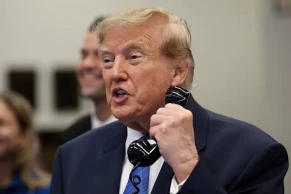
Trump says US reaches deal giving access to Venezuela’s 65 billion barrels of oil reserves
President Donald Trump said Friday that the United States has reached a major agreement with Venezuela that could give an American-backed private company access to the South American nation's vast oil reserves.
Trump described the agreement as the “biggest oil deal in world history”, saying it was negotiated by Secretary of State Marco Rubio, Defense Secretary Pete Hegseth and Venezuela's acting President Delcy Rodríguez.
Rodríguez's government said the agreement covers the development of 17 oil fields with proven potential of 65 billion barrels. It estimated that the deal could attract around $100 billion in investment and generate more than $209 billion in tax revenue for Venezuela.
Under the agreement, the United States would partner with an unnamed private operator to establish a new company to develop the oil fields, according to a U.S. official familiar with the deal.
The official, who spoke on condition of anonymity because he was not authorized to discuss the agreement publicly, said Rodríguez had granted the company rights to develop the fields for 100 years.
The company would give the United States an effective 55% share of its output, including an ownership stake and the right to purchase oil at cost, the official said. If realized, the company would become the world's second-largest corporate holder of proven oil reserves after Saudi Aramco.
Trump under pressure over high fuel prices
The announcement comes as Trump faces pressure to reduce high fuel prices in the United States amid the ongoing war in Iran and disruptions to global energy supplies.
The U.S. government has been drawing from its strategic petroleum reserves, which fell below 300 million barrels in early August, more than 100 million barrels lower than at the beginning of 2026.
The conflict involving the United States, Israel and Iran has sharply reduced the flow of Gulf oil through the Strait of Hormuz, a major global energy route that previously carried about 20% of the world's petroleum.
The average U.S. gasoline price was around $4.09 per gallon on Friday, compared with $3.21 a year earlier, according to AAA.
However, experts said the Venezuelan agreement is unlikely to bring immediate relief at the gas pump. Increasing Venezuela's oil production substantially would require years of investment to repair and expand its badly damaged infrastructure.
Major U.S. oil companies could also be reluctant to return because of Venezuela's political uncertainty and their previous experiences operating in the country.
After Maduro's removal, Trump met oil executives at the White House and urged them to return to Venezuela. Although executives showed interest, some remained cautious. ExxonMobil CEO Darren Woods had previously described Venezuela as an “un-investable” market.
Trump has maintained that his administration has helped bring greater stability to Venezuela. He has also accused the country of taking U.S. oil after former President Hugo Chávez nationalized hundreds of foreign-owned assets, including those belonging to American oil companies.
Venezuela opens oil sector to private investment
Rodríguez moved to open Venezuela's oil industry to greater private investment after taking power, reversing a key policy of the socialist movement that has governed the country for more than two decades.
Rubio said the new agreement would bring billions of dollars in private investment to Venezuela while helping reduce fuel prices in the United States.
The U.S. official said oil purchased from the new company would be used to replenish the American strategic petroleum reserve and for military purposes.
Venezuela possesses the world's largest proven crude oil reserves, estimated at around 303 billion barrels, or approximately 17% of global reserves, according to the U.S. Energy Information Administration.
Most of the country's oil deposits have already been identified, but aging infrastructure has severely limited production. Venezuela currently accounts for only about 1% of global oil output.
Former Venezuelan President Nicolás Maduro remains jailed in the United States. He has pleaded not guilty to federal narcoterrorism and drug trafficking charges.
1 month ago
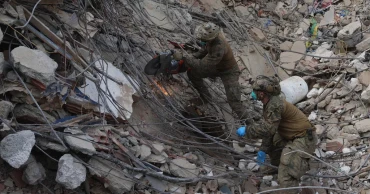
Death toll nears 2,000 as questions mount over Venezuela's quake response
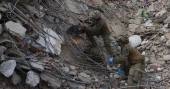
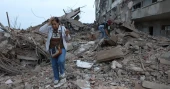
Venezuela's devastating twin earthquakes have killed at least 1,943 people and injured more than 10,500, while thousands remain missing, according to official figures, as survivors increasingly accuse the government of a slow and poorly coordinated rescue effort.
More than a week after the 7.2- and 7.5-magnitude earthquakes struck northern Venezuela on June 24, families continue searching for loved ones trapped beneath collapsed buildings in La Guaira state, Caracas and surrounding areas, with many saying civilian volunteers and foreign rescue teams have carried out much of the search and recovery work.
Among them is Angelica Mundrain, who has spent six days waiting outside the ruins of her beachfront apartment building in La Guaira, hoping heavy machinery will arrive to recover the bodies of her son, niece and nephew buried beneath concrete and twisted steel.
"We've been abandoned," Mundrain said, describing what she called a lack of organization, compassion and urgency in the government's response.
The disaster has exposed significant weaknesses in Venezuela's emergency response system under acting President Delcy Rodriguez, with residents saying the first 72 hours after the earthquakes were marked by confusion and inadequate coordination.
According to survivors, police and security forces were largely deployed to manage traffic while local residents, often assisted by foreign rescue teams equipped with thermal cameras, sound detection devices and trained search dogs, searched through the rubble. Ambulances reportedly faced long traffic delays, and hospitals struggled with shortages of personnel and medical supplies.
David Smilde, a Venezuela expert at Tulane University, said the government's response reflects longstanding institutional problems, including the loss of experienced public-sector workers due to low wages and corruption. He said an effective disaster response requires trained personnel, established emergency protocols and clearly defined responsibilities.
Residents also alleged that access to rescue equipment depended in some cases on wealth or political connections. Survivors said specialized machinery, including telescopic cranes, was deployed more quickly to buildings where military officers or politically connected individuals were believed to live, while other sites continued waiting for assistance.
Public frustration has occasionally led to confrontations with equipment operators. At one collapsed public housing complex, residents reportedly blocked an excavator from leaving the site, insisting rescue operations continue.
Rescue crews continued searching for survivors on Tuesday despite diminishing hopes of finding more people alive. Emergency experts say the first 48 to 72 hours after a major earthquake are generally the most critical for saving lives, although survival can be extended if trapped victims have access to food and water.
Electrician Daniel Castillo, who rescued his mother and son from a collapsed public housing building shortly after the earthquakes, said his brother's body was recovered a day later.
While collecting emergency hygiene supplies from a military distribution point, Castillo criticized the authorities' response, saying ordinary citizens and foreign rescue workers had shouldered much of the rescue effort while many security personnel remained largely uninvolved.
He contrasted the dust-covered volunteers searching through debris with members of the National Guard whose uniforms, he said, remained spotless throughout the operation.
3 months ago
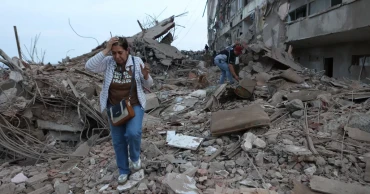
Death toll from Venezuela earthquakes rises to 188 as rescuers search for survivors
Rescue teams and residents continued searching through collapsed buildings in northern Venezuela on Thursday after two powerful earthquakes killed at least 188 people, injured around 1,500 and left more than 200 trapped beneath the rubble.
The twin quakes, measuring 7.2 and 7.5 in magnitude, struck Wednesday evening and were among the strongest to hit Venezuela in more than a century. Thousands of people were also reported missing across the country.
Authorities said the coastal state of La Guaira, north of the capital Caracas, suffered some of the worst destruction, with dozens of buildings collapsing and heavy casualties reported.
Panic gripped cities across northern Venezuela as residents rushed into the streets and searched through debris for missing relatives and neighbors. Television footage showed rescue workers using power tools to cut through piles of rubble in search of survivors.
Acting President Delcy Rodríguez described La Guaira as a "disaster zone" and said rescue teams from other parts of the country were being deployed to the area. She also appealed to businesses to provide heavy construction equipment to aid rescue efforts and said United Nations-certified search-and-rescue teams were on their way.
State television showed several survivors, including three children, being pulled alive from the debris in La Guaira.
The earthquakes also damaged and forced the closure of Venezuela's main airport, while buildings were evacuated as far away as Brazil's Amazon region, around 1,700 kilometres from Caracas.
The latest disaster poses a major challenge for the government of Acting President Rodríguez as Venezuela continues to struggle with a prolonged economic crisis and political uncertainty.
According to the US Geological Survey (USGS), the first 7.2-magnitude quake struck near the Caribbean coastal city of Moron at a depth of about 22 kilometres. A second, stronger 7.5-magnitude quake followed just a minute later at a depth of around 10 kilometres.
Officials have urged residents to remain outdoors, warning that aftershocks could trigger further building collapses and additional casualties.
3 months ago
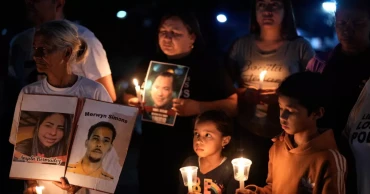
Venezuela unveils amnesty bill that could free political detainees
Venezuela’s acting President Delcy Rodríguez on Friday announced a proposed amnesty law that could pave the way for the release of hundreds of people jailed for political reasons, including opposition figures, journalists and human rights activists.
The long-demanded measure, backed by the United States-supported opposition, marks the latest concession by Rodríguez since she assumed control on Jan 3, following the dramatic removal of then president Nicolás Maduro in a US military operation in Caracas.
Addressing a gathering of judges, ministers, senior military officers and other officials in a prerecorded televised event, Rodríguez said the ruling party-dominated National Assembly would consider the bill on an urgent basis.
“May this law serve to heal the wounds left by the political confrontation fueled by violence and extremism,” she said. “May it serve to redirect justice in our country, and may it serve to redirect coexistence among Venezuelans.”
She also announced the closure of Helicoide, a notorious detention center in Caracas where independent organizations have repeatedly documented torture and other abuses. Rodríguez said the facility would be converted into a sports, social and cultural complex for police and nearby communities.
The announcement was made in the presence of several officials whom former detainees and rights groups have accused of ordering abuses at Helicoide and other prisons.
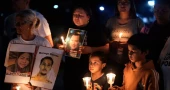
Outside Helicoide, relatives of detainees watched Rodríguez’s speech on mobile phones, some in tears as others chanted, “Freedom! Freedom!”
“God is good. God heard us,” said Johana Chirinos, an aunt of one prisoner, as she cried.
Opposition leader and Nobel Peace Prize laureate María Corina Machado said in a statement that the measures were not adopted “voluntarily, but rather in response to pressure from the US government.” She noted that people have been imprisoned for political activities for periods ranging from one month to 23 years.
“The regime’s repressive apparatus is brutal and has responded to the numerous criminal forces that answer to this regime, and it is all that remains,” Machado said. “When repression disappears and fear is lost, it will be the end of tyranny.”
According to the Venezuelan prisoners’ rights group Foro Penal, 711 people are currently detained nationwide for political reasons, including 183 who have already been sentenced.
Among those still imprisoned after the 2024 presidential election are former lawmaker Freddy Superlano, Machado’s lawyer Perkins Rocha, and Juan Pablo Guanipa, a former governor and close ally of Machado.
The government did not release the text of the proposed bill, leaving unclear how eligibility for amnesty will be determined. Rodríguez said the “general amnesty law” would apply to the entire period of political violence from 1999 to the present, but would exclude those convicted of murder, drug trafficking, corruption or human rights violations.
Earlier this month, Rodríguez’s administration announced plans to free a large number of detainees as a goodwill gesture, but families have criticised the slow pace of releases.
“A general amnesty is welcome as long as its elements and conditions include all of civil society, without discrimination, that it does not become a cloak of impunity, and that it contributes to dismantling the repressive apparatus of political persecution,” Foro Penal president Alfredo Romero said on social media.
The group said 302 detainees have been released since the Jan 8 announcement.
Human rights organization Provea also criticised the lack of transparency and the gradual nature of the releases, stressing that freeing those still detained is urgent. It said an amnesty should not be framed as a pardon or act of clemency by the state.
“We recall that these people were arbitrarily imprisoned for exercising rights protected by international human rights instruments, the National Constitution, and Venezuelan laws,” Provea said.
The US State Department confirmed on Friday that all known US citizens held in Venezuelan prisons had been released. It also said Laura Dogu, who will serve as Washington’s top diplomat in Venezuela, was due to arrive in Caracas on Saturday.
Outside another detention center in the capital, Edward Ocariz, who was jailed for more than five months after the 2024 election, joined families demanding the immediate release of detainees.
“We, Venezuelans, have all endured so much, all unjust, merciless and trampling on our dignity,” Ocariz said. “No one deserves this. And today, the guilty continue to govern Venezuela.”
8 months ago
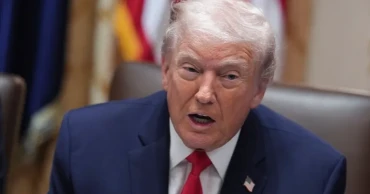
Trump orders reopening of Venezuela commercial airspace, signals travel resumption
US President Donald Trump announced Thursday that he has instructed U.S. officials to reopen Venezuela’s commercial airspace, a major step toward easing travel restrictions and potentially allowing American citizens to visit the South American country again. Trump said he informed Venezuela’s acting President Delcy Rodríguez of the decision and directed U.S. Transportation Secretary Sean Duffy and top military leaders to implement the reopening by the end of the day.
Speaking from the White House, Trump told reporters that “American citizens will be very shortly able to go to Venezuela, and they’ll be safe there,” signalling a shift in U.S. policy after years of diplomatic rupture. Venezuela’s government had not immediately responded to the announcement.
Earlier this week, the Trump administration notified Congress of initial steps to possibly reopen the long‑closed U.S. Embassy in Caracas, part of efforts to restore diplomatic ties following a controversial U.S. military operation that ousted former President Nicolás Maduro. The State Department said in letters dated Monday that it plans a phased approach to gradually resume embassy operations with a growing number of temporary staff conducting select diplomatic functions.
Diplomatic relations between Washington and Caracas collapsed in 2019, as the U.S. government raised its travel advisory for Venezuela to the highest “Do not travel” level, citing risks of wrongful detention, torture and kidnapping for U.S. citizens. The State Department still maintains that warning, and has not confirmed any changes in its advisory despite Trump’s airspace announcement.
In November, Trump had escalated tensions by declaring that the airspace “above and surrounding” Venezuela should be considered closed, prompting the U.S. Federal Aviation Administration to alert pilots about increased military activity in the region and leading major airlines to cancel flights.
The move to reopen Venezuelan airspace comes as American carriers eye resuming services that have been suspended for years, marking a potential revival in commercial links between the two nations.
8 months ago
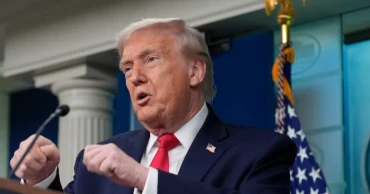
US forces seize seventh Venezuela-linked oil tanker amid Trump oil crackdown
U.S. military forces on Tuesday boarded and took control of a seventh oil tanker linked to Venezuela as part of the Trump administration’s drive to assert control over the South American country’s oil sector.
U.S. Southern Command said in a social media post that American forces apprehended the Motor Vessel Sagitta without incident, saying the tanker was operating in defiance of President Donald Trump’s declared quarantine on sanctioned vessels in the Caribbean.
The command did not specify whether the U.S. Coast Guard carried out the operation, as in previous seizures. The Pentagon and Southern Command said they had no additional details.
The Sagitta, a Liberian-flagged tanker, is registered to a Hong Kong-based company. The vessel last transmitted its location more than two months ago after leaving the Baltic Sea in northern Europe. It was sanctioned by the U.S. Treasury Department under an executive order tied to Russia’s 2022 invasion of Ukraine.
Southern Command said the tanker had taken oil from Venezuela, adding that the seizure “demonstrates our resolve to ensure that the only oil leaving Venezuela will be oil that is coordinated properly and lawfully.”
The command released aerial footage showing the Sagitta at sea, though unlike earlier operations the video did not show U.S. helicopters approaching or troops boarding the vessel.
Since the U.S.-led ouster of Venezuelan President Nicolás Maduro in a surprise overnight raid on Jan 3, the Trump administration has moved to take control of Venezuela’s oil production, refining and global distribution. Administration officials have said seizing tankers is part of an effort to generate revenue to rebuild the country’s battered oil industry and revive its economy.
Trump met oil industry executives nearly two weeks ago to discuss plans to invest $100 billion in Venezuela’s energy sector and said the United States expects to sell between 30 million and 50 million barrels of Venezuelan oil.
Speaking at the White House on Tuesday, Trump said the U.S. has already taken 50 million barrels of oil out of Venezuela. “We’ve got millions of barrels of oil left,” he said. “We’re selling it on the open market. We’re bringing down oil prices incredibly.”
The first tanker was seized off Venezuela’s coast on Dec 10. Most of the others were captured in nearby waters, except for the Bella 1, which was intercepted in the North Atlantic after abruptly turning back toward Europe on Dec 15 and was seized on Jan 7.
8 months ago
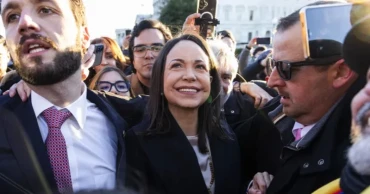
Machado vows to lead Venezuela when time is right
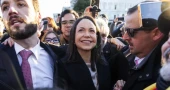
Venezuelan opposition leader María Corina Machado has said she will lead her country “when the right time comes” and expressed confidence that she will one day become Venezuela’s first woman president.
Speaking to Fox News, Machado said she believes she has a mission to rebuild Venezuela and turn it into a prosperous nation. “I believe I will be elected when the right time comes as president of Venezuela,” she said.
Her remarks came a day after she presented her Nobel Peace Prize medal to US President Donald Trump in Washington, calling it a recognition of his support for Venezuela’s freedom.
Earlier this month, the United States seized Venezuelan President Nicolás Maduro in Caracas and took him to New York to face drug and weapons charges. However, Trump has not endorsed Machado as Venezuela’s new leader, saying she lacks enough domestic support.
Trump has instead engaged with Venezuela’s interim president Delcy Rodríguez, who previously served as vice president under Maduro.
Machado said she has a mandate from the people and wants to serve her country in the most effective way. During her visit to Washington, she also met US senators at Congress as her supporters chanted “María, presidente” and waved Venezuelan flags.
Meanwhile, Rodríguez held talks in Caracas with the CIA director on improving relations between the two countries. She later said Venezuela would face the US through political dialogue and announced oil sector reforms to attract foreign investment.
With inputs from BBC
8 months ago
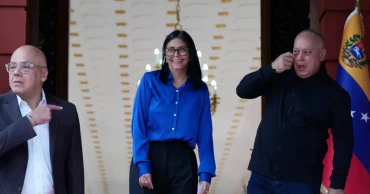
Venezuela to continue releasing political prisoners after Maduro arrest
Venezuela’s acting President Delcy Rodríguez said Wednesday her government would continue releasing prisoners detained under former president Nicolás Maduro, describing the move as part of a “new political moment” following his removal by the United States earlier this month.
Speaking at her first press briefing since Maduro was captured by US forces and flown to New York on Jan 3 to face drug trafficking charges, Rodríguez said the process of freeing detainees “has not yet concluded” and signaled that more releases were planned.
Addressing reporters at the presidential palace in Caracas, she struck a conciliatory tone, promising a Venezuela that would allow political and ideological diversity while insisting that the rule of law would be strictly enforced.
A leading Venezuelan human rights group estimates that about 800 political prisoners remain behind bars, including politicians, soldiers, lawyers and civil society activists.
Rodríguez’s comments came after US President Donald Trump said he had held a “great conversation” with her, their first direct contact since Maduro’s arrest.
“We had a long call. We discussed a lot of things, and I think we’re getting along very well with Venezuela,” Trump said at the White House.
Unlike previous speeches that echoed Maduro’s anti-US rhetoric, Rodríguez avoided mentioning Washington directly, even as relations between the two countries shift rapidly.
She acknowledged that prisoner releases were under way, a move widely seen as encouraged by the Trump administration, but insisted that the process had begun under Maduro in December as a gesture toward dialogue and tolerance.
“Crimes related to the constitutional order are being evaluated,” she said, referring to detainees held on charges that human rights groups say are politically motivated. “Messages of hatred, intolerance and acts of violence will not be permitted.”
Flanked by National Assembly President Jorge Rodríguez and Interior Minister Diosdado Cabello, she took no questions and said Cabello was overseeing the release process, which critics say has been slow and opaque.
Venezuela’s leading prisoners’ rights group, Foro Penal, confirmed that at least 72 detainees have been freed so far, including political activist Nicmer Evans, journalist Roland Carreño and two campaign aides of opposition leader María Corina Machado.
However, Foro Penal says more than 800 prisoners remain in custody on political grounds and has criticised the government for a lack of transparency.
Rodríguez rejected such claims, accusing what she called “self-proclaimed nongovernmental organizations” of spreading falsehoods about Venezuela.
“There will always be those who want to fish in troubled waters,” she said, adding that her government was committed to letting “the truth be reported.”
8 months ago
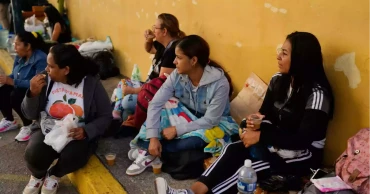
Families of jailed Venezuelans suffer mounting agony as expected releases delayed
Yaxzodara Lozada awoke shivering on Tuesday after spending the night on the sidewalk outside a Caracas prison, clinging to the hope that her husband, a police officer detained on Nov. 17, would be released under a goodwill measure announced by the government last week.
Despite signs that daily life in Venezuela is slowly returning to normal, with shopping centers, schools and gyms reopening, the government’s pledge to release jailed opposition members, activists and journalists has moved far more slowly than expected, drawing growing criticism.
The reopening comes a week after a dramatic U.S. operation that resulted in the detention of President Nicolás Maduro.
Families of more than 800 people whom human rights groups classify as political prisoners began assembling outside detention centers on Thursday, following an announcement by acting President Delcy Rodríguez that a substantial number of detainees would be freed as a “peace-seeking” gesture. Authorities, however, have not disclosed how many prisoners would be released or who would qualify, leaving advocacy groups scrambling for information and relatives in limbo.
Read More: Slow pace marks third day of prisoner releases in Venezuela after government goodwill pledge
By Monday afternoon, the legal group Foro Penal confirmed that 49 detainees had been released, including several foreign nationals. That same day, the White House confirmed an upcoming meeting between opposition leader María Corina Machado and U.S. President Donald Trump, who said the releases occurred at Washington’s request.
While welcoming the releases, the UN-backed fact-finding mission said the number freed falls well short of demands for the immediate and unconditional release of all political prisoners.
Outside prisons, families slept on sidewalks awaiting news, contrasting sharply with the government’s push to project stability as schools reopened under heightened security.
Officials emphasized resilience and optimism, even as relatives described fear, uncertainty and anguish over loved ones they have not seen for weeks.
8 months ago