Bangladeshi workers abroad
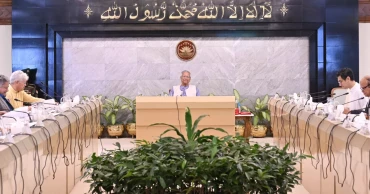
If employers lose trust, all skills development initiatives would fail: Prof Yunus
Highlighting the significant demand for Bangladeshi workers abroad, Chief Adviser Prof Muhammad Yunus on Sunday said all forms of fraud, related to skills training certificates, must be stopped to unlock the country’s untapped employment potential overseas.
“All these frauds must be stopped. The reputation of the country’s workforce is being undermined due to fraud and forgery related to skills training certificates,” he said, stressing that if employers lose trust, all skill development initiatives would fail.
The Chief Adviser made the remarks while presiding over a meeting of the Governing Body of the National Skills Development Authority (NSDA) at his office.
Prof Yunus instructed the concerned authorities to take effective measures to prevent the forgery of skill development training certificates and the use of fake credentials in order to safeguard Bangladesh’s reputation in the international labour market.
Stressing the importance of building the country’s brand image, he said, “Employers should say that workers who come from Bangladesh will definitely do well.”
Established in 2018, this was the second meeting of the NSDA Governing Body. The first meeting was held in 2022.
Prof Yunus said the NSDA has provided a strong framework for developing skilled human resources in line with the needs of both national and international labour markets.
With the growing demand for Bangladeshi workers abroad, he added, the role of the authority will become even more important.
Expressing optimism, the Chief Adviser said the NSDA’s initiative to introduce a unified standard certification system across all training institutions would play a crucial role in preventing such fraud.
“Our young generation is highly creative and full of potential. Our responsibility is to open doors of opportunity for them,” he said.
Prof Yunus happy over polls preparations, says next ‘week very crucial’
Prof Yunus also emphasised the need for necessary initiatives and coordination to enable private entrepreneurs to operate in a more transparent and effective manner.
The meeting reviewed the implementation progress of decisions taken at the previous Governing Body meeting and decided to establish an integrated skills ecosystem.
Under this ecosystem, uniform curricula and standards will be ensured for training programmes conducted by different ministries.
Once fully implemented, the system is expected to enhance the quality and credibility of certificates in the international market, reduce the wastage of public funds, and facilitate centralised and effective planning and implementation for assessing industrial labour demand and workforce development.
The Governing Body approved the long-term goals of the NSDA to address global challenges following Bangladesh’s graduation from Least Developed Country (LDC) status.
Key components of these long-term plans include conducting skills gap analyses in emerging sectors, bringing all development projects under NSDA curricula and competency standards, aligning the Bangladesh National Qualifications Framework (BNQF) with international benchmarks, and bringing the large informal-sector workforce under national skills certification through recognition of prior learning.
Among other issues, the meeting discussed the provision of Continuous Discharge Certificates (CDC) to students trained at the Institutes of Marine Technology (IMTs) under the Ministry of Expatriates’ Welfare and Overseas Employment.
Dhaka, Beijing cooperation must continue with new govt: Prof Yunus
Shipping and Labour and Employment Adviser Brigadier General (Retd) Dr M Sakhawat Hussain, Industries Adviser Adilur Rahman Khan, Bangladesh Investment Development Authority (BIDA) Executive Chairman Chowdhury Ashik Mahmud Bin Harun, Chief Adviser’s Principal Secretary M Siraz Uddin Miah, NSDA Executive Chairman Dr Nazneen Kawshar Chowdhury, secretaries of different ministries, and other senior officials attended the meeting.
7 months ago

Govt plans to send 8.10 lakh workers abroad in 2022-23: Document
The government has worked out a plan to send 8.10 lakh Bangladeshi workers abroad and provide skills development training to 5.20 lakh ones in the current fiscal year(2022-23).
Besides, to train up more workers for meeting the demands overseas job market it expected to start operation of some 100 technical trainer centres in different parts of the country.
According to an official document, it is necessary to provide necessary training to workers for their skills development and ensure their better jobs abroad.
To this end, all the training programmes of technical training institutes and institutes of marine technology are conducted under the National, Technical and Vocational Qualification Framework (NTVQF) from the last fiscal year( 2021-22).
Also read: Friendly conditions to be created for Bangladeshi immigrants in Portugal: Francisco Andre
Recognition of prior learning (RPL) activities has been taken up for effective use of the learning by migrant workers abroad to increase their earnings in the overseas labour market.
Apart from this, foreign language teaching courses are going on in the 43 Teachers Training Colleges (TTCs).
In addition, for bringing discipline in the immigration system three new online systems titled- ‘Employee Connectivity Reporting System’, ‘Online Grievance Management System’, and ‘Recruiting Agencies Information Management system (RAIMS)’ have been introduced, said the document.
The government has taken up a range of initiatives for the welfare of both expatriate workers and workers returning from abroad.
The discipline in the immigration system has been ensured through monitoring the activities of the recruiting agencies on regular basis.
The document mentioned that this sector has been completely digitalised through different programmes like- creating professional database for employee recruitment; scrutinizing visa forms through mobile apps; separate portal for receiving grievance petitions and automation of the activities of the ‘Bureau of Manpower, Employment and Training’ (BMET).
Also read: ‘Incentive still inaccessible for most migrant workers’
A number of activities are going on for the purpose of re-integration of migrant workers who have returned home and providing soft investment loans for their self- employment; providing scholarships to the meritorious children of the expatriates and providing medical assistance to the disabled expatriate workers on their return.
A plan of action for establishing technical training institutes at every Upazila in phases has been taken up for inspiring the marginalised communities across the country.
The document said that in 2020-2021 FY the growth of remittance stood at 36.10 percent. However, since the very beginning of fiscal 2021-2022, the income from remittances slightly decreased.
With a view to encouraging remittance through legal channel, the government has raised the rate of incentives 0.5 percentage point to 2.5 percent from January, 2022.
The government has withdrawn the mandatory provisions for submission of earning documents of the remitters in the case of availing cash incentives against remittances exceeding the amount of US$ 5,000.
It is expected that, a satisfactory growth of remittance will be back on track soon, said the document.
In 2019, $18.32 billion was remitted to Bangladesh, the third-highest recipient of remittance in South Asia.
Over 10 million Bangladeshis are living and working abroad, mainly in the Middle East. They are the second largest contributor of the country’s foreign remittances after the garment sector. Last year alone, they sent over $22 billion back home, according to Bureau of Manpower Employment and Training data.
According to the BMET, in 2019 alone, over 700,000 migrant workers left the country in search of employment abroad and over 73% of remittances were sent from Gulf Cooperation Council countries.
Remittance inflows to Bangladesh directly impact socio-economic development and act as a lifeline to vulnerable communities.
There should be an investment in education and skills upgrade so that lower-skilled migrant workers can earn more and break the cycle of debt, International Organisation of Migration suggests.
4 years ago