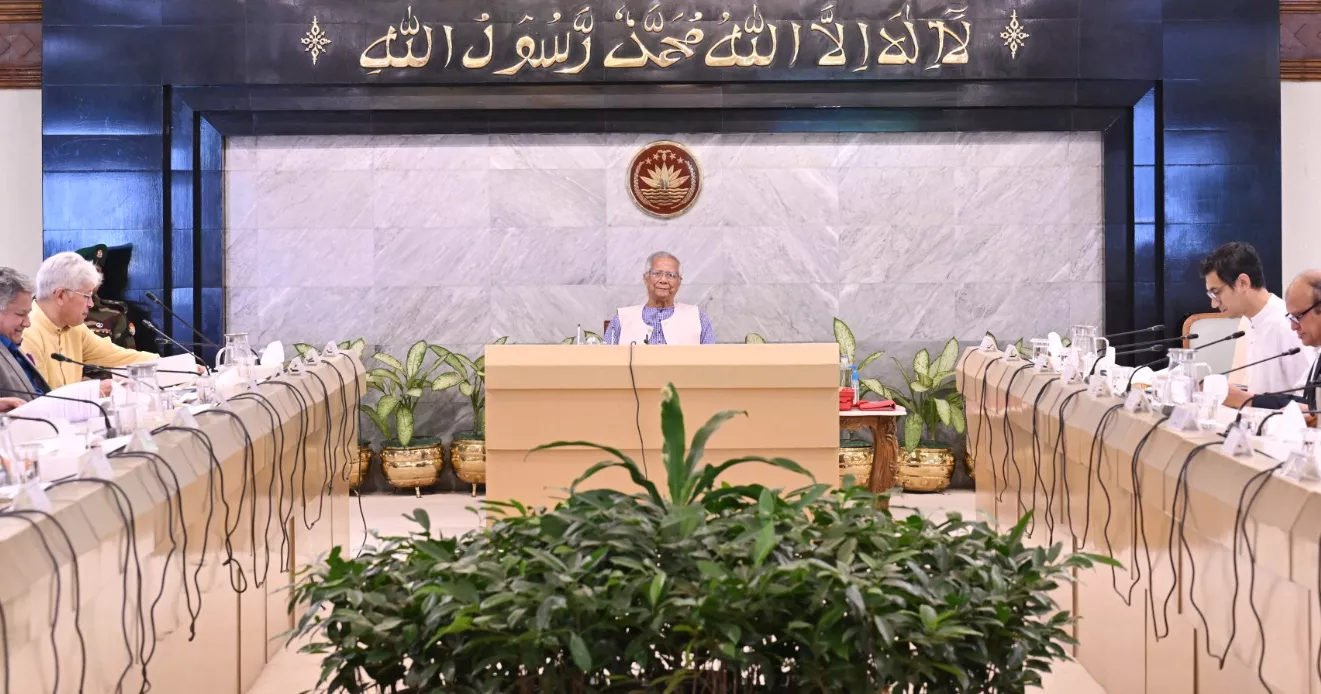
Highlighting the significant demand for Bangladeshi workers abroad, Chief Adviser Prof Muhammad Yunus on Sunday said all forms of fraud, related to skills training certificates, must be stopped to unlock the country’s untapped employment potential overseas.
“All these frauds must be stopped. The reputation of the country’s workforce is being undermined due to fraud and forgery related to skills training certificates,” he said, stressing that if employers lose trust, all skill development initiatives would fail.
The Chief Adviser made the remarks while presiding over a meeting of the Governing Body of the National Skills Development Authority (NSDA) at his office.
Prof Yunus instructed the concerned authorities to take effective measures to prevent the forgery of skill development training certificates and the use of fake credentials in order to safeguard Bangladesh’s reputation in the international labour market.
Stressing the importance of building the country’s brand image, he said, “Employers should say that workers who come from Bangladesh will definitely do well.”
Established in 2018, this was the second meeting of the NSDA Governing Body. The first meeting was held in 2022.
Prof Yunus said the NSDA has provided a strong framework for developing skilled human resources in line with the needs of both national and international labour markets.
With the growing demand for Bangladeshi workers abroad, he added, the role of the authority will become even more important.
Expressing optimism, the Chief Adviser said the NSDA’s initiative to introduce a unified standard certification system across all training institutions would play a crucial role in preventing such fraud.
“Our young generation is highly creative and full of potential. Our responsibility is to open doors of opportunity for them,” he said.
Prof Yunus happy over polls preparations, says next ‘week very crucial’
Prof Yunus also emphasised the need for necessary initiatives and coordination to enable private entrepreneurs to operate in a more transparent and effective manner.
The meeting reviewed the implementation progress of decisions taken at the previous Governing Body meeting and decided to establish an integrated skills ecosystem.
Under this ecosystem, uniform curricula and standards will be ensured for training programmes conducted by different ministries.
Once fully implemented, the system is expected to enhance the quality and credibility of certificates in the international market, reduce the wastage of public funds, and facilitate centralised and effective planning and implementation for assessing industrial labour demand and workforce development.
The Governing Body approved the long-term goals of the NSDA to address global challenges following Bangladesh’s graduation from Least Developed Country (LDC) status.
Key components of these long-term plans include conducting skills gap analyses in emerging sectors, bringing all development projects under NSDA curricula and competency standards, aligning the Bangladesh National Qualifications Framework (BNQF) with international benchmarks, and bringing the large informal-sector workforce under national skills certification through recognition of prior learning.
Among other issues, the meeting discussed the provision of Continuous Discharge Certificates (CDC) to students trained at the Institutes of Marine Technology (IMTs) under the Ministry of Expatriates’ Welfare and Overseas Employment.
Dhaka, Beijing cooperation must continue with new govt: Prof Yunus
Shipping and Labour and Employment Adviser Brigadier General (Retd) Dr M Sakhawat Hussain, Industries Adviser Adilur Rahman Khan, Bangladesh Investment Development Authority (BIDA) Executive Chairman Chowdhury Ashik Mahmud Bin Harun, Chief Adviser’s Principal Secretary M Siraz Uddin Miah, NSDA Executive Chairman Dr Nazneen Kawshar Chowdhury, secretaries of different ministries, and other senior officials attended the meeting.