hilsa price hike
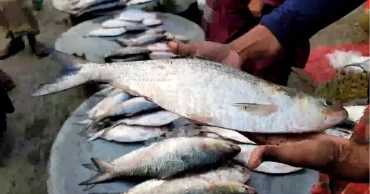
Hilsa prices soar further putting this beloved fish beyond reach
Hilsa, the pride of Bangladesh’s rivers and the heart of its culinary culture, has once again slipped beyond the reach of ordinary consumers as prices surged dramatically at the century-old Mir Kadim wholesale fish market in Munshiganj.
Within just 48 hours, hilsa prices have jumped by up to Tk 700 per kilogram, leaving both buyers and traders frustrated — each side pointing fingers over the sudden spike.
During a visit to the bustling Mir Kadim market on Friday, the scene was as lively as ever. Buyers and sellers packed into narrow lanes, where freshly caught silver hilsa shimmered under bright lights. Yet, for many who travelled long distances hoping to savour the seasonal delicacy, the excitement quickly turned to disappointment.
A one-kilogram hilsa is now priced at Tk 2,600–2,700, while the larger 1.5-kg fish are selling for Tk 3,200 per kg — a price bracket that has become a luxury for most households. Even the smallest hilsa, weighing just 150–200 grams, now cost Tk 650–700 per kg.
Hilsa returns to Khulna markets after 22-day ban
Consumers allege that syndicates are manipulating prices, while traders argue that the root of the crisis runs deeper.
Sand Extraction and Illegal Nets Blamed
Al Helal Royel, president of the Mir Kadim Fish Traders’ Association, said rampant and unplanned sand extraction is destroying natural breeding grounds, while the widespread use of illegal current nets is depleting fish stocks at an alarming rate.
“Fish stocks have fallen. Demand is high but supply is low — that’s why prices are increasing,” he explained.
According to the district fisheries office, Munshiganj produced 31,348 metric tonnes of fish in the past year. However, fish availability typically dips during winter, amplifying the strain on supply and pushing prices upward.
Delicious hilsa slips from table to luxury list
Other Fish Prices Also on the Rise
It isn’t just hilsa causing concern. Almost all fish varieties at Mir Kadim have seen significant price hikes.
A survey of the market revealed the following rates:
· River Pangas: Tk 800–1,000 per kg
· Farmed Pangas: Tk 150–200
· Rui: Tk 350–450
· Katla (farmed): Tk 400–500
· Katla (river): Tk 600–700
· Local boal: Tk 800–1,000
· Farmed boal: Tk 500–550
· Golda shrimp: Tk 700–1,000
· Bagda shrimp: Tk 600–700
· Aiyr: Tk 1,000–1,200
· Farmed koi: Tk 200–220
· Local koi: Tk 800–1,000
· Local sing: Tk 800–1,000
· Farmed sing: Tk 300–400
· Chitol: Tk 500–600
· Koral: Tk 600–700
Read more: Hilsa floods Chandpur markets, prices drop
Traders say the overall supply of both river and farmed fish is far from stable, contributing to the sharp rise in prices.
A Market with a Century of Legacy
Mir Kadim, one of the country’s oldest and busiest fish markets, operates through 43 wholesale sheds. Each morning, within just two to three hours, the market handles fish sales worth around Tk 1 crore. On weekends and holidays, the volume multiplies several times as buyers flock in from neighbouring districts.
But for now, the soaring prices, particularly of hilsa, have dampened spirits. What was once a common delight is increasingly becoming an occasional indulgence for many Bangladeshi families.
Read more: Hilsa Ilisha: The National Fish and Silver Pride of Bangladesh
10 months ago

Soaring prices keep hilsa out of Khulna kitchens
When it comes to hilsa, the general rule is that you pay less during the rainy season than in winter.
But this year, even the incessant rains have failed to cool off the prices of the monsoon delicacy, at least in Khulna. In simple words, the gastronome's delight is no longer within the reach of the common people.
Officials attribute the sky high prices of hilsa to spiralling fuel rates and hoarding by unscrupulous fish traders.
Read Hilsa Ilisha: The National Fish and Silver Pride of Bangladesh
"The fishermen are reeling under the impact of spiralling prices of diesel that they need to run their trawlers. Also, those hoarding the fish in refrigerators are responsible for pushing up the prices of ilish," Joydeb Pal, the district fisheries officer, told UNB.
Agreed fishers. "The trawlers we use for fishing, and the trucks and mini trucks used for transportation are all diesel driven. So, the fuel price hike has directly impacted us," said Belayet Mir a fisherman from Barguna.
Some fish traders, however, claimed that the prices of hilsa have gone up in the wake of the government giving 49 business units permission to export 2,400 metric tonnes of hilsa to India for the upcoming Durga puja.
Read: With Hilsa catch declining, Bagerhat fishermen stare at penury
Sheikh Saidul Islam, a fish trader, said, “Due to the government’s multipurpose plan, the production of hilsa has increased. But its prices vary as per the market demand."
4 years ago