Cold Storage
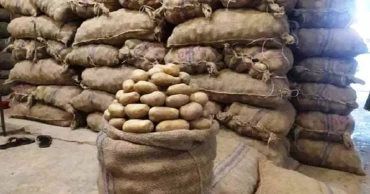
Bumper harvest, plunging prices; Chandpur’s potato market in crisis
Rows of unsold potato sacks in Chandpur’s cold storages reflect a season of deepening losses, turning what was once a lucrative crop into a source of financial despair for thousands of farmers.
In local markets, old potatoes are fetching as little as Tk 7–8 per kilogram, well below production and storage costs, leaving farmers with little incentive to withdraw their stored produce, locals said.
Outstanding dues for seed potatoes purchased on credit last season remain unpaid, while storage fees continue to accumulate, they said.
Agriculture officials said the district’s 56,860 potato farmers are concentrated mainly in Chandpur Sadar, Matlab South, and Kachua upazilas, where some 5,000 hectares are under potato cultivation.
Read more: Delays push up cost of seed potato project to Tk 1,138.74 crore
Despite the market downturn, they said, planting continues, though many farmers have scaled back their operations in response to last season’s losses.
“The absence of syndicates this season has kept potato prices low,” said Mobarak Hossain, officer at the Department of Agricultural Extension (DAE).
“Last season, syndicates pushed prices up to Tk 80 per kilogram. That situation does not exist this year,” he said.
The ripple effect is felt throughout the supply chain. Cold storage operators in Kachua upazila are struggling as farmers hesitate to withdraw their produce.
Mangal Khan and Yasin Mia, managers of local facilities, said that with market prices so low, even selling the stored potatoes fails to cover storage costs.
A bumper harvest last season exacerbated the problem. Good-quality old potatoes now sell for Tk 8–10 per kg, while new potatoes are priced around Tk 20 per kg. Farmers who invested heavily are counting losses.
“I produced 100 maunds of potatoes and made no profit at all—everything turned into a loss,” said Bachchu Miji, a grower and trader at Bakila Bazar in Hajiganj upazila. Others, including farmers from Shah Mahmudpur in Chandpur Sadar, echoed his frustration.
Hanif Patwary, whose 33 sacks of potatoes stored at Baborhat BSCIC cold storage sold for just Tk 3,000 per 50 kg sack, said, “After suffering such losses, I will not cultivate potatoes again.”
Bangladesh hosts its first-ever Potato Festival
The situation is mirrored in Kachua upazila, where more than half of stored potatoes remain in cold storage past the usual withdrawal period of November–December, frustrating both farmers and storage operators.
Meanwhile, the prices of other vegetables have also softened. Beans, snake beans, bitter gourd, and carrots now sell at Tk 60 per kg, and tomatoes at Tk 40 per kg, down from Tk 90–120 per kg just two weeks ago.
Despite the downturn, potato planting continues in Chandpur Sadar, Haimchar, Kachua, and Matlab upazilas, with some farmers reducing cultivation areas due to past losses.
Shamsul Islam of Bagadi and Ismail Hossain and Suruj Mia of Dhanpardi said they planted on smaller plots, wary of another season of poor returns.
New potatoes arriving from Munshiganj have further driven prices down, falling sharply from Tk 70 to Tk 20 per kg, boosting consumer demand. Currently, 5 kg of new potatoes sell for Tk 100, while 10 kg of old potatoes go for Tk 50–60.
Chandpur’s 10 operational cold storages are holding 80,169 tonnes of potatoes against a maximum capacity of 80,250 tonnes, according to Mobarak Hossain.
Abu Taher, Deputy Director of DAE Chandpur, said the cultivation target for the current season has been set at 7,200 hectares, down 1,000 hectares from last year, citing farmers’ discouragement and mounting debts.
“Farmers are naturally drawn to crops that guarantee fair prices. While about 4,000 hectares are already under potatoes, the focus is shifting to crops that ensure financial returns,” he said.
Read more: Sirajganj’s mustard fields bloom into golden seas, promise bumper harvest
For Chandpur’s potato farmers and storage operators, the coming months will be critical, as the market continues to weigh on livelihoods and investment decisions, according to the officials.
9 months ago

Potato farmers in Faridpur struggle with cold storage woes amid sweltering heat
As the sun beats down mercilessly on the sprawling agricultural fields of Faridpur, an all-too-familiar struggle unfolds -- storage crisis for their produce.
Locals said farmers and traders, laden with tonnes of freshly harvested potatoes, find themselves in a desperate race against time, vying for elusive storage space in the region’s limited cold storage facilities.
Concerns growing over Rooppur Nuclear Plant’s viability amid high costs
Their patience wears thin as the queue of trucks, brimming with golden heaps of potatoes, snakes along the Rajbari Road.
For days on, weary farmers linger under the oppressive heat, their precious produce vulnerable to the unforgiving elements.
Despite their best efforts, many are met with disappointment, as storage space remains in short supply, leaving them grappling with an unsettling fear—the looming prospect of spoilage.
A Battle Against Time and Heat
For the past five to six days, long lines of trucks have remained stagnant outside the cold storage facility on Rajbari Road.
Inside the tightly packed vehicles, sacks of potatoes sit precariously, their quality slowly eroding with each passing hour.
Farmers watch anxiously, knowing that nature does not wait.
Bumper tomato yields bring no joy to Sunamganj farmers
The standard practice dictates that bookings for cold storage must be made months in advance, typically in December and January.
Even those who meticulously followed this protocol are finding themselves at an impasse.
The growing demand for storage space has led to a backlog, further exacerbating the plight of traders and farmers alike.
Selim Mollah, a trader who journeyed all the way from Thakurgaon with 13 tonnes of potatoes, expressed his distress. “I arrived in Faridpur five days ago, but I’m still waiting to store my potatoes. The prolonged wait has left me exhausted, and I’m worried the heat will ruin my produce.”
His frustration is echoed by many others who share his predicament—stranded with their crops, caught in a cycle of uncertainty.
A Facility Strained Beyond Its Limits
Faridpur Cold Storage Limited, a privately owned facility established in 1995 in the bustling Goalchamat area, stands at the heart of this crisis.
With a storage capacity of 150,000 bags—each capable of holding 60 kg of potatoes—the facility serves farmers and traders from March to November.
Besides, it provides short-term storage for fruit vendors, catering to a diverse range of agricultural needs.
At the onset of the storage season, merchants from Faridpur, Gopalganj, Kushtia, Jhenidah, Magura, Nilphamari, Lalmonirhat, Thakurgaon, Rangpur, Dinajpur and Rajshahi flock to this vital hub, eager to safeguard their produce.
Each bag stored comes at a price of Tk 405, a necessary investment to ensure their harvest remains intact until it reaches the market.
Yet, the sheer volume of potatoes arriving in tandem has pushed the facility to its limits.
Rustum Mollah, the manager of Faridpur Cold Storage, attributes the bottleneck to an overwhelming yield and an influx of trucks arriving simultaneously.
“We’ve already received over 60,000 bags of potatoes. Once we clear the backlog, we’ll be able to manage the remaining stock,” he explained.
However, the challenge is not just about capacity—it is also about manpower.
“We have a limited number of unloading workers, which is causing delays in storing potatoes from distant areas. However, we aim to clear the waiting trucks within the next four to five days,” he assured, offering a glimmer of hope to those still waiting.
Pilgrims, agencies struggle as Saudi Arabia almost freezes visa issuance for Umrah
A Larger Crisis in Cold Chain Infrastructure
The situation in Faridpur is but a microcosm of a larger issue plaguing Bangladesh’s agricultural sector—an acute shortage of cold storage facilities.
The country’s existing infrastructure, though boasting over 300 cold storage units with a combined capacity of 2.7 million metric tonnes, remains woefully inadequate.
This deficiency leads to significant post-harvest losses, compromises food safety, and stifles the potential for agricultural trade.
Experts argue that a well-developed cold chain system could revolutionise the sector, enabling farmers to expand export opportunities while ensuring their produce retains its quality and nutritional value.
Without such an intervention, farmers will continue to battle the elements, their hard-earned yields at the mercy of time and temperature.
For now, the farmers of Faridpur remain steadfast in their vigil, hoping against hope that their patience—and their potatoes—will not go to waste.
1 year ago
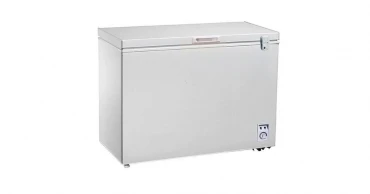
Freezer Buying Guide and Price Ranges in Bangladesh in 2024
Freezers or “deep fridges” have become an essential part of every home. As the country adjusts to the record hot and humid weather, the need for freezers has become even more urgent for storing food items. For example, fish, meat, and other perishables need to be stored in freezers for long preservations. And sometimes, traditional fridges with small built-in freezers simply aren’t enough. So for those looking for a freezer, this is the ultimate guide. In this article, we talk about different types, what to consider, and the price range of freezers in Bangladesh in 2024.
Types of Freezers
There are different types of freezers depending on their setup and functionality. For example, some freezers are built into a regular fridge. There are also walk-in freezers used in commercial kitchens.
But depending on the physicality of standalone freezers, it can be divided into three main types:
Upright Freezers
These freezers resemble traditional fridges with their upright design and a front opening door. They are perfect when you need to regularly access the storage. The upright design allows for better compartment allocation making it easy to store and retrieve items.
However, upright freezers are less energy efficient compared to chest freezers. It also has less storage due to compartmentalization.
Drawer Freezers
Drawer freezers are built into the kitchen cabinet for seamless integration. This type of freezer isn’t all that common in Bangladesh as most kitchens do not utilize the cabinet system.
Besides, drawer freezers have less storage space compared to both upright and chest freezers. It is also more expensive to install them.
Chest Freezer
Almost all the freezers available in the Bangladesh market are chest freezers. This type of freezer opens from the top with a hinged lid. The obvious advantage of a chest freezer is the large storage capacity. These freezers are great for long-term storage as they are more power-efficient than the other two. However, on the downside, chest freezers require more floor space compared to upright or drawer freezers.
Read more: IPS Buyer's Guide with Price Ranges in Bangladesh
What to Consider While Buying a Freezer
What is your plan with the freezer?
One of the first things to consider before buying a freezer is how you plan to use the freezer. For example, do you plan to use it as supplemental storage for your regular fridge? Or do you plan to store items for a long time?
Depending on your need, you can choose an upright freezer for frequent access or a chest freezer for long-haul storage.
Where to place the freezer?
As homes and apartments get smaller and smaller in urban areas, it's important to consider whether you’ll be able to accommodate a freezer in a way that doesn’t stick out. You need to consider whether your kitchen space or the dining space is the most suitable for positioning the freezer.
Additionally, consider checking your doorways to make sure you can fit in the freezer in your desired area.
Capacity
Another thing to consider is the capacity. Many standard fridges already come with a built-in freezer. However, if you need additional space for cold storage, a 90 to 150-liter-sized freezer is considered mini-sized. For mid-size options, consider anything between 150 to 200 liters. Anything above 200 liters can be classified as large freezers.
What is your budget?
The budget is perhaps another important thing to consider when buying a freezer. As a rule of thumb, higher storage capacity would incur higher costs. The price also depends on cutting-edge features available in the freezer.
Freezers from local brands tend to be cheaper compared to international options.
Available Features
You may consider some additional features before choosing a freezer. These include:
- Energy efficiency - Fast freezing - Automatic defrost - Heat retention - Temperature alarm - Interior lighting - Locking - Style and design.
2 years ago