Ordinance

Govt committed to protecting July fighters under new ordinance: Home Minister
Home Minister Salahuddin Ahmed on Monday said the government is committed to providing legal and constitutional protection for those involved in the July uprising as outlined in the July National Charter.
He told parliament that during the previous interim government, an ordinance titled the July War Protection Ordinance was issued and later presented in Parliament.
The current government has unanimously agreed to enact this ordinance as a formal bill.
Responding to criticism on social media, the Home Minister said that calls by what he described as the “Awami fascist group” for justice in past killings could potentially lead to legal challenges against freedom fighters for actions taken during the Liberation War, including the killing of Razakars, if such cases are filed.
Referring to the July mass uprising, he said people who attacked protesters ‘like occupying forces’ and committed acts of violence faced public resistance.
Some lost their lives and others were injured during these confrontations which he described as decisions made ‘on the battlefield.’
He reiterated that the ordinance provides protection for the July fighters.
“Specific cases related to killings by police have been filed. Some are being tried in the International Crimes Tribunal (ICT) while others are under the general penal code. Investigations are ongoing, and several charge sheets have already been submitted,” the minister added.
The minister also said verdicts in two cases against Sheikh Hasina and some of her associates including a former Home Minister have already been delivered and these proceedings were broadcast live.
The Home Minister said the judiciary will operate independently and the government will not interfere in legal proceedings.
He said these during the parliamentary question-answer session when NCP MP from Rangpur Akter Hossain raised concerns over alleged police misconduct over the past 16 years.
He claimed some officers acted outside the law, particularly during July, participating in killings and torture on their own initiative.
He asked whether the Ministry of Home Affairs would take departmental action against such officers in addition to judicial proceedings.
He also questioned whether the ministry had any plans to address what he described as ongoing unrest allegedly fuelled by the Awami League through narratives surrounding “police killings.”
6 months ago

Govt promulgates ordinance with fines for illegal tree cutting
The government has promulgated ‘Forest and Tree Conservation Ordinance, 2026’ to strengthen forest conservation.
A gazette notification was issued in this regard by the Legislative and Parliamentary Affairs Division of the Law Ministry on Tuesday.
The ordinance provides clear rules on surveying and recording forest land, obtaining permission for tree cutting, penalties, and conditional exchange of forest land.
Cutting prohibited trees can result in fines up to Tk 1 lakh and compulsory reforestation; cutting permission-required trees without approval can incur up to Tk 50,000; and damaging trees otherwise can attract up to Tk 20,000, it said.
As per the ordinance, cutting or removing trees in unclassified state forests, social forests, government and autonomous institutions, educational institutions, and public areas will require prior approval from a designated tree conservation officer.
The Chief Conservator of Forests will assign divisional forest officers to serve as tree conservation officers.
Trees listed as prohibited or declared endangered by the Forest Department cannot be cut under any circumstances.
However, privately-owned trees listed under permission-required species can be cut following the prescribed procedure and prior approval.
Applicants must provide details such as species, number, estimated height, girth, and reason for cutting in a designated form.
It requires a written decision within 30 days of application submission after verification and field inspection.
In Chittagong Hill Tracts, tree cutting in reserved forest areas will follow rules under the ‘Chittagong Hill Tracts Regulation, 1990’, instead of the ordinance.
Approval of tree cutting will require compensatory planting of the same species and number of trees in the same area. Aggrieved individuals may appeal to the Conservator of Forests within 15 days of the decision.
The ordinance prohibits damaging trees with nails or metal objects for non-commercial purposes, and the Forest Department is tasked with enforcing this rule.
A gazette listing prohibited and permission-required trees will be issued within three months of the ordinance taking effect, with updates as needed.
Organizations committing offenses may hold directors, officers, or representatives personally liable for fines up to Tk 3 lakh. Forest officers are empowered to file cases, conduct investigations, seize evidence, and represent the department in court.
The ordinance also sets out new rules for forest land surveying and recording.
9 months ago
Advisers approve draft Police Commission Ordinance
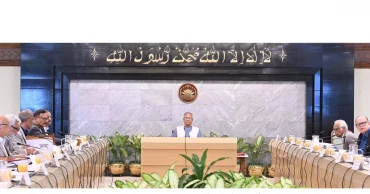
The Council of Advisers on Thursday (December 04) approved the draft Police Commission Ordinance-2025, aiming to make the police more people-friendly one.
Once the ordinance is promulgated, there will be a five-member commission under it, headed by a retired Supreme Court judge and the commission will make recommendations to the government on issues such as investigating and resolving citizen complaints, resolving grievances of police members.
Chief Adviser Prof Muhammad Yunus chaired the meeting the Chief Adviser’s Office.
Environment, Forest and Climate Change Adviser Syeda Rizwana Hasan briefed reporters at the Foreign Service Academy after the meeting.
Read more: Prof Yunus urges police to ensure ‘festive, peaceful historic election’
Chief Adviser’s Press Secretary Shafiqul Alam and Deputy Press Secretary Abul Kalam Azad Majumder also spoke at the briefing.
Adviser Rizwana said the commission members will be a retired district judge, a retired officer not below the rank of Additional Inspector General of Police, a professor of a university who can be working or retired and a person with at least 15 years of experience in human rights and good governance.
Responding to a question, she said the names of the commission members will come through a selection committee and the government will make appointments based on that.
Regarding the purpose of the formation of the commission, the Adviser said the police will be made people-friendly and people-oriented and this commission will work in collaboration with the government.
Read more: 64 districts get SPs through lottery: Home Adviser
The commission will recommend to the government what needs to be done to ensure that the police can work free from influence.
Besides, the commission will also identify where the police need to be modernized and what kind of training is needed to make the police human rights sensitive.
The meeting of the Council of Advisers also approved the proposal to amend the Representation of the People Order (RPO).
The meeting also approved the draft of the National Regulatory Authority Ordinance on building construction.
Read more: Bangladesh sees crime spike ahead of polls; police stress preparedness
The meeting gave in-principle approval to the Hi-Tech Park Authority Amendment Ordinance.
10 months ago

Bangladesh promulgates ordinance with death penalty for enforced disappearances
The government has promulgated the Enforced Disappearance Prevention and Remedies Ordinance, 2025 with the provisions of death penalty and life imprisonment for those to be found guilty of involvement in incidents of enforced disappearances.
The Legislative and Parliamentary Affairs Division under the Ministry of Law issued a gazette late on Monday (December 01).
The Council of Advisers approved the draft of the ordinance on November 6.
Jamaat Ameer appreciates move to try army officers linked to enforced disappearances, killings
According to the ordinance, tribunals will be set up at district and divisional levels to deal with the cases of prevention and prosecution of enforced disappearances.
Offences under the ordinance are non-bailable and non-compoundable.
As per the ordinance, if the victim dies as a result of enforced disappearance or if the person cannot be found alive or dead even five years after the disappearance, the offender may be sentenced to death or life imprisonment.
If any public servant or member of a law enforcement agency arrests, detains, abducts, or otherwise deprives a person of liberty and deny the act or concealing the fate or whereabouts of the person, thereby placing the individual outside the protection of the law may face life imprisonment or a prison term of up to 10 years, it says.
Anyone found to have destroyed evidence of disappearance, or constructed, installed, or used secret detention centres for enforced disappearances may face up to seven years in prison.
The ordinance also sets out penalties for senior officers or commanders of law enforcement agencies.
It states that if a superior officer orders, authorises, approves, consents to or instigates the commission of such crimes by subordinates or participates in the crime he or she will face the same punishment prescribed for the offence.
Warrants issued for arrest of Hasina, 29 others in 2 enforced disappearance cases
A superior may also be punished if negligence, incompetence, or failure to maintain discipline or control enables subordinates to commit an enforced disappearance, the ordinance says.
It further states that the location of an arrested person may be kept confidential ‘in the interest of state security’ until the person is produced before a magistrate.
Trials may proceed in absentia if the accused is on the run.
10 months ago

RPO (Amendment) Ordinance: Coalition candidates must contest under own party symbols
The government of Bangladesh has issued the “Representation of the People (Amendment) Ordinance, 2025,” with provision that even if registered political parties form an electoral alliance, candidates must contest the polls with their own party symbols.
The Legislative and Parliamentary Affairs Division of the Law Ministry issued a gazette notification in this regard on Monday (3rd November 2025).
Earlier, on October 23, the Advisory Council approved the draft amendment of the RPO.
During discussions on amending Article 20 related to the use of coalition symbols BNP objected to the change while Jamaat-e-Islami and the National Citizen Party (NCP) demanded the provision remain unchanged.
Election 2026: EC directs field officials to arrange polls preparation meetings
Ultimately, the government retained the rule that candidates in alliances must contest under their respective party symbols.
This means that in the upcoming election, candidates nominated under an alliance cannot use the symbol of a larger or allied party but must use their own registered party symbol.
The amended ordinance specifies that if two or more registered political parties agree to jointly nominate a candidate, the Election Commission may allocate the symbol reserved for the candidate’s own political party based on his or her party affiliation.
Read more: 12-party alliance for allowing alliance candidates to use partner’s symbol
11 months ago
Govt approves ordinance for transparent HC judge appointments
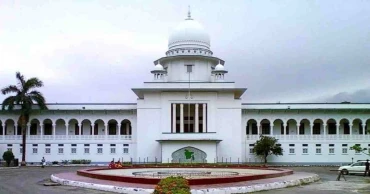
The government has approved an ordinance that maintains the provision for appointing judges to the High Court (HC) through the establishment of a council.
Law Affairs Adviser Prof Asif Nazrul announced this at a press conference regarding HC judge appointments and other contemporary affairs held at the Secretariat on Tuesday.
He revealed that the Council of Advisory approved the draft of the 'Supreme Court Judge Appointment Ordinance, 2025' on January 17 and its gazette was published on Tuesday.
Emphasising the importance of appointing neutral and competent judges, he said that the human rights of the 18 crore people would remain at risk if impartial and qualified individuals are not appointed as HC judges through a transparent process.
"The gazette for the 'Supreme Court Judge Appointment Ordinance 2025' was issued today. You all know that under the previous government, the High Court became a major platform for lawlessness, human rights violations, and the repression of people. Even in the face of severe human rights violations, people were denied redress," he added.
The Law Adviser noted that political parties and civil society organisations had long been advocating for the appointment of skilled, experienced and neutral judges to the HC to ensure justice.
Read: Govt okays SC Judges Appointment Ord
According to the ordinance, the formation of the Supreme Judicial Appointment Council for HC judge appointments is mandated. The council will be headed by the Chief Justice and will include two justices each from the Appellate Division and the HC, along with the Attorney General.
"The council will first conduct a thorough scrutiny. They will gather potential candidates on their own initiative, but anyone—be it an individual or a lawyer—can also submit recommendations. This process will be open, and the council will hold interviews after the initial scrutiny," the ordinance explains.
Adviser Asif further assured, "Judges will be appointed to the High Court through a transparent and accountable process. Hopefully, with the High Court's involvement, we will be able to establish a better appointment process than in any previous tenure."
He said that judges for the HC will be appointed from both the judicial services and the pool of lawyers, with the council determining the appropriate ratio for each group.
Regarding the trial progress at the International Crimes Tribunal (ICT), the Law Adviser expressed satisfaction, saying that there is no connection between the election and the prosecution of the former Awami League government's cohorts.
Read more: Political appointment of judges destroyed judiciary: Asif Nazrul
A second ICT could be formed to expedite trials, if necessary, and that political party unity could further accelerate the election process, he added.
1 year ago
Draft ordinance for repealing security for family of Father of the Nation approved
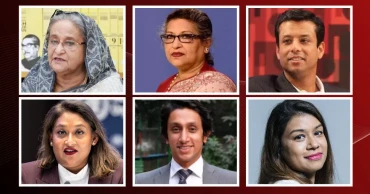
The Advisory Council meeting on Thursday gave final approval to the draft of 'Security of Family Members of the Father of the Nation (Repeal) Ordinance, 2024', subject to vetting by the Legislative and Parliamentary Affairs Department.
Interim Government Chief Adviser Professor Muhammad Yunus chaired the meeting at state guesthouse Jamuna.
“Our government is an outcome of anti-discrimination movement. It (the security ordinance) was seen as discriminatory,” Adviser on Environment, Forest, and Climate Change Syeda Rizwana Hasan told reporters after the meeting.
The Public Security Division of the Ministry of Home Affairs initiated the issue as they feel there is “no necessity” of such special security.
As per the decision of the previous government, the 'Father of the Nation Security of Family Members Act, 2009' (Act No. 63 of 2009) was enacted and promulgated. Later, a gazette was issued to provide special security and facilities as per the Act.
The law was enacted only to provide state privileges to members of a family which is a clear discrimination, said the Advisory Council.
The current interim government is committed to eradicating all discrimination after the anti-discrimination student uprising, according to the press wing of the Chief Adviser.
It is necessary to take immediate action and issue an ordinance to repeal this Act, the Council viewed.
The family members of Father of the Nation Bangabandhu Sheikh Mujibur Rahman were getting foolproof state security everywhere in the country, including their residences and free utility services.
Meanwhile, the Advisory Council in its meeting also gave final approval to the draft of 'Special Security Force (Amendment) Ordinance, 2024'.
The 'Special Security Force Act, 2021' was formulated to provide security to the President, Prime Minister of the People's Republic of Bangladesh, family members of Father of the Nation Bangabandhu Sheikh Mujibur Rahman.
In view of the popular uprising of the students, an interim government was formed on August 8, 2024, consisting of the Chief Adviser and other advisers.
In such a changing situation, it is necessary to ensure the security of the Chief Adviser under the 'Special Security Force Act, 2021'.
It was also necessary to cancel some of the provisions of the said law with the addition of the security provision of the Chief Adviser to the Interim Government of the People's Republic of Bangladesh. 'Special Security Force Amendment Ordinance 2024' was unanimously approved in the advisory council meeting.
2 years ago