Export markets
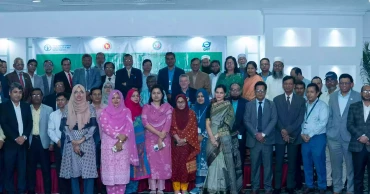
FAO supports Bangladesh in strengthening export, safety for fisheries, livestock sectors
A validation workshop hosted by Food and Agriculture Organization of the United Nations (FAO) on Thursday focused on reducing pesticide risks and enhance the quality of dried fish for domestic and export markets.
The workshop was arranged to finalise the updated version of the National Residue Control Plan (NRCP) Policy Guidelines 2011 (Revision 2025) and the Pesticide Residue Monitoring Plan (PRMP) Guidelines for dry fish in Bangladesh at Pan Pacific Sonargaon Hotel on Thursday.
The workshop aimed to align Bangladesh’s pesticides management frameworks with the changing requirements of the European Union (EU) and national regulations governing pesticide residues in the fisheries sector.
The initiative is done under the FAO’s led Pesticide Risk Reduction in Bangladesh project that is funded by the Global Environment Facility (GEF).
Dia Sanou, Deputy Representative, FAO Bangladesh, and Shahina Ferdousi, Joint Secretary, Fisheries Branch, Ministry of Fisheries & Livestock, participated the event which was chaired by Md. Zia Haider Chowdhury, Additional Director General, Department of Fisheries.
The validation meeting follows an extensive consultative process to identify gaps and areas for improvement in the existing NRCP Policy Guidelines and inform the updating the NRCP Policy Guidelines and developing the PRMP Guidelines to ensure their compatibility with both EU regulations and national standards.
This process involved thorough desk reviews of relevant legislation and regulations, as well as conducting three focus group discussions (FGDs) in Khulna, Gazipur, and Dhaka with experts, stakeholders, and government officials.
Shahina Ferdousi, Joint Secretary, MOFL, acknowledged DoF and FAO’s significant collaboration in ensuring the country’s sustainable export and food safety regulations.
World food prices remain steady in August: FAO
She said, “FAO has trained DoF officials on pesticide residue monitoring, reviewed regulations, and improved drying practices for dried fish producers. These efforts aim to reduce pesticide risks and enhance the quality of dried fish for domestic and export markets."
Dia Sanou, Deputy Representative, FAO Bangladesh, highlighted the country’s remarkable progress in the fish export sector, "Bangladesh has become the third-largest global producer of farmed fish, exporting to over 50 countries, including major markets like the EU, the US, and Japan.
However, the country faces growing challenges with chemical contamination in aquaculture products, particularly from banned drugs and other chemicals, leading to significant economic impacts and a loss of customer confidence."
He further added, “The updated NRCP Policy Guideline 2011 and PRMP Guideline for Dry Fish will help uphold safety standards in Bangladesh’s fisheries, protect public health, and strengthen exports.’’
The workshop will work as a key milestone in fostering collaboration among key actors in this sector.
The validation meeting is part of the FAO’s ongoing efforts to ensure sustainable and safe fishery practices in Bangladesh, fostering better regulatory frameworks to safeguard public health and improve trade standards for seafood products.
FAO distributes silo, cattle feed to 15 110 families in Jamuna river basin to safeguard livelihoods
The recommendations focused on the "Four Betters"—Better Production, Better Nutrition, Better Environment, and a Better Life—ensuring sustainable export and food safety regulations in fisheries and aquaculture.
1 year ago

ICCB seeks strategy to rebuild ties with export markets, importers
International Chamber of Commerce-Bangladesh (ICCB) has said the current law-and-order issues have led to “adverse reactions” from international brands and buyers, raising concerns about future orders.
It is crucial to devise a strategy to rebuild relationships with key export markets and importers urgently, the ICCB said in its editorial of the current news bulletin released on Wednesday.
Businesses fully trust Chief Adviser Prof Muhammad Yunus's leadership in creating a ‘New Bangladesh’ and will act as a catalyst with the interim government to ensure true democracy, justice for all, discrimination-free, and sustainable, inclusive growth to fulfill the dream of our martyrs, said the chamber body.
However, it said, some actions and steps taken do not seem to be in line with achieving these objectives as opined by civil society and experts. “Nevertheless, we are optimistic about the future.”
Private sector will work hand in hand with interim government to rebuild country's economy: ICCB President
Besides, according to BGMEA, the garment industry has suffered collective production loss of around US$400 million. “As the RMG sector is crucial to our export earnings, ensuring uninterrupted operations and taking comprehensive measures to stabilise the garment industry is vital,” said the ICCB.
August 5 marked a landmark victory for the people of Bangladesh through an unprecedented Anti-discrimination Students' Movement, said the ICCB.
The ‘Quota Reform Movement’, which initially aimed to reform the 2018 quota system for government jobs, ultimately attributed to the end of Prime Minister Sheikh Hasina's 15-year ‘autocratic’ governance, according to the editorial.
This achievement, showcasing the solidarity, strength, and determination to uphold the rights of students and the people, serves as a testament to the enduring spirit of collective action, even in the face of significant challenges.
Thus, ICCB said, a new chapter of democracy and good governance has unfolded in our country through the sacrifices made and the mass movement supported by the entire nation. “We honour the movement's martyrs, pray for the salvation of their departed souls, offer our condolences to their families, and wish a swift recovery for those who were injured.”
Businesses emphasised the urgent need to address various issues, particularly the law and order situation, said the chamber body.
Bangladesh could reduce costs by 11-12%, gain additional $0.6 billion in exports by embracing digital trade: ICCB Roundtable
Despite government efforts, including deploying armed forces, some miscreants continue to instigate unrest, affecting industries, especially the RMG sector, ICCB observed.
Although all demands of RMG workers have recently been accepted, industrial areas still face disruptions due to outsiders causing disorder, it said.
These offenders have engaged in robbery, vandalism, arson, and looting, resulting in damages exceeding Tk. 5,000 crores as estimated by the businesses.
Businesses emphasised on ensuring stable energy supply, financial sector stability, improving the country's image, and advancing the ICT sector.
Approximately 70 million people work in various sectors such as garments, pharmaceuticals, food processing, leather, small industries, and ICT. Unrest in the industrial sector could lead to mass unemployment, causing social and economic instability, said the ICCB.
The youth represent the country's future, and fostering employment and economic growth requires strengthening and expanding the private sector.
The business community aims to collaborate with the younger generation, leveraging their intellect and vision to present Bangladesh in a new light on international platforms, the ICCB added.
1 year ago