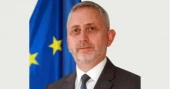
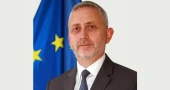
Ambassador Michael Miller
EU wants fair polls, says election timing an issue for Bangladesh to decide
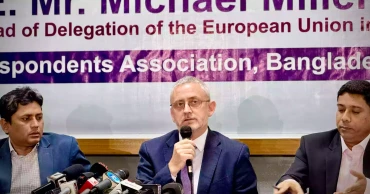
Reiterating its support for the delivery of an ambitious reform agenda in Bangladesh, Ambassador and Head of Delegation of the European Union Michael Miller on Monday said the election timing is an issue for Bangladesh to decide and they are not pressuring on anyone to hold the election on a particular date.
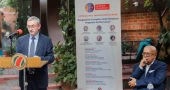
“I think that I have to say that timing is a matter for Bangladesh to take a decision upon. We see this political transition as leading up to democratic elections. So, that's the important milestone I mentioned. But as the European Union, we don't have an opinion about time, and we are not pressuring anyone to hold elections on a particular date,” he said while responding to a question at the “DCAB Talk” held at Jatiya Press Club.
Diplomatic Correspondents Association, Bangladesh (DCAB) hosted the event where DCAB President AKM Moinuddin and General Secretary Md Arifuzzaman Mamun also spoke.
Ambassador Miller said they are waiting for political parties and the interim government to agree on “very clearly prioritised and specific list of reforms” and noted that they do have experience which is helpful and financing which can support. And we have the political will to stand with you.”
Election timing an issue for Bangladesh to decide: Ambassador Miller
Chief Adviser Prof Muhammad Yunus has recently said the people of Bangladesh think that the interim government is still the “good answer” for them but stressed that they will not go beyond June 2026 to hold the best election ever in the country.
Prof Yunus, who is also Chairman of the National Consensus Commission, stressed the urgency of accelerating reform efforts to ensure that the national election is held between December this year and June 2026.
EU envoy visits BRAC University to discuss academic collaboration
Ambassador Miller said they think that there needs to be sufficient time to implement the reforms under this interim government.
Referring to their work with the Election Commission, he said they have been engaging to try to identify where the European Union can be most helpful in supporting the conduct of the elections in line with international standards.
“We absolutely want the elections, when they are held, to be ones that we can look at and say, this is free and fair and the result is entirely credible,” said Ambassador Miller, adding that they we want to be part of that success story, because it will be a very significant milestone in Bangladesh’s political transition.
He said they are also working to make sure that disinformation is not something that they see undermining the free and fair conduct of the elections when they happen.
Based on deaths reported by various credible sources, the UN report estimated that as many as 1,400 people may have been killed between 1 July and 15 August, and thousands were injured, the vast majority of whom were shot by Bangladesh’s security forces.
Responding to a question, the EU Ambassador said they support the work of the UN fact-finding mission and laid emphasis on accountability for those “terrible crimes” perpetrated against the people during the July Uprising.
Highlighting the importance of Bangladesh’s judicial authorities’ evidence-based work, Ambassador Miller hoped that Bangladesh will deal with the terrible crimes perpetrated against its people.
“There must be accountability. There must be transparent and fair process and the rights of every single person should be respected through due process,” he added.
Ambassador Miller said the interim government had inherited “very great number of challenges”, including on security, economy, financial fronts and rebuilding confidence takes time.
Talking about women’s rights, the EU envoy said equality between men and women is the core value in Europe and it is a core universal value.
He said the work of the Women’s Affairs Reform Commission should be examined extremely carefully and they support all efforts that ensure equality between men and women.
“The report and the recommendations of the Women’s Affairs Reform Commission are extremely important. We consider equality between men and women as core value of the EU,” said Ambassador Miller.
He said the recommendations of the Commission should be looked at “extremely carefully and closely” by political parties because they would like to see those recommendations translated into actions. “We will contribute towards greater equality.”
In response to a question on the Rohingya issue, Ambassador Miller said unfortunately this is a crisis that goes on despite the best efforts of Bangladesh and partners like the European Union.
“There are enormous efforts being made by Bangladesh,” he said, adding that there is violence on the other side of the border.
“We are indeed trying very hard to support a political solution which is the only solution to this crisis,” said Ambassador Miller.
“I have to say, we have many conversations with the Bangladesh authorities, those conversations always concluded with a common understanding that return can only be in a safe, dignified, and voluntary manner,” he added.
As a humanitarian partner for Bangladesh, Ambassador Miller said they are quite happy to be pragmatic on how they can meet the needs of the refugees.
The European Union has maintained a consistent level of support over the past seven years. In 2025, the European Union has already allocated over EUR 32 million to support the Rohingya refugees and their Bangladeshi host communities. These funds are provided via the Joint Response Plan, which we are launching today.
The European Union also supports Rohingya refugees who have fled to other countries in the region, as well as the Rohingya who remain in Myanmar. Our total support for the Rohingya since 2017 equals nearly 1 billion EUR provided together by the EU and its Member States.
1 year ago
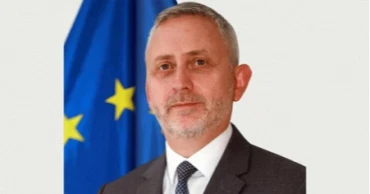
EU underlines need for transparent investment environment
Ambassador of the European Union (EU) to Bangladesh Michael Miller on Wednesday underlined the need for a "transparent, predictable and competitive" trade and investment environment in Bangladesh.
Speaking at a session at the Bangladesh Investment Summit, he underlined that building prosperity, promoting sustainable growth, mobilising investments and addressing climate change are common goals of both the EU and Bangladesh.
The ambassador said the EU seeks to advance this through the Global Gateway approach by supporting a green economic growth model decoupled from carbon emissions, along with an inclusive energy transition that ensures affordable, secure, and clean energy for all, mobilising €1.3 billion under the Team Europe Initiative on green energy with European Investment Bank willing to double it’s lending in Bangladesh.
The EU organised the thematic session on "Renewable Energy: Unlocking the Potential of Bangladesh for Investors in Renewable Energy" as part of the Bangladesh Investment Summit 2025, organised by the Bangladesh Investment Development Authority (BIDA).
The session was opened by Ambassador Miller and the keynote speaker was Muhammad Fouzul Kabir Khan, adviser for the Ministry of Power, Energy and Mineral Resources.
Other high-level speakers were Jarno Syrjälä, Under-Secretary of State for International Trade, Ministry for Foreign Affairs of Finland, and Mr. Nicolas Weeks, Ambassador of Sweden to Bangladesh.
The session on renewable energy brought together investors from Europe, Asia and other regions, key industry stakeholders, local industry leaders, the Bangladesh authorities, and sector experts to discuss the potential of renewable energy in Bangladesh.
Bangladesh, one of South Asia’s fastest-growing economies, presents significant opportunities for foreign direct investment (FDI) in renewable energy, driven by rising electricity demand from rapid industrialisation and urbanisation, as well as high energy costs resulting from import dependency of fossil fuels, said the EU Embassy.
DP World discusses investment opportunities with CA Prof Yunus
Adviser Fouzul highlighted the depletion of fossil fuel reserves, volatility in the global energy market, and carbon emissions as key factors driving Bangladesh’s transition to renewable energy, reaffirming the interim government's strong commitment to fostering a transparent, competitive, and inclusive renewable energy market that serves the interests of businesses, citizens, and the nation as a whole.
A panel discussion explored at length the urgent need for investment in renewable energy production in Bangladesh, opportunities and challenges in terms of the business environment, investment framework, and regulatory landscape, as well as the mechanisms for green financing to support renewable energy projects in Bangladesh.
The panel included Michael Steidl, Regional Head of the European Investment Bank (EIB), Jalal Ahmed, Chairman of the Bangladesh Energy Regulatory Commission (BERC), Sarah Negro, Global Head of Public Affair for H&M, Tanveer Mohammad, Chief Corporate Affairs Officer, Grameenphone Ltd, Ahsan Khan Chowdhury, CEO and Chairman of PRAN-RFL Group, Khandker Md. Abdul Hye, Chairman of Sustainable and Renewable Energy Development Authority (SREDA), and Syed O. Faruque, Partner, COP Frontier O2 ApS.
It was moderated by Máté Heisz, Chief Operating Officer of SolarPower Europe.
The panel discussion was followed by a B2B matchmaking session that connected local and international investors, facilitating their networking with government authorities and financial institutions, and fostering partnerships for new investments in renewable energy and other sectors.
The event also showcased renewable energy projects in Bangladesh involving Team Europe (the EU, EU financing institutions, Norway and Switzerland), Lafarge Geocycle, ABB, SolShare, Bangladesh Sustainable and Renewable Energy Association (BSREA), and Omera Solar.
Two MoUs were signed during the session: one between H&M and Pran Group on a Corporate Power Purchase Agreement (CPPA), and another between SolarPower Europe and BSREA on renewable energy cooperation.
The day concluded with a reception hosted by EuroCham Bangladesh.
The renewable energy session was organised in collaboration with the Bangladesh Investment Development Authority (BIDA), United Nations Developemtn Programme (UNDP), and the European Union Chamber of Commerce (Eurocham) in Bangladesh.
1 year ago
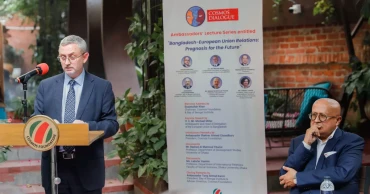
EU wants Bangladesh to succeed in its transition from “autocracy to democracy”
Ambassador and Head of Delegation of the European Union (EU) to Bangladesh Michael Miller has said they want to see Bangladesh successfully transition “from autocracy to democracy” and become a like-minded partner in international organisations.
“We want your transition to succeed. We need things to move on quickly, and we are here to work with you. We are here as the European Union offering partnership expertise, investment and consistency,” he said, adding that they want to see Bangladesh 2.0 emerge and want to be Bangladesh’s consistent partner well beyond the lifetime of this interim government.
Ambassador Miller made the remarks while delivering his keynote speech on “Bangladesh-European Union Relations: Prognosis for the Future.” Cosmos Foundation, the philanthropic arm of the Cosmos Group, in collaboration with the Bay of Bengal Institute organized the dialogue as part of Ambassadors’ lecture series under the Cosmos Dialogue on Monday evening.
He elaborated why they want to support all the reform ambitions of the interim government. The Ambassador said it is extremely important for them to pursue this relationship to the maximum and they need to also ensure that there is respect for fundamental rights, there is due process in this country, the rule of law is upheld, and those rights apply to everyone, without exception.
“Human rights are for all. They're not European, they're universal, and they apply to your citizens as well as to our citizens. And it is important now that this stability in terms of politics in your country is reflected in the reality; everyone has a right to due process. People should not be in jail unless they are held on credible charges of criminal offenses and so on and so forth,” Ambassador Miller said.
Chairman of Cosmos Foundation and Bay of Bengal Institute Enayetullah Khan delivered the opening remarks while the session was chaired by Dr Iftekhar Ahmed Chowdhury, a renowned scholar-diplomat and former Adviser on Foreign Affairs of Bangladesh Caretaker Government.
Gaining sectoral dialogue partner status with ASEAN high on the agenda for Bangladesh
President of Bay of Bengal Institute and Honorary Adviser Emeritus, Cosmos Foundation Ambassador (Retd) Tariq A Karim, Dhaka University Prof at Department of Development Studies Rashed Al Mahmud Titumir, Prof at Department of International Relations, University of Dhaka Dr Lailufar Yasmin; Cosmos Group DMD and Honorary Consul of Ireland in Bangladesh Masud Khan and Cosmos Foundation Executive Director Nahar Khan, among others.
Members of the diplomatic corps and distinguished academicians attended the event.
Enayetullah Khan said Bangladesh values its relationship with the EU. “Let us look forward to an era of strategic cooperation, partnership and global engagement. As Bangladesh enters a new era called Bangladesh 2.0, support from the EU will continue to be vital and critical for our future endeavors,” he said.
1 year ago

EU eyes right process towards Bangladesh polls; also mindful of rule of law
Acknowledging the broader support and popularity of the interim government, Ambassador of the European Union (EU) to Bangladesh Michael Miller has said there has to be democratic elections at the end of the process, leading to a new parliament and a government with people’s mandate staying mindful of the “rule of law and respect” for fundamental rights.
“For us, these are principles that are at the core of the relationship between the European Union and Bangladesh,” the Head of the EU Delegation told UNB in his first interview after his arrival in Dhaka, noting that the ambition is “sky high” while the changes are always “difficult”.
The Bangladesh-EU partnership is seen as fast-evolving and dynamic; and last year, two sides celebrated 50 years of relations.
Ambassador Miller said the popularity of the Chief Adviser and interim government is very clear and the sense of common support across party lines is really very strong.
He said it is a difficult moment and perhaps not everything - not all reforms - can happen all at once but there has to be delivery of some “quick wins”.
Ambassador Miller said the government has to demonstrate that it is able to take forward reforms. “The ambition is sky high. The pressure from the street is extremely strong and somewhere here there has to be delivery of some quick wins which can still be structural in nature.”
1 year ago