Constitution of Bangladesh
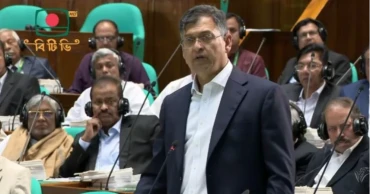
No constitutional existence of ‘Reform Council’ yet: Home Minister
Home Minister Salahuddin Ahmed on Sunday said the Constitution of Bangladesh does not recognise anything named a ‘Reform Council’, noting that such a council could only be established after a constitutional amendment.
“The honourable President has convened a session of the National Parliament, not a session of any ‘Reform Council,” he told reporters before joining the adjourned sitting of the Jatiya Sangsad.
Referring to the proposal mentioned in the July National Charter, Salahuddin said that if a constitutional reform council is to be implemented under that framework, the Constitution must first be amended.
He also noted that the legality of the proposed council has already been challenged in court.
“The Constitutional validity of the council mentioned under the July National Charter has been challenged, and the court has issued a rule in this regard. The matter is now under judicial consideration,” he said.
The Minister said that if such a council is to be formed based on the outcome of a referendum, the Constitution must first be amended through discussion.
Fuel rationing withdrawn, normal supply resumes at filling stations
“Only after the Constitution is amended and the provision incorporated can steps be taken to form the council and arrange the oath-taking, if necessary,” he added.
Responding to another question regarding the Speaker and Deputy Speaker, the Home Minister said both still hold their primary membership in their respective political parties.
“They have not resigned from their parties. Therefore, Article 70 of the Constitution does not apply here,” he said, adding that the provision becomes applicable only when a member resigns from their party.
7 months ago

Attorney General argues for removal of “Father of the Nation”, “Bengali Nationalism”, “Secularism” from Constitution
Attorney General Md Asaduzzaman today called for significant revisions to the Constitution, suggesting the removal of key provisions such as socialism, Bengali nationalism, secularism, and the designation of Bangabandhu Sheikh Mujibur Rahman as "Father of the Nation."
During the fifth day of hearings at the High Court on the legality of the 15th Constitutional Amendment, he argued that these changes would align the constitution with the country's democratic and historical ethos.
The Attorney General also demanded the reinstatement of provisions for a referendum, which was abolished under the 15th Amendment.
Speaking to the media after the hearing, the Attorney General said that retaining the 15th Amendment undermines the spirit of the Liberation War, the 1990 mass uprising, and the 2024 July revolution. "The amendment betrays the sacrifices of martyrs like Abu Sayed and Mugdho," he said.
He accused the amendment of prolonging authoritarian rule and violating constitutional supremacy. "It’s a direct assault on democracy and the rule of law," he said, adding that the amendment perpetuates division among citizens and disrupts the country’s political stability.
Attorney General argues for removal of “Father of the Nation”, “Bengali Nationalism”, “Secularism” from Constitution
Touching on the inclusion of Sheikh Mujibur Rahman as "Father of the Nation" in the preamble of the constitution, Asaduzzaman acknowledged Mujib’s critical role in Bangladesh's independence. "Sheikh Mujibur Rahman’s contributions to our Liberation War are undeniable, but the imposition of this title in the 15th Amendment deviates from the original spirit of the constitution," he noted.
The Attorney General argued that this inclusion fosters political polarisation and has been enforced in a way that restricts dissent, making it a punishable offence to criticise him. "This contradicts the spirit of constitutional inclusivity," he said.
The Attorney General further criticised Article 6, which defines national identity through language, claiming it has fostered unnecessary divisions among citizens. He argued that no other country uses language as a basis for national identity, making this provision unique and problematic.
He also took issue with Articles 7(ka) and 7(kha), claiming they undermine democracy and serve authoritarian purposes. Calling for their repeal, he asserted these articles were enacted with ill intent to stifle democratic institutions.
Addressing Article 8, Asaduzzaman argued that socialism and secularism do not reflect the realities of a nation where 90% of the population is Muslim. He advocated for reinstating the original phrasing, which emphasised unwavering faith in Allah. He also questioned the relevance of Bengali nationalism in Article 9, calling it inconsistent with modern democratic principles.
The Attorney General vehemently opposed the abolition of the caretaker government system, calling it a "stab in the heart of democracy."
The Attorney General urged the reinstatement of referendum provisions under Article 142, arguing it was essential for restoring democratic accountability. He criticised the amendment for enabling MPs elected through "election engineering" to unilaterally eliminate this critical democratic mechanism.
1 year ago