state reform
State reforms useless without mindset change: Salahuddin
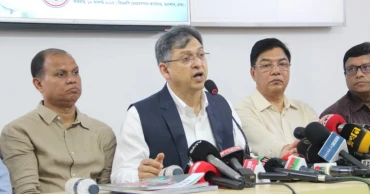
BNP Standing Committee Member Salahuddin Ahmad said on Sunday that reforming the state structure will be pointless unless rulers, politicians and citizens change their mindset and attitude.
“Let us adopt a mindset where we go through reform every day — a reform aimed at public welfare, so we can work towards building a welfare-oriented state and society,” he said while addressing a programme at the BNP Chairperson’s Gulshan office.
The BNP leader said everyone is now talking about reform at the state level, but reform of the system alone is not enough.
“If we truly want a welfare-oriented and humane state, we must also reform our way of thinking. Those who will run the state must go through mental reform, the people must also go through mental reform, and our mindset as a whole must change,” he observed.
Salahuddin said only a collective transformation of the people, the society and the political leadership could help implement true structural reform.
He believes that if that happenes, it would lead to the creation of a humane and welfare-oriented state.
“We have to see reform as a continuous process. Only then can we build a state structure that serves the people, where both the leaders and the citizens share responsibility,” the BNP leader said.
‘Amra BNP Poribar’ arranged the programme to provide financial assistance to injured activists from the 2024 student-led mass uprising, cancer patients and other sick and helpless people.
The BNP leader said the country will now have a democratic constitution through reforms.
He, however, questioned how a humane state can exist if neither the rulers nor the people change their mindset.
Prof Yunus’ move clears confusion over next national election: Salahuddin
Salahuddin said that if people think all responsibility lies with the government, it is a wrong idea.
He mentioned that Robert Kennedy once said he might not be able to give anything to the first two generations, but maybe the third one would benefit. He said their vision should be the same -- what they could do for the country, not just what the government could do for them.
Salahuddin said this is the change of mindset the nation now needs, and only then would it be possible to have a dynamic government, state and society that reflect the dreams of the martyrs and freedom fighters.
Referring to the sacrifices made during the student uprising of 2024 and the Liberation War, the BNP leader said, “We must work to build the kind of society they dreamed of – so that the next generation can live in a better country.”
He urged all to work so that fascism never rises again and that the state is run in a way that reflects the will and welfare of the people.
Salahuddin said those who sacrificed their lives and got injured during the democratic movements, including the mass uprising last year, are national heroes.
The BNP leader expressed sorrow that the interim government still could not prepare a proper list of those killed and injured in the mass uprising.
Presided over by BNP family convener Atikur Rahman Ruman, the meeting was conducted by member Zahidul Islam Rony. BNP Media Cell convener Moudud Hossain Alomgir Pavel, treasurer Rashiduzzaman Millah, and assistant secretary for information and technology Ashraf Uddin Bakul were also present.
1 year ago
NCP urges sweeping state reform to prevent slide into autocracy
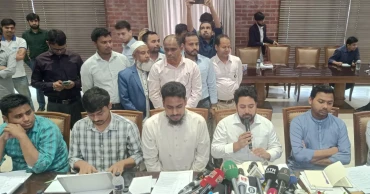
The National Citizen Party (NCP) on Saturday called for a radical overhaul of the state structure through comprehensive reforms, aiming to fulfil the aspirations of the July mass uprising and prevent the re-emergence of fascism or autocratic tendencies in future governments.
“By reform, we mean fundamental reform and the reforms which will bring a radical change and a qualitative change in the structure of the state,” said NCP Convener Nahid Islam.
He made the remarks at his opening speech at the talks with the National Consensus Commission at the LD Hall of the Jatiya Sangsad Complex.
An eight-member NCP delegation led by Nahid Islam attended the dialogue at 10:30am with Vice Chairman of the Consensus Commission Prof Ali Riaz in the chair.
The National Consensus Commission arranged the talks as part of a series of dialogues with political parties to reach a national consensus over the state reform initiatives taken by the interim government.
Nahid Islam said different state institutions, including the Constitution, were politicised in the past. The seed of one person-centric structure was sown in the Constitution, he said.
“As a result, no matter who comes to power, no matter who is given the responsibility of running the state, if the state structure is kept unchanged, there will be a tendency among them to become fascist and autocratic,” he said.
The NCP Convener said the July mass uprising did not happen not just for the change of an individual. “There was no plan to remove one party from power and install another. Rather, there was an aspiration in the July Mass Uprising to establish a democratic state system that would protect the rights of people through fundamental and qualitative reforms of the state structure by bringing qualitative changes to the state,” he said.
NCP delegation led by Nahid joins talks with Consensus Commission
He said the aspirations that led people to take to the streets in the past, including the 1990 mass uprising, have failed. “That failure led to the creation of a fascist regime that lasted for 16 years,” he added.
Noting that the aspirations of the July Mass Uprising should no way be failed, Nahid said, “We must fulfill the desire that has been created among the people - this is commitment of all of us to the nation,” he said.
In the case of fundamental reforms of the State, the National Citizen Party, are giving special importance to the issues like the constitution, the Prime Minister, the judicial system and the electoral system, he added.
“We all have to make that commitment before the nation to ensure another autocratic system, fascism will not come to Bangladesh and we will move forward by closing all its paths. And we will work from our respective places to create a democratic constitution, a democratic state structure,” said the NCP chief.
Peace won't return to Myanmar keeping Rohingya issue unresolved: Dhaka tells Washington
Earlier, on March 24, NCP submitted its written opinions over the reform recommendations to the National Consensus Commission.
Out of the 166 reform recommendations made by the Consensus Commission, the NCP agreed to 113 recommendations and agreed partially to 29 others.
On March 20 last, the National Consensus Commission opened its dialogues with political parties aiming to build a national consensus on the reform initiatives undertaken by the interim government.
The commission has already held talks with 12 political parties.
The commission formed under the leadership of Chief Adviser Prof Muhammad Yunus aims to establish a unified stance on critical reforms.
Since its inception on February 15, 2025, the commission has been working to finalise recommendations for the state reform proposals.
In the initial phase, key recommendations from five reform commissions — covering constitutional, public administration, electoral system, judiciary, and anti-corruption reforms — were compiled and shared with 39 political parties for their feedback. To date, 34 parties have responded.
The National Consensus Commission is working to build national consensus over reform initiatives by mid-July next, by completing the first round of talks with political parties by the first week of May next and entering the second round of talks in the second week of May.
1 year ago