Telecom Policy

Debate Over Telecom Policy: Stakeholders criticise lack of consultation, govt defends policy
A heated debate has emerged surrounding the government's proposed 'Telecommunication Network and Licensing Reform Policy-2025,' aimed at overhauling the nation's telecom licensing framework.
Stakeholders are divided on its potential to modernise the sector versus concerns over regulatory changes.
Entrepreneurs and related organisations have expressed their anger over the draft being finalised without any discussion with stakeholders.
Bangladesh Nationalist Party (BNP)has also taken a strong stance on this issue and has urged the government to withdraw the draft policy.
On the other hand, the government states that this policy has been designed to reduce consumer costs and attract foreign investment.
The Department of Posts and Telecommunications has developed the 'Telecommunication Network and Licensing Reform Policy-2025' to bring major changes to the country's telecom licence system.
The draft proposes gradually cancelling old licences such as IGW, IIG, ICX, and NIX, and introducing new licences at both international and national levels. This move is feared to give more control to foreign-owned mobile companies, while small local entrepreneurs worry about losing their businesses.
Organisations like ICX, ISPAB, and other entrepreneurs have protested against the draft. BNP has also publicly asked the government to withdraw the policy, with their Secretary General Mirza Fakhrul Islam Alamgir criticising the government for making decisions quickly without consulting stakeholders.
Govt to break syndicate of 'autocrats and mafias' in telecom sector: Taiyeb
Fakhrul warned that this could hinder fair competition and sustainable growth.
The government claimed that the main goal of the policy is to improve customer service and lower costs. However, questions have also been raised about its impartiality as the 11-member committee formed to review the draft includes only officials from state-owned institutions.
Experts warned that the new framework might lead to a monopoly by large mobile operators, harming thousands of small local businesses that depend on employment in the sector.
"If the policy is implemented without proper discussion and thorough analysis, it could negatively affect the country's economy and technological development," experts added.
Mohammad Aminul Hakim, President of Internet Service Provider Association Of Bangladesh (ISPAB), told UNB that small local telecom operators are being affected by frequent policy changes.
He said that most of these operators are small entrepreneurs holding fixed telecom licences, and the new policy seems to threaten their existing licences and operations, especially in the fibre optic sector.
So, there is little protection for local entrepreneurs under these changes, he added.
BNP slams BTRC’s draft telecom policy, calls it inappropriate before polls
Expressing solidarity with the concerns raised by ISPAB and ICX, BNP criticised the government's decision during a press conference.
Mirza Fakhrul Islam Alamgir said that rushing the draft without stakeholder input could harm small businesses and create monopolies for big operators.
He added that lifting restrictions on ownership across multiple sectors could allow large companies to dominate multiple areas, reducing competition and hurting smaller firms.
In response, Faiz Ahmad Taiyeb, special assistant to the Chief Adviser on Ministry of Posts, Telecommunications and Information Technology, said that even if foreign investment is encouraged, local entrepreneurs will still be protected.
He welcomed opinions from political parties and assured that existing licences won’t be taken away. Those wishing to continue in the new system will need to obtain new licences.
Taiyeb also mentioned that the new policy aims to break the influence of past corrupt practices and mafia syndicates controlling the telecom sector.
He emphasised that the government is developing this policy through a transparent and democratic process, aiming for a fairer and more competitive industry.
Contents of the Draft Policy
The proposed ‘Telecommunication Network and Licensing Reform Policy-2025’ outlines significant changes to the licensing system in the telecom sector.
It introduces five new types of licences:
1. Access Network Service Provider (ANSP) Licence: For cellular mobile and fixed telecom services. ANSPs will also handle services directly at the customer level.2. National Infrastructure and Connectivity Service Provider (NICSP) Licence: For operating infrastructure such as fibre optics, towers, and transmission networks at the national level.3. International Connectivity Service Provider (ICSP) Licence: For international voice, internet, and data connections.4. Non-Terrestrial Networks and Service Provider (NTNSP) Licence: For satellite services, non-terrestrial networks (NTN), and high-altitude platforms (HAP).5. Telecom Enabled Service Provider: For services like SMS aggregators and OTT platforms.
Mobile operators welcome govt's proposed reforms to telecom sector
Once the policy is implemented, licences such as IGW, IIG, ICX, NIX, and MNP will be phased out, and companies will need to obtain new licences by 30 June 2027.
Foreign ownership limits are proposed as follows:
* ANSP: up to 80%* NICSP: up to 55% (or 80% in special cases)* ICSP: up to 49%
Debate Over Telecom Policy: Stakeholders Criticise Lack of Consultation While Government Defends the PolicyThe policy also proposes to encourage the launch of Mobile Virtual Network Operators (MVNOs), with increased scrutiny of dominant companies to prevent monopolies.
Infrastructure sharing will be made mandatory.
Additional plans include expanding services to rural and underdeveloped areas, adhering to cybersecurity and data protection laws, enabling lawful wiretapping, and offering subsidies and discounts based on performance.
The framework aims to be fully operational through amendments to existing rules, new licensing, and phased cancellation of old licences by June 2027.
1 year ago
BNP slams BTRC’s draft telecom policy, calls it inappropriate before polls
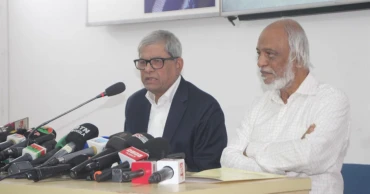
BNP on Thursday voiced concerns over the BTRC’s recently drafted ‘Telecommunication Network and Licensing Regime Reform Policy 2025’, saying that unilaterally enacting such a national policy ahead of the upcoming parliamentary election would be inappropriate.
“BNP believes that it won’t be appropriate to unilaterally enact such a nationally important policy at this time, especially considering the upcoming national elections,” said BNP Secretary General Mirza Fakhrul Islam Alamgir.
He conveyed the party's observations on the policy during a press conference at the BNP Chairperson's Gulshan office.
“BNP has taken note of the recent initiative by the Bangladesh Telecommunication Regulatory Commission (BTRC) regarding the 'Draft Telecom Network and Licensing Reform Policy 2025'. While this initiative is commendable, we express apprehension about making hasty decisions in such a nationally important sector at this moment,” Fakhrul said.
He said the objectives of the policy are to simplify the licensing process, encourage technological advancement, and increase digital inclusion for the rural population which are certainly positive aspects.
The BNP leader, however, said analysing the draft policy, some serious issues can be found that could hinder equitable and sustainable development in the telecom sector.
BNP extends maximum support for national reform consensus: Salahuddin
“BNP, with a constructive mindset, is highlighting the potential weaknesses, ambiguities, and certain clauses within this draft that could unduly benefit large Mobile Network Operators (MNOs) – which might harm Small and Medium Enterprises (SMEs) and local entrepreneurs,” he said.
Fakhrul said it is necessary to ensure caution, transparency and participation of relevant stakeholders in formulating such national-level telecom policies. “With the national election ahead, hasty decisions should not be made.”
He said his party pledged to continue working towards equitable development through digital connectivity and safeguarding national digital security and sovereignty.
Narrating the potential problems and challenges of the draft policy, the BNP leader said if the restriction on ownership across multiple services’ sectors is lifted, major mobile operators may establish monopolistic control in several areas. “This will reduce competition and push smaller companies further behind.”
He also said that SMEs could face a financial crisis if the draft policy is implemented. “Following deregulation, especially in the absence of clear guidelines on the assets and liabilities of local ISPs or small telecom operators, these smaller entities could fall into serious financial difficulties.”
Fakhrul said there is also a lack of clarity about the limit on foreign ownership, which could discourage investment and affect the stability of the sector. “Loopholes in cross-ownership could allow large companies to take over even more of the market.”
He urged the government to hold open discussions with all stakeholders, including SMEs, technology experts, and consumer organisations, before finalising such an important policy.
“A full analysis of the financial and social impact of the proposed policy should also be carried out. It is especially important to consider the possible harm to SMEs and local businesses, job losses and the overall impact on the economy,” the BNP leader said.
He warned that the draft policy favours large companies by giving them easier access to ISP and NSP licences. This could sideline SMEs, reduce competition and create monopolies, which would harm the wider economy.
Fakhrul said the policy does not provide clear guidance on satellite broadband and new digital services, which could confuse investors.
He also said the limits of enterprise services are unclear, especially when it comes to where mobile operators’ fibre-based business connections should be restricted. “This lack of clarity in the policy could lead to disputes and inequality,” he added.
BNP Standing Committee member Dr Abdul Moyeen Khan alleged that the government did not consult with relevant experts or political parties before formulating such a policy. “We do not support making such an important policy hastily before the election,” he said.
1 year ago