July mass uprising
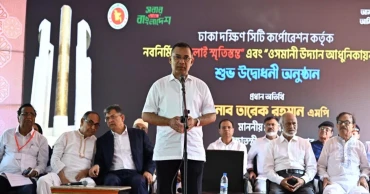
PM warns opposition against paving way for authoritarianism, betraying July martyrs
Prime Minister Tarique Rahman on Monday said the opposition that paving the way for a return to authoritarianism by opposing the government without justification would amount to betraying the martyrs of both the July mass uprising and the 1971 Liberation War.
“ If you open the way for authoritarianism while opposing the government, it will certainly not bring a good outcome for the country. It would be a betrayal of the July martyrs and, in the same way, of the freedom fighters of 1971,” he said.
The Prime Minister made the remarks while addressing a public gathering after inaugurating the July Memorial and the renovated Osmani Udyan beside the Secretariat.
He urged opposition parties to play a constructive role in Parliament and work with the government on issues of national interest.
Tarique said people are watching how the opposition is opposing the government simply for the sake of opposition.
“Of course, you will oppose the government. But opposition must be constructive. If we remain stuck in the old culture of opposing just for the sake of opposition, how will we move the country forward?” he asked.
Referring to the mandate given by people in the 13th parliamentary election, the Prime Minister said voters entrusted the BNP with the responsibility of governing the country and other parties with the role of opposition.
8 days ago
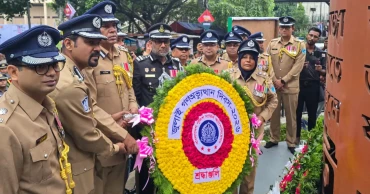
Bangladesh observing July Mass Uprising Day
Bangladesh is observing July Mass Uprising Day today with nationwide programmes, commemorating the student-led mass uprising that culminated in the fall of the Awami League government on Aug 5, 2024.
The day is being observed with state ceremonies, political programmes and tributes to those killed and injured during the uprising.
The government, political parties and socio-cultural organisations have taken various programmes, marking the day.
The minister, state minister, secretary, officials, and employees of the Ministry of Liberation War Affairs, along with people from different walks of life, placed wreaths at the July Martyrs' Memorial in Shahbagh in the morning.
At noon, a reception will be accorded to the families of the July martyrs and the July fighters at the Bangladesh-China Friendship Conference Centre in the capital. Acting President Hafiz Uddin Ahmad will attend the function as the chief guest.
Dhaka University is also observing the 2nd anniversary of the July Mass Uprising with a series of programmes, including the foundation-laying of a July Memorial and a dedicated July Corner in the university's Central Library.
A discussion on the July uprising will be held at the TSC where five families of the July martyrs will be honoured, and a prayer session will be held after Asr prayers at the Central Mosque, seeking eternal peace for the martyrs.
Bangladesh missions abroad also chalked out discussion programmes on the occasion.
Religious institutions across the country are organising special munajat and prayers.
Meanwhile, acting President Hafiz Uddin Ahmad and Prime Minister Tarique Rahman issued separate messages on the occasion of July Mass Uprising Day.
In his message, Hafiz Uddin extended his heartfelt greetings and congratulations to the valiant July warriors and all patriotic citizens of the country, saying the nation will forever remember their extraordinary sacrifices, boundless courage and outstanding contributions as an enduring source of inspiration.
He also called for upholding the dignity of the martyrs’ sacrifices, building a humane Bangladesh that belongs to the people, where fascist and authoritarian rule, as well as extremism, will never again find a place.
The acting President urged all to unite in building a new Bangladesh that is democratic, just, humane, free from discrimination, happy and prosperous and work together to realise the dreams, ideals, hopes and aspirations of the martyrs who made the supreme sacrifice in the Great War of Independence and the July Mass Uprising.
In his message, the Prime Minister described August 5 as a day of joy, a day of victory and a day of the restoration of democratic political rights for all those who cherish freedom and democracy.
He said for more than one and a half decades, in the struggle against fascism and for the restoration of the people's right to vote and their democratic rights, the BNP, other anti-fascist political parties, and the people of differing views had to endure limitless persecution and repression.
2 months ago
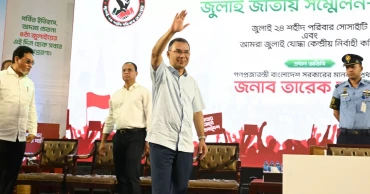
PM joins national conference marking 2nd anniversary of July mass uprising
Prime Minister Tarique Rahman on Saturday joined the July National Conference-2026, organised to mark the second anniversary of July mass uprising and honour those killed and injured during the movement.
The programme began at 10:12 am at the Bangladesh-China Friendship Conference Centre in Agargaon with a remembrance ceremony jointly organised by the July 24 Martyred Families Society and the central executive committee of Amra July Joddha.
"The conference is being held in remembrance of the bloody July Revolution. The programme is dedicated to the martyrs," Prime Minister's Additional Press Secretary Atikur Rahman Rumon said.
He said Prime Minister Tarique Rahman attended the programme as the chief guest.
Families of those who were martyred in the July mass uprising and those who were injured attended the event.
The programme began with the recitation of verses from the Holy Quran.
A special munajat was then offered for the eternal peace of the souls of the July martyrs, followed by the national anthem.
Chief Whip Nurul Islam Moni chaired the programme which was attended by cabinet members, lawmakers, political leaders, ambassadors and high commissioners, senior military and civil officials, and leaders of various professional bodies.
The July mass uprising refers to the 2024 student-led movement that began with demands for reforms to the quota system in government jobs. It later grew into a wider anti-government protest, leading to the ouster of then prime minister Sheikh Hasina, who fled to India on August 5, 2024.
3 months ago
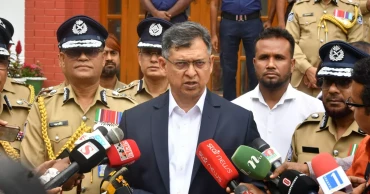
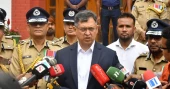
Constitutional reforms to reflect public expectation, July mass uprising: Home Minister
Home Minister Salahuddin Ahmed on Saturday said that any constitutional reform in Bangladesh will prioritize public expectations and the aspirations of the martyrs of the student-led mass uprising of July 2024
He added that all amendments will be carried out through consensus based on the ‘July National Charter’ signed among political parties.
The minister made the remarks while responding to journalists after attending the passing-out parade of the 43rd BCS (Police) batch at Bangladesh Police Academy in Sardah, Rajshahi.
When asked whether the constitution would recognize Ziaur Rahman as the declarer of independence, Salahuddin Ahmed said a dedicated committee will review all aspects and draft proposals, giving precedence to the principles endorsed in the July National Accord. He emphasized that the process will reflect the current aspirations of the people and honor the dreams of the martyrs of the July uprising.
Police to remain free from political interference: Home Minister
The constitutional amendment committee will draft proposals based on political consensus, and final decisions will be made in Parliament following the first, second, and third readings as per legislative procedure.
Addressing the new police officers, the Home Minister said the uniform symbolizes not just authority but responsibility, sacrifice, and service.
He urged them to dedicate themselves to the nation with integrity, courage, and humanity, congratulating the batch on completing their training and wishing them success in both professional and personal life.
Police Chief IGP Md. Ali Hossain Fakir and Police Academy Principal G M Azizur Rahman were also present at the event.
6 months ago
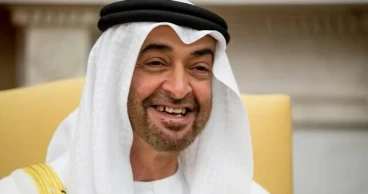
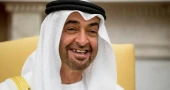
UAE President pardons 25 convicted Bangladesh citizens
President of the United Arab Emirates (UAE) Sheikh Mohamed bin Zayed Al Nahyan has pardoned 25 Bangladeshi citizens who were previously convicted in the UAE.
The pardon was granted following a request from Bangladesh, seeking clemency for Bangladeshi nationals arrested in UAE in connection with the events surrounding the July 2024 and subsequently sentenced by UAE courts.
Read more: Disney to build its 7th theme park in UAE
All 25 individuals have been pardoned and returned to Bangladesh, said the UAE Embassy in Dhaka on Sunday, noting that this act of clemency once again reflects the generosity of Sheikh Mohamed bin Zayed Al Nahyan.
The expatriate Bangladeshis were detained at different times in the UAE during the July 2024 uprising in Bangladesh.
This humanitarian gesture reflects the UAE leadership’s commitment to compassion, tolerance and justice, as well as the deep-rooted, brotherly relations between the United Arab Emirates and Bangladesh, the Embassy said.
Read more: UAE President, PM mourn death of Khaleda Zia
Earlier, the President had also pardoned Bangladeshi expatriates several times who were serving sentences for staging a rare protest in the UAE, underscoring the UAE’s humanitarian approach.
9 months ago
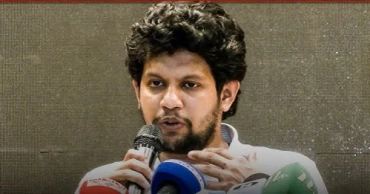
Mahfuj Alam rules out joining NCP over Jamaat alliance
Former Information Adviser Mahfuj Alam on Sunday (December 28, 2025) said he will not join the National Citizen Party (NCP) because of its alliance with Bangladesh Jamaat-e-Islami.
In a post on his verified Facebook account at night, Mahfuj said his respect, affection and friendship for his 'July comrades' remain intact, but he has decided to stay away from the party.
“Under the present reality, my respect, affection and friendship for my July comrades will not be erased. But I am not becoming part of the NCP,” he wrote.
Mahfuj said he was offered the opportunity to contest the election as a candidate of the Jamaat–NCP alliance, but he was not interested.
Read more: NCP joined Jamaat-led alliance to protect ‘July Generation’, says Nahid
“Maintaining my long-standing position is far more important to me than becoming a Jamaat–NCP alliance candidate in any constituency in Dhaka,” he said.
Raising questions over how far the NCP upholds the ideals of July, Mahfuj wrote that he has long spoken about a new political and economic order, a cultural struggle against fascism, confronting social fascism, reconciliation and building a society based on responsibility and empathy.
“These are ideas that my July comrades have repeatedly spoken about from within those two organisations. But did they truly internalise them?” he questioned.
He said he made every effort to establish NCP as an independent, broad-based 'big July umbrella', but that attempt failed for various reasons.
Describing the current phase of history as a 'cold war' for Bangladesh, Mahfuj said it is wiser at this moment to avoid taking sides and instead remain firm in one’s own principles and positions.
“The possibility of an alternative July force has not yet ended. Rather, I will continue to uphold what I have said and the principles I have believed in over the last one and a half years — through political, cultural and intellectual means. If you care to join me, you are most welcome," he said.
Read more: NCP finally joins Jamaat-led alliance, Jamaat Ameer announces new coalition
He also said a new political and economic order is both possible and realistic, adding that the rise of an alternative, moderate July force is very close.
Speculation had been rife throughout the week about the NCP joining a Jamaat-led alliance. On Sunday afternoon, Jamaat-e-Islami Ameer Dr Shafiqur Rahman formally announced the new coalition with NCP.
In a separate press briefing, NCP Convener Nahid Islam said the decision to join hands with Jamaat and like-minded groups was taken in the interest of broader unity.
Meanwhile, opposing the Jamaat alliance, two central NCP leaders — Tasnim Jara and Tajnuva Jabeen — have resigned from the party. Another central committee member, Monira Sharmin, has announced her withdrawal from the election, though she has not formally resigned.
Read more: ‘I won’t resign, though NCP deviated from founding goal’: Samantha
9 months ago
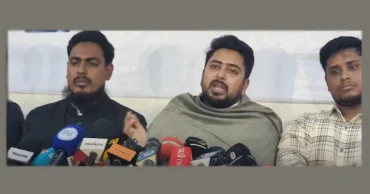
NCP joined Jamaat-led alliance to protect ‘July Generation’, says Nahid
National Citizen Party (NCP) joined an alliance led by Bangladesh Jamaat-e-Islami and other like-minded parties, citing the need for a broader unity to protect the generation that actively participated in the July uprising, NCP Convener Nahid Islam said on Sunday (December 28, 2025).
Nahid made the announcement at an urgent press conference held at NCP’s temporary office in the city's Banglamotor in the evening.
“We initially intended to contest the election independently and had prepared to field candidates in all 300 constituencies. However, incidents such as the killing of Osman Hadi, spokesperson of the Inqilab Moncho, prompted us to reconsider and take a new decision,” Nahid said.
Referring to ongoing conspiracies to disrupt the February elections, he said the main aim of the defeated forces is to destroy the July generation. “To preserve the dreams of the July generation, NCP has joined hands with Jamaat”.
Read more: Mahfuj Alam rules out joining NCP over Jamaat alliance
Nahid emphasised that the alliance seeks broader unity to reform the country, ensure justice for the July mass killings, and curb hegemony and corruption. “From that perspective, we have joined this alliance to ensure a competitive election.”
The decision to ally with Jamaat has sparked mixed reactions within NCP. Central leaders such as Tasnim Jara and Tajnuva Jabeen resigned, while leaders including Samantha Sharmin and Monira Sharmin openly opposed the move.
“We have taken the decision based on the majority opinion. The party will continue to operate according to its rules,” Nahid said.
When asked how NCP’s ideology aligns with Jamaat, he replied, “For now, the alliance is purely for electoral purposes. Post-election, we will decide whether to move forward together. The primary focus of the current alliance is the 13th national election and referendum.”
Regarding seat-sharing, Nahid said, “No final decision has been made yet. We will announce the details at a press conference on Monday.”
Earlier in the day, Jamaat Ameer Dr Shafiqur Rahman, at an urgent press briefing with like-minded parties, announced NCP’s formal entry into the alliance. Besides NCP, the Liberal Democratic Party (LDP) has also joined the coalition.
After the July uprising, Jamaat-e-Islami, Islami Andolan Bangladesh, Khelafat Majlis, Bangladesh Khelafat Majlis, Bangladesh Khelafat Andolon, Bangladesh Nezame Islam Party and Jatiya Ganatantrik Party (JaGaPa) began discussions to field single candidates in all constituencies through seat-sharing arrangements.
Read more: ‘I won’t resign, though NCP deviated from founding goal’: Samantha
The Bangladesh Development Party later joined the process, forming an eight-party alliance that carried out prolonged joint movements on various demands.
With the fresh inclusion of NCP and LDP in the electoral understanding, the number of parties in the Jamaat-led alliance has now risen to ten.
9 months ago
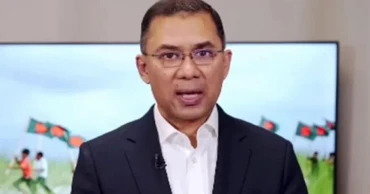
Tarique stresses reconciliation over revenge after 16 years of ‘authoritarian rule’
BNP Acting Chairman Tarique Rahman on Wednesday (December 10, 2025) said that his party is committed to accountability, reconciliation and democratic rights -- not revenge -- despite facing the most repression over the last 16 years.
In a message posted on his verified Facebook page on Human Rights Day, he also said his party envisions a future Bangladesh to be built on unity, dignity and democratic freedoms with human rights upheld.
“BNP has suffered deeply, yet emerged stronger, guided by the belief that truth, justice, accountability, reconciliation and a shared commitment to the rule of law can build a Bangladesh that honours every voice and every life, a nation where human rights are defended as essential to our collective future,” Tarique wrote.
He said Bangladesh ‘lived beneath a darkened sky’ for 16 years as fear replaced basic freedoms.
Read more: Only BNP understands reforms what Bangladesh truly needs: Mirza Abbas
“Some felt it sharply, others carried the weight quietly. But for many, especially those whose politics diverged from the deposed regime’s ruling line, the darkness was a lived reality: midnight knocks, fabricated cases, brutality endured, terror seeping into daily culture, and families waiting by doors that never opened again,” her said.
Tarique said no political organisation bore this burden more than BNP. “Across extrajudicial killings, enforced disappearances, custodial deaths, and false charges, BNP leaders, activists and supporters formed the largest share of the wounded and missing. And in the 2024 mass uprising, it was again BNP’s ranks that suffered the highest number of deaths and injuries.”
He stressed that the pain extended far beyond a single political group, affecting students, journalists, writers and ordinary citizens who lost the everyday essentials of dignity, safety and freedom of expression that “today’s Human Rights Day asks us to protect.”
In those years, the BNP leader mentioned that he was stripped of the most basic right of voicing his opinion as he was silenced by an order prohibiting newspapers, electronic media and social media in the country from publishing or airing his words since 2015.
Read more: BNP plans universal 'Family Card' for all women: Tarique Rahman
“Yet even from enforced silence, I kept fighting for the rights and democracy denied to millions, proving that a spirit committed to justice cannot be muted by decree,” he said.
He also highlighted the suffering endured by his mother and BNP Chairperson Khaleda Zia, whom he described as a national symbol of resilience through imprisonment, political cases and attempts to erase her legacy.
“Yet she remained steadfast in the principles she had upheld throughout Bangladesh’s democratic journey. She has always championed that rights belong to every citizen, and that a nation cannot thrive when fear shapes its public life. Her resilience was never hers alone; it reflected the resilience of countless ordinary people,” the BNP leader said.
Sharing personal accounts, Tarique said his own mother endured the pain of seeing her son tortured in custody, while his family also suffered the loss of his brother.
Read more: Khaleda's condition remains unchanged: Board
Yet, he said, this “pain does not always produce bitterness,” but instead strengthens the resolve to build a fairer future.
“Our Deshnetri, my mother, exemplifies this more than anyone I know. It can shape people into guardians of a better future, and into people who understand that a nation cannot be rebuilt by repeating the injustices it survived. What Bangladesh needs now is larger than politics. We envision a united country where human rights are guaranteed, where plurality of opinions is welcomed, where opposition is a healthy part of democracy rather than a threat, and where no one is erased for their beliefs,” Tarique said.
He said BNP stands strong, choosing resolution over retribution and it rejects the politics of vengeance and affirms that no Bangladeshi, whether ally or opposition, should ever again fear the institutions created to protect their rights.
Calling for a rights-based future, he urged Bangladeshis to remember the stories of Abrar Fahad, Mushtaq Ahmed, Ilias Ali, Sajedul Islam Sumon, Sagar-Runi and many more, so that injustices are not repeated.
Read more: BNP ready to lead fresh drive against corruption: Tarique
10 months ago
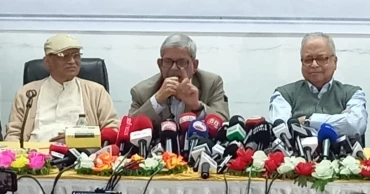
Fakhrul calls for unity to uphold gains of July mass uprising
BNP Secretary General Mirza Fakhrul Islam Alamgir on Tuesday (December 09, 2025) urged political leaders and people to remain united in safeguarding the gains of last year’s July mass uprising, saying the sacrifices of the young people who lost their lives must not go in vain.
“Let us work together to consolidate the victory we achieved through the movement of July 2024,” he said while addressing the publication ceremony of four books written by prominent economist Professor Mahbub Ullah and his wife Umme Salma Alo.
Fakhrul said the differences of opinion may exist among political parties, but those must not undermine the hopes and dreams of the nation. “The sacrifices of the young men who gave their lives must not go in vain — we must remain united to turn our dreams into reality.”
The programme, organised at the Jatiya Press Club, also coincided with the 81st birthday of Prof Mahbub Ullah.
Read more: BNP worked to curb corruption, fake voter claims baseless: Nazrul
Praising the noted economist, Fakhrul described Mahbub Ullah as one of the most respected intellectuals in the country.
He said Mahbub Ullah has long been associated with BNP’s reform efforts, playing a key role in policy discussions and initiatives taken by Begum Khaleda Zia.
Fakhrul recalled Mahbub Ullah’s contributions to the party’s political, constitutional and economic reform proposals, including those placed in 2016 as part of BNP’s Vision-2030 for Bangladesh.
He said the main points of the BNP’s Vision-2030 emerged from the thoughts Mahbub Ullah.
“He has a connection with BNP, and denying that would be denying the truth. Whenever Begum Khaleda Zia wanted to hold discussions on any matter in the country, she would call him,” Fakhrul said.
Read more: BNP ready to lead fresh drive against corruption: Tarique
He also mentioned that Mahbub Ullah also played a key role in forming Oikayfront-led by BNP against Awami League’s authoritarian government before the 2018 national election.
Fakhrul said the renowned economist always advocated for shaping the country into a democratic state, establishing an economy free from inequality, and ensuring that ordinary people enjoy their voting rights and other freedoms.
“He has always been at the forefront of efforts to create a democratic and anti-authoritarian Bangladesh, and his contributions can never be denied. From the books of Prof Mahbub Ullah that I have read, the same message resonates — a vision of a truly democratic, equitable, and free Bangladesh. I want to thank him again today and wish him a very happy birthday,” the BNP leader said.
Fakhrul also mentioned that it is the birthday of another remarkable woman, Begum Rokeya, who played a pioneering role in awakening women in the country and across South Asia, as well as the birthday of Prof Mahbub Ullah’s third daughter, and extended greetings to them.
“I also hope that Mahbub Ullah will continue to guide and support Bangladesh’s politics and economy with his wisdom, scholarship, and experience,” he said.
Read more: Tarique warns BNP of ‘something terrible’ if unity falters
10 months ago
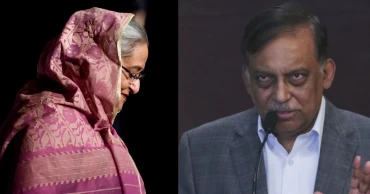
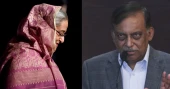
ICT releases full verdict on Hasina, Kamal’s death penalty
The International Crimes Tribunal (ICT)-1 on Wednesday (November 26) released the full text of its 453-page judgment that convicted and sentenced ousted prime minister Sheikh Hasina and former home minister Asaduzzaman Khan Kamal to death for crimes against humanity committed during last year’s July Mass Uprising.
International Crimes Tribunal Prosecutor Mizanul Islam confirmed that the prosecution has received a full copy of the verdict. “The registrar will decide when the copy of the verdict will be sent to the concerned department,” he said.
Meanwhile, Zayed Bin Amjad, lawyer for former Inspector General of Police (IGP) Chowdhury Abdullah Al Mamun—who was sentenced to five years in prison in the same case—said he has also received a copy of the full verdict.
State-appointed defence lawyer Md Amir Hossain, who represented Sheikh Hasina and Kamal, said he has not received any copy due to the absence of legal provision allowing it. As the two accused remain absconding, they will not have the opportunity to appeal, he added.
BNP hails Hasina’s death sentence verdict, says justice served
On November 17, the tribunal delivered the judgment against the three, finding them guilty on the charges brought forward.
The three-member tribunal, headed by Chairman Justice Md Golam Mortuza Majumder, began announcing the verdict at around 12:30pm, unveiling the 453-page document.
Five charges had initially been brought against ousted prime minister Sheikh Hasina for allegedly ordering crimes against humanity during the July–August mass student uprising.
The tribunal evaluated these allegations and proceeded with the trial. The charges were later reorganized into two broad charges, under which the accused were found guilty of a total of six offences.
Prosecutor Gazi M. H. Tamim said the tribunal’s verdict considered two consolidated charges, within which six distinct crimes were established.
The court found the ousted prime minister Sheikh Hasina and former Home Minister Asaduzzaman Khan Kamal guilty of three counts under charge number one.
Count-1: Inciting crimes through provocative speech at a press briefing on July 14, 2024, where she labelled protesters as children of Razakars.
Count-2: On the night of July 14, 2024, she had a telephonic conversation with the then vice-chancellor of the University of Dhaka, Dr ASM Maksud Kamal, where she again termed the protesters as Razakars and threatened to hang them. The tribunal found the accused had ordered and incited the violence that followed and did not obstruct their subordinates from committing the crimes.
Count-3: Following that, police shot and killed Begum Rokeya University, Rangpur (BRUR) student Abu Sayeed.
Read more: Dhaka writes to Delhi afresh seeking Hasina’s extradition
The tribunal sentenced both Sheikh Hasina and Asaduzzaman Khan Kamal to imprisonment unto death for three counts of charge number one.
It also found them guilty of three counts of charge number two.
Count-1: Ordering the deployment of helicopters, drones and lethal weapons against protesters, which was proved in the telephonic conversation of Sheikh Hasina with Hasanul Haque Inu.
Count-2: Following the order, six unarmed students were gunned down in the capital's Chankharpul area on August 5, 2024.
Count-3: Six protesters were gunned down in Ashulia on August 5, 2024, and their bodies were burned to hide evidence.
The tribunal sentenced Sheikh Hasina and Kamal to death for these offences.
The tribunal also ordered the authorities concerned to confiscate the property of Sheikh Hasina and Asaduzzaman Khan.
The court also asked the authorities concerned to take steps to provide adequate compensation from this property to the martyrs and injured victims of July-August movement in proportion to the extent of their losses.
Besides, former Inspector General of Police Chowdhury Abdullah Al-Mamun, who testified as a state witness in the case, was sentenced to five years in prison in both charges.
Read more: Delhi examining request for Hasina’s extradition; Dhaka expects response
11 months ago