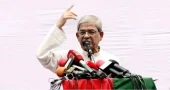
Mirza Fakhrul Islam Alamgir-bnp
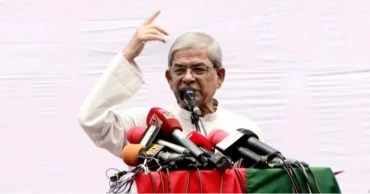
Fakhrul seeks clear policy to protect pharmaceutical sector
Expressing deep concern over potential risks in Bangladesh’s pharmaceutical sector, BNP Secretary General Mirza Fakhrul Islam Alamgir on Wednesday urged the government to protect the industry through a transparent, inclusive, and industry-friendly policy.
“We have recently observed that certain non-transparent, one-sided policies and directives taken by the government, along with inaction on some issues, have created significant risks for this promising industry,” he said in a statement.
The BNP leader pointed out that no representative from the Bangladesh Association of Pharmaceutical Industries has been included in the recently formed Drug Control Committee (DCC), the task force to ensure the list and availability of essential medicines, and the technical sub-committee of the DCC.
“BNP believes that transparency, participatory decision-making and reflecting the views of professionals are essential in formulating policies, regulating, and developing the pharmaceutical sector,” he said.
Fakhrul said the best approach in the national interest would be to find solutions jointly through discussions with the Bangladesh Association of Pharmaceutical Industries and all relevant stakeholders.
Fakhrul-led BNP delegation to join July Declaration programme
“We do not support the formation, amendment, or implementation of any committee that excludes industry entrepreneurs. With the upcoming LDC graduation in mind, the right decisions must be taken to protect this sector,” he added.
The BNP leader noted that for nearly two years no new medicines have been registered, and medicine prices have not been adjusted for a long time.
“By not approving new medicines, Bangladesh risks losing the TRIPS waiver advantage, as the country will officially graduate to middle-income status on 24 November 2026. In such a situation, new medicine registrations should be granted without delay,” he said.
Fakhrul emphasised that the pharmaceutical sector is now not just a manufacturing industry but also a strategic national asset. “Timely and responsible decisions are crucial to protect and develop this sector.”
He also said BNP believes in coordinated cooperation between the government among the private sector, industry entrepreneurs, relevant experts, and researchers can help advance Bangladesh’s pharmaceutical sector towards sustainable development.
“BNP hopes the government will engage in discussions with entrepreneurs and take industry-friendly decisions to maintain the stability and reputation of the country’s pharmaceutical sector,” Fakhrul said.
He observed that Bangladesh’s pharmaceutical industry has long been making a significant contribution to the economy, public health, and employment.
Fakhrul said the industry meets almost the entire domestic demand and has earned international recognition by steadily expanding its export potential.
“Quality medicines made in Bangladesh are now exported to more than 160 countries, including the United States, Europe, Canada, and Australia. The sector is also making notable progress in building capacity for producing Active Pharmaceutical Ingredients (API),” he said.
1 year ago
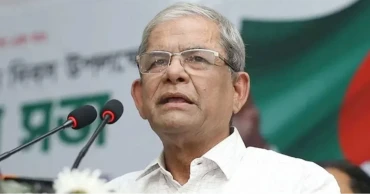
Fakhrul off to Thailand for treatment
BNP Secretary General Mirza Fakhrul Islam Alamgir left Dhaka for Bangkok, Thailand, on Wednesday for follow-up eye treatment.
Fakhrul, accompanied by his wife Rahat Ara Begum, left Hazrat Shahjalal International Airport for Bangkok at 11:15am on a Thai Airways flight, BNP’s media cell member Sayrul Kabir Khan told UNB.
Fakhrul urges interim govt to declare ‘July Charter’, hails consensus on reforms
He said the BNP leader will receive follow-up treatment at Rutnin Eye Hospital in Bangkok, where he had a successful surgery on his left eye for a retina problem on May 14.
Sayrul said Fakhrul is expected to return home on August 19.
Earlier, on May 13, the BNP Secretary General went to Bangkok for emergency surgery on the retina of his left eye.
1 year ago
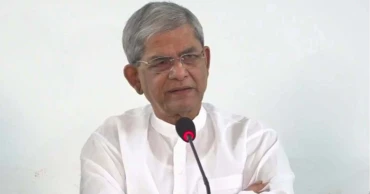
Fakhrul urges interim govt to declare ‘July Charter’, hails consensus on reforms
Stating that a consensus among political parties on 12 fundamental reform proposals is a positive development, BNP Secretary General Mirza Fakhrul Islam Alamgir on Tuesday urged the interim government to immediately declare the ‘July Charter’, paving the path for holding the national election.
“I see something good happening. I read in the newspapers today (Tuesday) that all parties have agreed on 12 fundamental points of reform. This is a positive step,” he said while addressing a discussion.
The BNP leader praised Vice Chair of the National Consensus Commission Professor Ali Riaz and his team for their hard work in bringing various political parties closer on key reforms.
“We would like to clearly say—complete the reforms without delay and immediately announce the (July National) Charter. Please hold the national election on the date that was discussed in the meeting in London with our Acting Chairman Tarique Rahman, which gave the nation hope and inspiration. Give people back their rights, including their right to vote,” he said.
Shafiul Bari Babu Smriti Sangsad organised the programme at the Jatiya Press Club, marking the fifth death anniversary of former Jatiyatabadi Swechchhasebak Dal president Shafiul Bari Babu.
Fakhrul said some people criticise BNP by claiming the party does not want reforms. “But the idea of reform came from us—we were the ones who initiated it.”
BNP pledges to prioritise child labour elimination if elected: Fakhrul
He said BNP’s founder Ziaur Rahman began the reform process by restoring democracy and introducing a multiparty system, after Sheikh Mujibur Rahman -- the key architect of authoritarian rule -- had buried democracy by establishing one-party rule through BAKSAL.
“It was Ziaur Rahman who brought back multiparty democracy, removing all darkness. He also ensured freedom of expression and freedom of the press through those reforms. That was his political reform,” the BNP leader said.
As part of economic reforms, he said Ziaur Rahman introduced a free-market economy, moving away from a rigid and flawed economic model, which helped improve the condition of the country within three and a half years.
Fakhrul said BNP Chairperson Khaleda Zia introduced the parliamentary form of democracy, replacing the presidential system.
He said Khaleda also introduced the caretaker government system and carried out many reforms for women’s empowerment and the development of various sectors.
“So, BNP has never been afraid of reforms-- we’ve always welcomed them,” Fakhrul observed.
He thanked all involved in building consensus on 12 key issues but raised concerns about proposals like the proportional representation (PR) system, which he said are unfamiliar to most people in Bangladesh.
“There are proposals like proportional representation in the lower house of parliament—which our people don’t even understand. Many don’t know what PR means. People still struggle with EVM voting—how will they understand PR?” the BNP leader said.
Fakhrul criticised a few political parties for insisting they won’t join elections unless such a system is introduced. “Let’s move away from these confusing ideas. Give people a voting system they understand—one that ensures their proper representation in parliament.”
He also cautioned against trying to solve Bangladesh’s problems using foreign ideas that do not match the country’s political culture or realities.
1 year ago
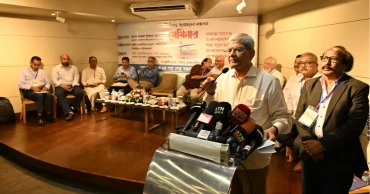
People want genuine democracy to solve nation’s problems: Fakhrul
BNP Secretary General Mirza Fakhrul Islam Alamgir on Saturday said that the people of Bangladesh aspire for genuine democracy as it is the only way to resolve the country's problems.
"I can say this that I understand the pulse of my country’s people. They want to improve their lives, they want progress, and they want a genuine democratic system. Through that democratic system, a path to resolving all issues can be found,” he said while addressing a seminar.
Stating that the country is going through a transitional period, Fakhrul urged all to stay united in order to overcome all challenges and achieve success through collective efforts.
“An opportunity has been created as a national unity was built through an unprecedented mass uprising by students and the general public. If we can now move forward with that unity, focus on our core issues, and work with a shared vision and purpose, then without a doubt, we will succeed," he observed.
The BNP leader said the people of Bangladesh have carried out many long democratic struggles and finally achieved independence through a Liberation War, showing their unity and resilience.
“After fighting against fascist forces for the last 15 years, the nation has reached a turning point. In this July and August, we have been able to remove a terrible, monstrous regime. So, if we remain united, I believe success is within our reach,” he said.
These days, Fakhrul said, many people are talking about reforms, but BNP felt the need for reform a long time ago.
He said BNP presented ‘Vision 2030’ in 2016, outlining its reform plans, with Begum Khaleda Zia laying the foundation for the initiative.
In 2022, the BNP leader said their party's Acting Chairman Tarique Rahman had presented 31 points, all focused on reforms.
“As a political party, we are fully aware of what the people need and of the changes that must come with time. We know that reforms are essential, and even changes to the structure of the state are necessary. With this understanding, we are moving forward consciously,” he said.
Can't run country with hired people: Fakhrul
The National Committee on the Implementation of Padma Barrage and Second Padma Bridge organised the seminar titled, “The Necessity of Implementing Padma Barrage and Second Padma Bridge” at the BRAC Centre Inn in the city’s Mohakhali area.
He said there is no doubt about the need for the Padma Barrage and the second Padma Bridge in Bangladesh. “At the same time, we understand the needs of the people living in the affected districts who have been waiting for these projects.”
Considering the climate situation and its impact on around eight to nine crore people and their lives and livelihoods, Fakhrul said his party fully realises the importance of the Padma Barrage and the second Padma Bridge.
He said although seven feasibility studies have already been carried out and many discussions held, unfortunately, no clear decision has yet been made on the matter.
“Our experts have stressed this point strongly, and I want to highlight it too. What is most needed now is political commitment. Political commitment is the key, and it can only come when the demand arises from the people themselves. This is very important,” the BNP leader said.
He said the Padma Barrage and the Second Padma Bridge are not just issues for Faridpur or Rajbari, as they affect the entire southern region of Bangladesh. “People from all walks of life need to come forward with this demand.”
Fakhrul said BNP Chairperson Khaleda Zia gave a commitment to build the Second Padma Bridge a long time ago.
Noted economist Dr Debapriya Bhattacharya said an updated technical report on the Padma Barrage and Second Padma Bridge projects is necessary before moving forward with such major infrastructure.
He said political commitment is also needed to implement such large projects in a transparent manner.
Dr Debapriya also said political parties should include river protection as part of their election pledges and reflect it in their election manifestos.
He said Bangladesh must also prepare to reassess and renegotiate the Ganges Water Sharing Treaty with India, which is set to expire in 2026 after completing its 30-year term.
BNP pledges to prioritise child labour elimination if elected: Fakhrul
Eminent economist and former adviser to the caretaker government Dr Hossain Zillur Rahman said a competent and courageous political leadership is required to implement such a project, considering its potential, along with an updated technical report.
He said technical expertise, transparency and skilled professionals for regional negotiation are also necessary to carry out the Padma Barrage and Second Padma Bridge projects.
Hossain Zillur suggested forming a working group on the Padma Barrage project to create public pressure on the government for its implementation.
Water resources and climate change expert Dr Ainun Nishat said building the Second Padma Bridge is possible, but it will be a very risky undertaking and must be approached with caution.
He said it is important to understand how the river will behave in the proposed locations of the second bridge over the mighty Padma River.
The expert said environmental concerns should also be taken into account when planning such major bridge and barrage projects.
Dr Nishat expressed concern that people in the southern region of Bangladesh are already facing serious consequences of climate change and said the government should take the issue seriously.
1 year ago
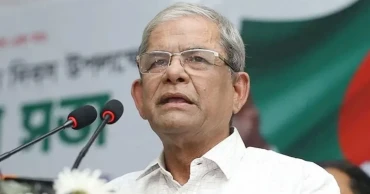
No real reform possible without elected representatives: Fakhrul
BNP Secretary General Mirza Fakhrul Islam Alamgir on Friday said no real reform is possible without involving people’s representatives and establishing a proper democratic structure through a national election.
Speaking at a discussion, he also criticised those who think reforms can happen overnight or just through a few meetings. “Reform must be carried out through a process. It is a continuous process,” he said.
The BNP leader said if the government thinks the police will stop taking bribes from tomorrow just because it wants them to, it will not happen. “You have to build a structure where bribery is discouraged.”
Zia Parishad organised the programme titled 'July Uprising: Expectation and Achievement at the Jatiya Press Club,' marking the first anniversary of last year’s mass uprising that led to the fall of what he described as the fascist rule of Sheikh Hasina.
Fakhrul also blamed the existing bureaucracy for holding back the country’s development.
“Our bureaucracy is a major obstacle to development. It is a negative bureaucracy and must be turned into a positive one. To do that, we mainly need to involve the people in the process,” he said.
Hasina can never be forgiven, says Fakhrul
The BNP leader said political parties should focus on returning to the people, learning about their needs and reflecting those needs in running the country.
Referring to the criticism BNP faces for demanding elections, Fakhrul said, “As soon as we started talking about the election, they began saying BNP only wants polls. But has anyone thought about why do we want the election?”
He explained that without elections, true public representatives cannot be chosen. “And without representatives, how can they go to Parliament? And if there is no elected Parliament, how can people’s rule be established?”
“You cannot just hire a few people from home and abroad to run a country. It’s not possible,” Fakhrul remarked.
1 year ago
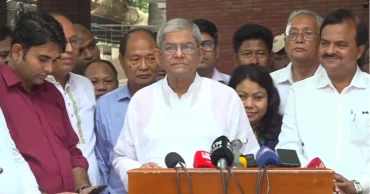
Govt on right track over elections, says Fakhrul
BNP Secretary General Mirza Fakhrul Islam Alamgir on Wednesday said the interim government is on the right track over the national election.
“We had detailed talks on accelerating the election process. The Chief Adviser reiterated his commitment to holding the national election between mid-February and March. We believe necessary steps should be taken accordingly and he assured us they would be,” he said.
Fakhrul was talking to reporters at the BNP Chairperson’s Gulshan office following a meeting with ‘Bangladesh Nationalist Ethnic Minority Party’.
Responding to a question from reporters over Tuesday night's meeting with the Chief Adviser, he said, “The Chief Adviser suddenly called us. He does it from time to time, especially when a crisis arises in government. We responded because we are committed to supporting this government and will do whatever is necessary to restore democracy.”
He said they believed such interactions should be held more frequently.
Fakhrul urges unity despite political differences as BNP envisions rainbow state
Referring to the recent jet crash in Uttara, the BNP leader said, “Many young lives were lost in the accident. I personally visited the site. We expressed our condolences. In the aftermath, two advisers were confined at Milestone School.”
“Again, due to complications surrounding the exams students entered the Secretariat, and everyone saw that it created an administrative crisis. A few days earlier, fascist elements created chaos in Gopalganj. It felt like a sign of their resurgence,” he added.
He said the Chief Adviser told them that political parties had resisted the fascist forces and invited them for discussions.
“It's natural that this government will have flaws. But rather than focusing on the weaknesses, we should appreciate their intent. I don't see any lack of sincerity in their approach to the election,” Fakhrul said responding to another question.
When asked about the National Consensus Commission’s proposal that the head of government and the party chief should not be the same person, Fakhrul said, “That is their proposal. Political parties are expressing their opinions both in favor and against. All voices must be heard—that’s the essence of democracy. Let all flowers bloom.”
Asked whether the government showed any negligence in handling the situation over Uttara aircraft crash, he said, “There was no negligence, but there was a lack of experience. They have never run a state before. Unlike us, they lack the experience of governance.”
“One more issue is ego. They don’t consult us on anything. They don't take advice from us—perhaps out of ego,” he added.
In response to whether recent unrest is aimed at disrupting the election, Fakhrul said, “Some chaos is indeed happening. It’s clear that fascist forces are trying to stir up trouble.”
1 year ago
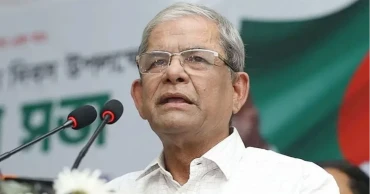
Fakhrul urges unity despite political differences as BNP envisions rainbow state
Stating that their party dreams of a rainbow state upholding pluralism, BNP Secretary General Mirza Fakhrul Islam Alamgir on Sunday said there is no reason to be disappointed by the differences of opinion among political parties following the July mass uprising.
“Here, the father of a martyr expressed his sorrow, saying that we had hoped the political situation would calm down quickly after the mass uprising, a proper political structure would be formed, and we would be able to enter a new Bangladesh. But politics is not such an easy path… it’s not a bed of roses,” he said.
While speaking at a tree-plantation event titled ‘The Mass Uprising 2024 – National Unity and Democratic Journey –Evergreen Memories,’ Fakhrul said problems are part and parcel of politics, as that is its very nature. “But there’s no reason to be disheartened by it.”
“We believe there will be differences of opinion, a variety of views and paths. Some will believe in democracy, some in socialism, and others in a welfare state. Bringing all these together, we want to build a ‘rainbow state’—just like a rainbow rises with many colours. Our leader Begum Khaleda Zia dreamed of creating such a state long ago,” he observed.
Fakhrul alleges political plot to derail election using Mitford murder
The BNP leader said their party’s Acting Chairman Tarique Rahman already presented a 31-point outline, and every reform proposal currently being discussed was put forward by the party back in 2022.
Jatiyatabadi Krishak Dal and ‘Amra BNP Poribar’ jointly organised the programme on the grave premises of late President and BNP founder Ziaur Rahman at Sher-e-Bangla Nagar, where saplings of neem trees were planted in memory of the martyrs of the July Mass Uprising.
Mirza Fakhrul also planted two neem trees at Zia Udyan, adjacent to the grave of Ziaur Rahman, in memory of the martyrs—one named after Shaheed Saikat and the other after Shaheed Abu Sayed.
This event is part of a wider tree plantation programme being carried out by BNP in Dhaka and across the country with the aim of planting 10 lakh saplings.
Fakhrul said he did not want to get into debates over how many of their party leaders and workers were martyred, how many were killed, what sacrifices they had made, or who did what.
“Because I feel that focusing on such things is a bit self-centred. My responsibility is to lift this nation up. Those who gave their lives did so with a clear declaration—that they would remove the fascists and build a free and democratic country,” he said.
He said their party wants to build a truly liberal democratic Bangladesh as dreamt by the martyrs. “We want to build a country where people can live safely, freely and peacefully. We are highly hopeful that our Acting Chairman Tarique Rahman is leading us towards that goal.”
The BNP leader expressed the hope that the interim government, which has pledged to hold elections by mid-February, will honour its commitment.
“Through that election, we will be able to form a people’s government—one that will honour our martyrs, give them the respect they deserve, and take all necessary steps to establish a truly democratic state in Bangladesh, which was the cause they fought for,” he said.
1 year ago