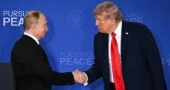
Trump leaves Alaska summit
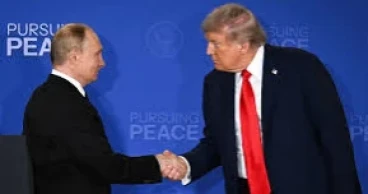
Trump leaves Alaska summit with Putin without a Ukraine peace deal
President Donald Trump failed to secure a peace agreement with Russian President Vladimir Putin on Friday, ending their high-profile summit in Alaska without a breakthrough in efforts to end the war in Ukraine. Despite offering Putin a warm welcome, Trump left empty-handed in what was seen as his biggest diplomatic test to date.
Speaking after the summit, Trump said, “There’s no deal until there’s a deal,” while Putin suggested the two had reached a vague “understanding” and warned Europe not to derail what he described as early progress. Trump said he would soon brief Ukrainian President Volodymyr Zelenskyy and European allies on the outcome.
Trump, who had promised a swift end to the war when he returned to office, couldn’t even convince Putin to agree to a temporary halt in fighting. This, despite earlier moves to pressure Ukraine’s leadership and limit military aid. While Trump threatened new sanctions and greeted Putin with ceremony at the military base in Anchorage, no substantial progress was made.
Instead, the meeting served to boost Putin’s international image after years of isolation by the West over his war in Ukraine and domestic crackdowns. The summit also delayed the threat of new U.S. sanctions.
In a sign of disappointment, a planned joint press conference ended without taking questions from the media. Later, in a Fox News interview, Trump shifted focus, suggesting that it might now be Zelenskyy’s responsibility to move peace efforts forward—despite not being invited to the summit.
Trump had hoped to showcase his negotiating abilities, while Putin sought concessions that would solidify Russia’s battlefield gains, block Ukraine’s NATO ambitions, and bring the country back under Moscow’s influence.
“We made significant progress,” Trump said alongside Putin. “There are just a few points left, one very serious. But we didn’t reach an agreement.”
Putin: Trump Understands Russia’s Priorities
For Putin, stepping onto U.S. soil for the first time in over a decade marked a symbolic victory. He framed the summit as a chance to rebuild pragmatic ties with Washington and praised Trump as someone who respects that Russia has its own national interests.
Putin expressed hope that the talks would serve as a turning point in U.S.–Russia relations and possibly lay the foundation for resolving the Ukraine conflict.
Although no concrete agreement was reached, Trump closed the meeting by thanking Putin and hinting at a future encounter. When Putin suggested meeting “next time in Moscow,” Trump replied that it was “an interesting one,” acknowledging that such a visit could draw criticism but might still happen.
Trump later told Fox News that Putin echoed many of his own views—including grievances about the 2020 U.S. election—raising concerns that the Russian leader may have successfully flattered Trump into viewing the summit as a personal win, despite its lack of results.
The two leaders greeted each other warmly upon arrival, shaking hands at length and chatting while military jets soared overhead. Putin even rode in Trump’s presidential limo to the meeting venue. The red-carpet treatment stood in stark contrast to Putin’s role in launching the ongoing war in Ukraine and may have unsettled European allies watching from afar.
Summit Format Altered, Zelenskyy Left Out
White House Press Secretary Karoline Leavitt confirmed just before Trump’s arrival that the meeting format had changed: instead of a one-on-one talk, it would include three officials from each side. Trump was joined by Secretary of State Marco Rubio and special envoy Steve Witkoff, while Putin brought Foreign Minister Sergey Lavrov and adviser Yuri Ushakov.
The format change appeared to be a more cautious approach compared to Trump’s controversial 2018 summit with Putin in Helsinki, where the two met privately and Trump publicly questioned U.S. intelligence on Russian election interference.
Ukrainian President Zelenskyy’s absence from the Alaska talks marked a clear departure from the West’s longstanding policy of “nothing about Ukraine without Ukraine,” further fueling concerns in Kyiv and Europe.
Peace Still Out of Reach
Russia and Ukraine remain at odds on key conditions for peace. Putin has rejected any temporary ceasefire unless the West halts arms shipments to Ukraine and Kyiv stops mobilizing troops—terms flatly rejected by Ukrainian and Western leaders.
Now in its fourth year, the war continues to claim lives and drain resources on both sides. Ukraine, though far smaller than Russia, has managed to hold out since the invasion began in early 2022. Still, it faces relentless attacks across a sprawling 1,000-kilometer (600-mile) front line.
Trump-Putin Talks in Alaska Could Redefine Moscow-Washington Relations
Alaska’s proximity to Russia—just 3 miles (5 kilometers) across the Bering Strait—gave the summit additional symbolic weight. The Joint Base Elmendorf-Richardson, a key Cold War outpost, remains a hub for intercepting Russian aircraft entering U.S. airspace.
1 year ago