PR system
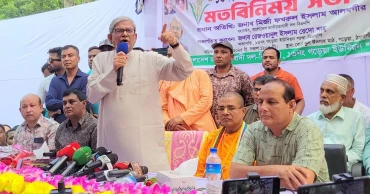
‘Don’t push the nation into chaos’: Fakhrul
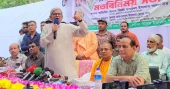
BNP Secretary General Mirza Fakhrul Islam Alamgir on Wednesday urged all quarters to shun divisions and unrest in the name of movements, emphasising the need for strong unity to hold the national election in February next year in line with the people’s aspirations.
“Please save the country. Do not create divisions any more. Do not push the nation into chaos by raising various demands… Please let the election be held. Let the people of Bangladesh live in peace and end the unrest,” he said.
The BNP leader made the call while speaking at a views-exchange meeting organised by the Garia Union unit of BNP at the Gopalpur Government Primary School field in Thakurgaon Sadar upazila.
He warned that some groups have taken to the streets with various demands, saying their intentions do not seem good. “Stop these demands for now. Stop marches and rallies over the PR issue.”
Fakhrul said he himself does not understand the PR system, so how would the country’s people understand it?
Country’s political, economic future depends on next election: Fakhrul
He urged some political parties to abandon demands such as whether there should be a referendum or PR, warning that otherwise the election could be delayed.
The BNP leader said political parties should cooperate with the interim government and the Election Commission to arrange the election in February next year, instead of engaging in debate over PR and the referendum on the July Charter.
“The people of the country want an election. Let the vote take place first, and then any demands can be discussed and decided in parliament,” he said.
After fascist Hasina fled the country on August 5, Fakhrul said the nation had an opportunity to establish a new democratic system.
“Now we want to build the country beautifully… Please end these unrests by holding the election. We do not want to create divisions between Hindus and Muslims or Buddhists and Christians. We do not want to encourage violent or vindictive politics. We want to live together in peace,” the BNP leader said.
He also outlined BNP’s plans for the country if elected, saying their party knows how to run the government effectively, having been in power before.
Tarique to return and lead BNP’s electioneering: Aman
“We will provide jobs for one million people. Every family will get a family card, which will give them access to various services. We will improve healthcare, increase the budget for education, and give emphasis to the welfare of farmers,” Fakhrul said.
About the election, he said the candidate chosen by the people will be elected and urged the political leaders not to harm the country by indulging in divisive politics. “We want a democratic Bangladesh, based on peace and brotherhood.”
He also spoke about the upcoming signing of the reform charter on 17 October. “What is reform? Reform is like changing the tin sheets or doors of a house every few years. Similarly, politics also needs reforms. Our political leaders and students feel that reform is needed to set the country right.”
The BNP leader said issues on which political parties agree will be incorporated into the July Charter, while a referendum will be held for the remaining matters.
Speaking about the new Bangladesh, he said, “We will never forget the Liberation War. The country’s independence is our existence. We will also never forget 5 August, when our children drove out the fascist Hasina with their blood. Working together is what the new Bangladesh is about.”
People to reaffirm Bangladesh’s non-communal spirit in next election: Fakhrul
Fakhrul also called upon everyone to unite to build the new Bangladesh in line with the aspirations of those who sacrificed their lives in the July–August mass uprising.
“Too much damage has already been done. We want to see a democratic Bangladesh with everyone united,” he said.
11 months ago
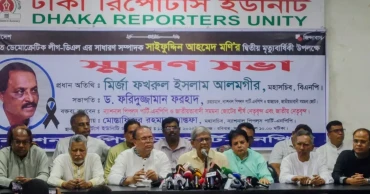
Push for PR system meant to delay election: Fakhrul
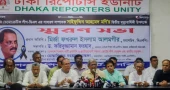
BNP Secretary General Mirza Fakhrul Islam Alamgir on Sunday said the people of the country will not accept the proportional representation (PR) voting system, as some parties are pushing for it to delay the election and hinder the restoration of democratic order.
Speaking at a memorial discussion, he also said people want to see the national election held by February 2026, as pledged by head of the interim government Professor Muhammad Yunus.
“Some political parties are suddenly campaigning for the PR system about which the people of Bangladesh have no idea. Although the Reform Commission itself did not bring up this issue, a few political parties are now talking about it and even carrying out movements in its favour,” the BNP leader said.
Fakhrul said the aim behind the demand for PR is clear to delay the election and to obstruct the process of returning power to the people.
“The people of this country will not accept the PR system. From our party’s side, we have clearly stated this before, and I say again: the people will not accept this system. Nothing that is imposed on them will be accepted by the people of Bangladesh,” he said.
The BNP leader said they are committed to seeing the election take place by February 2026, as promised by Professor Yunus. “The people also want that election and wish to return to a democratic system through it. They want their hopes and aspirations to be fulfilled through democracy.”
The National People’s Party (NPP) organised the programme at Dhaka Reporters’ Unity (DRU) in memory of Democratic League general secretary Saifuddin Ahmed Moni, who died on October 12, 2023.
Fakhrul said it has been about 14 months since the formation of the interim government, and people do not expect that Bangladesh can be transformed overnight like Aladdin’s magic lamp. “But what they do want is to see the beginning of the right process — a process through which we will see the rise of a new Bangladesh.”
The BNP leader said any party can win the next national election depending on the people’s will. “But the people will choose that party which has been tested in the past — the one that has been in government, worked for the nation, shown people the light of hope, and led them from darkness to light.”
Fakhrul said the BNP is fully committed to democratic reform and a fair election, though a quarter is running a false campaign to brand the party as anti-reform.
“BNP has always been in favour of reforms. In fact, the party itself was born through reform. Our founder, Shaheed President Ziaur Rahman, established a multi-party democracy in place of one-party rule,” he said.
Committed to ensuring impartial duty during national election: Public Admin Secy
The BNP leader said that after a long struggle, the people have now got a chance to rebuild Bangladesh as a true democratic state following the fall of what he called a ‘fascist regime’ that destroyed the country’s democracy, economy, and national spirit.
“We have entrusted Nobel Laureate Professor Muhammad Yunus with the responsibility of guiding the nation back to democracy. He and his advisory council are working to form a system that will hold a free and fair election acceptable to all,” Fakhrul said.
He said the current interim administration, led by Professor Yunus, has already taken several reform initiatives through various commissions. “Many of the issues being discussed by these reform commissions were actually included in BNP’s 31-point reform proposal announced during the anti-fascist movement.”
Fakhrul urged people to remain alert and united to defeat all conspiracies and build a truly democratic Bangladesh. “There are many conspiracies and plots, but the people of Bangladesh have the strength to overcome them.”
The BNP leader said the coming days will be a real test for the nation amid false propaganda being spread through YouTube, television, and social media every day. “I believe people can distinguish truth from lies. The people of this country never make the wrong choice — they always move in the right direction.”
Stressing the importance of remembering the history of 1971, he alleged that some people try to make the nation its Liberation War. “We must always remember that we became independent through that war. Because of independence, we can now dream of a new Bangladesh and fight to improve the lives of our people.”
Recalling his own participation in the Liberation War, Fakhrul said many who fought in 1971 or took part in later democratic movements are still carrying on that struggle. “Our only goal is to build a truly democratic and prosperous Bangladesh. Keeping that in mind, we must move forward together.”
11 months ago
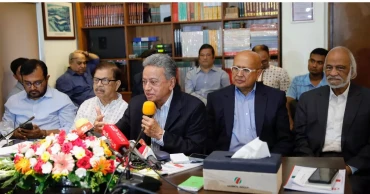
Amir Khosru questions political parties’ authority on PR system referendum
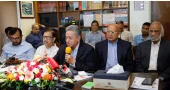
BNP senior leader Amir Khosru Mahmud Chowdhury on Saturday questioned who gave political parties the authority to decide on holding a referendum over introducing a proportional representation (PR) system in Bangladesh.
“Why should we go for a referendum on PR? First of all who has given us that responsibility? The people didn’t give us this responsibility,” he said while addressing a seminar.
The seminar, titled ‘Election 2026: A Critical Look at Proportional Representation’, was arranged by Cosmos Foundation, the philanthropic arm of Cosmos Group, at the Cosmos Centre in the capital’s Moghbazar area. United News of Bangladesh (UNB) was the media partner of the event.
UNB Editor-in-Chief Enayetullah Khan presided over the session.
Khosru, a BNP Standing Committee member, also said the country’s people not political parties, will on PR system through elections.
The BNP leader said every party has many issues where there is no consensus. “So, if you go for a referendum on each of them, you’ll end up doing referendums for the next two years.”
He said the current interim government in Bangladesh has been formed based on the constitution and it is also being run under the same constitutional framework.
“So, we want to restore democratic order and bring about any changes later, we must first hold an election under the current constitution and return to a democratic system,” the BNP leader observed.
Once a democratic system is restored in the country, Khosru said, discussions can take place inside and outside parliament on reform issues like the PR system. “You can’t have a meaningful public debate when you don’t have a democratic government in place,” he argued.
The BNP leader also said those who want PR should first earn people’s mandate.” No one has given 30 political parties the authority to decide the country’s future. It’s the people who will decide through elections.”
Moyeen Khan rejects proportional representation system
He also said it is unrealistic to expect all political parties to agree on every issue. “We’re not forming a one-party Baksal system. Differences in ideas and policies will always exist, and that’s the beauty of democracy. Each party should go to the people with its own vision.”
11 months ago
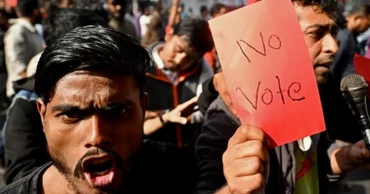
Bangladesh elections could see ‘No Vote’ choice, candidate caps
The Election Commission has drafted the Representation of the People Order (Amendment) Ordinance, 2025, proposing major changes, including a ‘No Vote’ option to avoid uncontested elections, involving the armed forces as a law enforcement agency and limiting candidates to contesting in no more than two constituencies.
The draft RPO also enhanced the EC’s authority to stop the polls and cancel the candidacy of an elected member of parliament even during the post-election period on charge of inconsistent or false information in an affidavit and the statement of income and expenditure.
If the draft RPO is enacted, the Commission’s authority over the government departments and officers and the presiding officer’s authority to stop the polling would go up.
“The draft of RPO is almost finalized. But only one thing related to expatriate voters is now being reviewed. The draft RPO will soon be sent to the law ministry (to make it law by promulgating an ordinance),” Election Commissioner Abdur Rahmanel Masud told UNB on Monday.
He said the draft RPO, if passed, would allow the Election Commission to stop voting in a whole constituency for irregularities, a power the Awami League removed in 2023 before the 2024 polls.
The current commission, headed by Chief Election Commissioner AMM Nasir Uddin, drafted the RPO (Amendment) Ordinance, 2025 ahead of the 13th parliamentary election planned to be held in early February 2026.
In the draft law, the Armed Forces, — Bangladesh Army, Bangladesh Navy and Bangladesh Air Force —have been added to the definition of law enforcing agencies alongside Police, Armed Police Battalion, Rapid Action Battalion, Ansar Force, Battalion Ansar, Border Guard Bangladesh and Coast Guard.
PR system possible if only law is amended: CEC Nasir
The Armed Forces had earlier been included in the definition of law enforcement agencies, but the Awami League government dropped them during its first term after the 2008 general election. As a result, the armed forces were deployed as just striking forces in the past three general elections in 2014, 2018 and 2024.
The draft law empowers the Election Commission to declare the candidacy of an elected contestant illegal and even cancel the election within five years if it finds any inconsistency or false information in the candidate’s affidavit or the statement of income and expenditure.
EC’s Priority
Two new provisions — Articles 5(3) and 5(4) of the RPO, 1972 — have been inserted to ensure the EC’s dominance and enhance its authority over government officials and departments.
The Article 5(3) stipulates that if any dispute arises between the government and the EC regarding assistance, the EC’s requirements shall take precedence.
The Article 5(4) authorises the EC to take necessary punitive action against any officer, employee or government department if it is satisfied that they have neglected their duties.
A new provision proposed in the Article 7 of RPO states that the disciplinary action taken in response to the recommendations of this Commission shall be recorded in the personal records, service records and annual confidential report of the officer or person. The appointing authority shall inform the Commission in writing about the actions taken against the officers concerned within ten working days, it added.
BNP against PR system, says Fakhrul
Another amendment proposes that no person can contest in more than two constituencies simultaneously. Under the existing Article 13A of the RPO, a person can be a candidate in more than three constituencies. The draft law says if someone contests in more than two, all his nomination papers will be void.
‘No Vote’
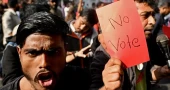
The EC has incorporated a ‘No Vote’ option to ensure no one is elected uncontested. If only one person remains as a contesting candidate after scrutiny or withdrawal of candidature, that candidate must contest against a ‘No Vote’ option in that constituency.
If ‘No Vote’ gets more ballots than the candidate, a fresh schedule must be announced for the election. If the candidate gets more votes, he will be declared elected.
The provision for the ‘No Vote’ option along with other electoral symbols was incorporated in the RPO ahead of the 2008 national election but was dropped before the 2014 election.
Single Platform for Candidates
A new provision requires returning officers or assistant returning officers to take measures for bringing all candidates on a single platform after symbol allocation to announce their manifestos and pledge to abide by the code of conduct in a spirit of harmony among them.
Polling Suspension
Under the proposed Article 25, a presiding officer could stop the polling, if it is interrupted beyond control, or if ballot boxes are unlawfully removed, destroyed, lost or tampered to such extent that the result of the poll at the polling station cannot be ascertained. The current RPO does not permit a presiding officer to stop polling before seeking help from law enforcement agencies and failing to restore order.
Post-Polls Candidacy Cancellation
The proposed ordinance allows the EC to investigate any affidavit or statement of income-expenditure return submitted by an elected candidate for discrepancies or false information even after the election. If, after a hearing and investigation, the commission is satisfied that such discrepancies exist, it can declare the candidacy unlawful, cancel the election, and arrange a fresh poll in that constituency.
'No vote' to return only for single-candidate seats: EC
The draft law also made it mandatory for an aspirant to mention the statements of income sources and assets of the persons and dependents.
The next national election in Bangladesh is likely to be held in the first half of February, as indicated by Chief Adviser Prof Muhammad Yunus and Chief Election Commissioner AMM Nasir Uddin.
The Chief Election Commissioner also said the Election Commission has stepped up preparations across the country for the election.
1 year ago