DUCSU Election 2025
A New Era in Bangladesh Student Politics: Why Shibir's Strategy is a Wake-Up Call for Other Parties
In the wake of Shibir's decisive victory in the DUCSU election 2025, other parties have received a wake-up call, as the win signals a major shift in student politics. According to a social media sentiment analysis by SharedToday, Shibir's success can be attributed to a positive campaign focused on service and discipline, a strategy other parties may need to adopt.
The New Face of Campus Politics
The old labels and abstract political narratives are losing their grip on students. Shibir reframed the election around present-day issues such as discipline, order, and practical services. This approach resonated overwhelmingly with students. While the "anti-independence" narrative did see a jump in engagement late in the DUCSU election, it ultimately failed to stop Shibir's momentum. Students chose to interact with content about "present-tense" capacity and discipline, rather than history.
A Wake-Up Call from the DUCSU and RUCSU Elections
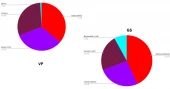
In the recent DUCSU polls, Shibir's victory was a result of a well-executed strategy of timing, simple promises, and strong organization. Shibir's VP candidate, Sadiq, dominated online engagement in the final days, with his share jumping from 53.09% to 88.97%, creating a perception of "inevitability" that rivals couldn't counter. In the General Secretary race, Farhad held his lead from the beginning, while his rivals' engagement shares collapsed.
Read more: From DUCSU to JUCSU: Shibir’s winning streak rolls on
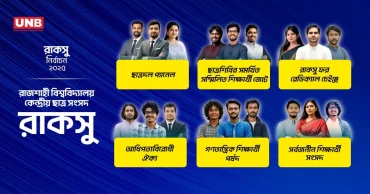
This trend appears to be continuing in the RUCSU election. According to a SharedToday inception report on September 16, Shibir's Sammilito Jote panel is dominating social media engagement with 92.6% of the share. In the VP race, Shibir's Mostakur Rahman has a commanding 66.2% share of engagement. While JCD and Oikya's campaigns are smaller, they are leaning more positive.
For instance, JCD's AGS candidate Zahin Biswas Esha has the strongest individual footprint online, with a 61.3% engagement share in her position. However, the overall data indicates that Shibir's powerful, service-oriented narrative is what is resonating most, capturing over 93% of all panel-level engagement in the early stages of the RUCSU campaign.
Lessons for Other Parties
The success of Shibir provides a clear lesson for other parties. The fragmented "July Bloc" (including Independent and Odhikar) saw its online engagement share collapse from 4.97% to 0.31% in the final stretch of the DUCSU election, largely due to a drop in presence and lack of "last-mile amplification". JCD, while holding its base in DUCSU, failed to excite voters, and its VP candidate's engagement collapsed from 30.33% to 9.08%.
Read more: JUCSU: Newly-elected VP Zitu vows to end sycophantic student politics
Shibir's strategy of disciplined organization, a focus on tangible services, and a positive message of moral leadership stands in stark contrast. As other parties look to compete, they may need to move away from old slogans and embrace a more positive, service-oriented approach to win over a pragmatic student body.
1 year ago
The 2025 DUCSU Election's Digital Mirage
The final days of the DUCSU 2025 election saw a dramatic shift in online engagement, but a new analysis reveals that much of the visible momentum was a carefully constructed mirage. A report from SharedToday exposes a phenomenon called "auto-turfing"—the use of coordinated, repetitive campaign posts to create an illusion of widespread support. This practice has cluttered the digital view, making it difficult to distinguish genuine popularity from manufactured waves.
Detecting the Deception
Auto-turfing campaigns can be identified by several key markers, as outlined in the SharedToday report:
- Identical or near-identical posts shared by multiple accounts in short timeframes.- Overuse of templated slogans and hashtags.- High engagement spikes on content with low diversity.
Read more: DUCSU Election 2025: A Campaign’s Final Twist
The Turf-Inflated Race
Looking at the final 24 hours of raw engagement, the GS race was dominated by two candidates, with a shocking shift in momentum. Meghmallar of the Left Alliance suddenly took the lead, capturing 63.6% of engagement, while Shibir’s Farhad held 33.3%. Odhikar's Sabina, once a frontrunner, collapsed to just 2.1%.
However, this sudden surge was highly artificial. The Left's rise was almost entirely from organized amplification, with over 70% of Meghmallar’s last 24-hour engagement being turfing-driven. Similarly, Shibir’s late surge was powered by organized networks, with an estimated 60-65% of Farhad’s engagement being turfing-driven.
The Real Race: Organic Engagement Only
When the "turfing" is stripped away, the true state of the race becomes clear. A "clean" analysis of organic-only engagement provides a different picture of the election:
Organic VP Race (two-week trend):
- Umama (Independent): ~40%- Abidul (JCD): ~36%- Sadiq (Shibir): ~22%- Others:
1 year ago
DUCSU Election 2025: A Campaign’s Final Twist
As the Dhaka University Central Students’ Union (DUCSU) election 2025 draws to a close, the final days have proven to be a testament to the unpredictable nature of student politics. According to a data report from SharedToday, the digital landscape shifted dramatically between September 5th and 6th, re-shaping the races for the top posts.
The Vice President's Race
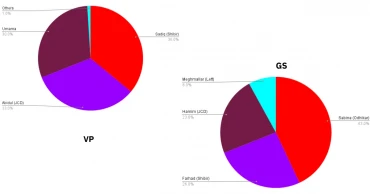
The VP race, once a clear contest between JCD’s Abidul and Independent candidate Umama, has become a three-way battle. A late and powerful digital push from Shibir’s Sadiq vaulted him to the top of the online engagement charts. SharedToday’s data shows that Sadiq now holds
36% of the online traction, just edging out Abidul at 33% and Umama at 30%. This isn't an overnight change in campus sentiment but a clear mobilization effect, demonstrating Shibir's highly disciplined and organized approach to the digital campaign.
Read more: DUCSU Election 2025: A Race of Fragile Alliances and Shifting Sentiments
The General Secretary’s Race
In the GS race, a clear front-runner has emerged. Odhikar’s Sabina has pulled ahead of her competitors by successfully branding herself as the “face of change” and a representative of the July movement’s ideals. According to data from SharedToday, she had a commanding
43% share of traction from August 22 to September 6. She is well ahead of Shibir’s Farhad, who sits at
26%, and JCD’s Hamim at 23%. This indicates that students are responding to a message of change and accountability, and Sabina has been the most effective at capturing that sentiment.
Read more: JCD alleges certain group spreading hate online centring DUCSU
What the Data Says About the BGCS Panel
While BGCS was once a symbol of the student movement's power, Shared Today’s analysis reveals that the panel is now "virtually absent" from the digital conversation. Their traction scores are negligible, with less than a 1% share. This mirrors the panel's internal fragmentation, as key leaders defected to run as independents, leaving the official BGCS panel without the digital firepower needed to compete.
1 year ago
DUCSU Election 2025: A Race of Fragile Alliances and Shifting Sentiments
As the Dhaka University Central Students' Union (DUCSU) election 2025 approaches, an analysis of social and digital media trends, sourced from SharedToday, reveals a fragmented and highly competitive landscape. The traditional political dominance of single panels appears to be over, with a mixed outcome now the most probable scenario.
The Fallout of Fragmentation
The most significant dynamic shaping this election is the visible disunity within the BGCS panel, which emerged from the July uprising. Several prominent BGCS leaders—including Tahmid Al Mudasir, Ashiqur Rahman Jim, Abu Salehin Ayon, and Sanjana Afifa Aditi—have decided to run independently or join rival panels. This internal discord has led to the resignations of key figures like Moktosen Muktar, who cited frustration with "party-linked politics," and Mahin Sarkar, who is now contesting for General Secretary from another independent panel. Abdul Kader, the BGCS VP candidate, acknowledged that these divisions could negatively impact the panel's prospects. This fragmentation is likely to damage voter trust in the BGCS's unity and effectiveness and increases the risk of vote splitting.
JCD's Strategic Advantage
This internal disarray within the BGCS has created a strategic opening for the Jatiyatabadi Chhatra Dal (JCD). The JCD panel, with VP candidate Md. Abidul Islam Khan and GS candidate Sheikh Tanvir Bari Hamim, has a disciplined, nationwide network aligned with the BNP. While the July movement activists are split, JCD has been able to consolidate its support across halls, giving it an advantage. Social media analysis indicates that JCD has a high organizational presence and steady news visibility, suggesting stable momentum.
Read more: Ducsu polls: JCD unveils 10-point manifesto promising changes
The Rise of Independent Candidates
In contrast to the BGCS's struggles, the Independent Alliance led by Umama Fatema is gaining significant traction. With prominent BGCS figures now running independently, Umama's panel may attract disillusioned BGCS supporters. Her campaign is positioned as a "fresh face" with strong credibility from the July uprising, appealing to voters who are disenchanted with traditional party politics.
1 year ago