Octopus
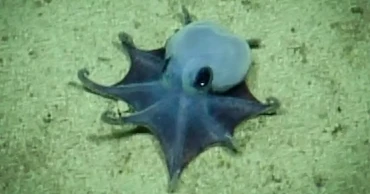
New deep-sea blue octopus species identified off Galápagos Islands
Scientists have identified a new species of tiny blue octopus living nearly 6,000 feet beneath the ocean surface near the Galápagos Islands, adding to the region’s long list of rare and unique wildlife.
The species, officially named Microeledone galapagensis, was described in the scientific journal Zootaxa after researchers confirmed it had never been recorded before.
The discovery traces back to a 2015 deep-sea expedition aboard the research vessel E/V Nautilus, conducted in cooperation with the Charles Darwin Foundation and the Galápagos National Park Directorate. Using a remotely operated underwater vehicle, scientists explored the seafloor near Darwin Island at the northern edge of the Galápagos archipelago.
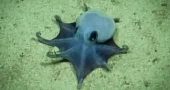
At a depth of about 5,800 feet (1,773 meters), the team spotted a small octopus moving across an underwater mountain. Researchers were surprised by its bright blue color and tiny size, roughly similar to a golf ball.
“It's tiny! It’s blue!” scientists were heard saying during expedition recordings.
The team collected one specimen and also captured video footage of two others believed to be the same species. Back in the Galápagos, the samples were studied at the Charles Darwin Research Station, where scientists quickly realized the octopus did not match any known species.
Octopus expert Janet Voight, curator emerita of invertebrates at the Field Museum in Chicago, was contacted for identification after reviewing images of the animal.
“Right away, I knew it was something really special,” Voight said. “I’d never seen anything like it.”
Because only one confirmed specimen was available, researchers avoided dissecting it to preserve the rare find. Instead, they used advanced micro CT scanning technology at the Field Museum to study its internal structure without damaging it.
The scans produced detailed 3D images of the octopus’s organs, beak, and other features, allowing scientists to classify it as a new species.
Experts said the non-invasive imaging was crucial due to the specimen’s rarity.
The octopus is now recognized as Microeledone galapagensis, a species that adds new insight into deep-sea biodiversity around the Galápagos region.
Researchers say the discovery highlights how much of the deep ocean remains unexplored and how many unknown species may still exist in remote marine ecosystems.
“This tiny blue octopus fascinated us,” said marine scientist Salome Buglass, a co-author of the study. “Discoveries like these remind us how little we still know about the deep sea and why it needs protection.”
Source: Science Daily
4 months ago
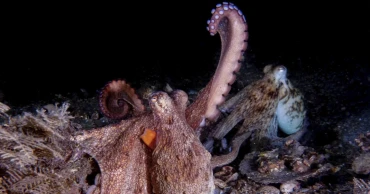
Octopuses favor front arms for most tasks, study finds
Unlike humans, who may be right-handed or left-handed, octopuses do not have a dominant arm. But new study shows they tend to rely more on their front arms when carrying out everyday tasks.
Scientists analyzed hundreds of short video clips of wild octopuses crawling, swimming, standing, fetching, and groping to understand how their eight limbs work in the wild.
“All of the arms can do all of this stuff – that’s really amazing,” said Roger Hanlon, co-author of the study and a marine biologist at the Marine Biological Laboratory in Woods Hole, Massachusetts.
Unlike many mammals, octopus limbs are not specialized. However, the study found that three octopus species showed a clear preference for using their four front arms about 60 percent of the time. The rear arms were more often deployed for walking, stilting, and rolling.
“The forward arms do most of the exploring, the rear arms are mostly for walking,” said Mike Vecchione, a zoologist at the Smithsonian National Museum of Natural History who was not involved in the study.
The research, based on video footage collected between 2007 and 2015 in the Atlantic Ocean and the Caribbean Sea, is the first large-scale analysis of octopus limb use in the wild. Unlike lab-based studies, it showed no preference for right or left arms.
Results were published Thursday in the journal Scientific Reports.
“I’m in awe that the researchers managed to do this,” said Janet Voight, an octopus biologist at the Field Museum of Natural History in Chicago, who was not part of the study.
Octopuses are notoriously shy and elusive, spending much of their time hidden in dens. Capturing their behavior on camera required years of patience and persistence.
Each octopus arm is highly complex, equipped with 100 to 200 suckers that serve as sensory organs “equivalent to the human nose, lips, and tongue,” said Hanlon.
And in the wild, where losing arms to predators is common, redundancy comes naturally.
“When you’ve got eight arms and they’re all capable,” Hanlon said, “there’s a lot of redundancy.”
1 year ago