Bangladesh's national election 2026
Election season kicks off in Bangladesh; 2,582 candidates submitted nomination papers
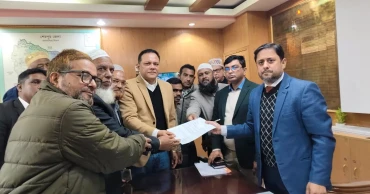
A total of 2,582 candidates have submitted nomination papers to contest from the country’s 300 constituencies in the 13th general election slated for February 12, 2026.
As many as 3,407 aspirants collected nomination papers, but 2,582 ones filed nomination papers, according to the statistics of the EC’s central coordination committee.
Among them, 278 nomination papers were submitted in 33 constituencies of Rangpur region, while 260 in 39 constituencies of Rajshahi region, 276 in 36 constituencies of Khulna region, 166 in 21 constituencies of Barishal region, 142 in 15 constituencies of Faridpur region, 444 in 41 constituencies of Dhaka region, 311 in 38 constituencies of Mymensingh region, 146 in 19 constituencies of Sylhet region, 365 in 35 constituencies of Cumilla region, and 194 in 23 constituencies of Chattogram region.
BNP enters election race with anti-fascist movement allies
The candidates across the country submitted their nomination papers on Monday before the 5:00 pm deadline in a calm and orderly atmosphere for the upcoming national election.
Most aspirants submitted their nomination papers on the final day as only 166 were submitted until Sunday.
No incident of violence was reported anywhere in the country in connection with the submission of nomination papers on the final day.
BNP Chairperson and former Prime Minister Khaleda Zia’s nomination paper was submitted to contest the election from Feni-1, while BNP Acting Chairman Tarique Rahman’s nomination papers were submitted to contest from Dhaka-17 and Bogura-6 constituencies.
Bangladesh Jamaat-e-Islami Ameer Dr Shafiqur Rahman’s nomination papers were filed to the returning officer concerned to contest from Dhaka-15 constituency.
Maintain law and order at any cost: Bangladesh’s police chief
BNP Secretary General Mirza Fakhrul Islam Alamgir submitted the nomination paper to contest from Thakurgaon-1 constituency, while Bangladesh Jamaat-e-Islami Secretary General Mia Golam Parwar submitted his nomination paper to run from Khulna-5 constituency.
The number of aspirants, who submitted nomination papers, was 2,711 in the 12th general election held on January 07, 2024, what that was 3,065 in the 11th general election held on December 30, 2018.
The Election Commission on December 11 announced the schedule to hold the 13th parliament election and the referendum on the July National Charter (Constitutional Reform) Implementation Order simultaneously on February 12 next.
According to the election schedule, the deadline for the submission of nomination paper is December 29, while the scrutiny of nomination paper is on December 30-January 4 and the last date for the withdrawal of candidature is January 20.
EC Secretary rules out further extension for nomination submission
The election campaign will start on January 22 and continue till 48 hours before the balloting period (7:30am on February 10).
This time the Commission appointed 69 returning officers –two divisional commissioners (Dhaka and Chattogram), three regional election officers (Dhaka, Chattogram and Khulna) and 64 district deputy commissioners.
The collection and submission of nomination papers started on December 12, a day after the announcement of the election schedule.
9 months ago
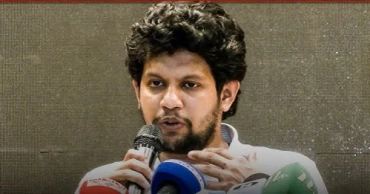
Mahfuj Alam rules out joining NCP over Jamaat alliance
Former Information Adviser Mahfuj Alam on Sunday (December 28, 2025) said he will not join the National Citizen Party (NCP) because of its alliance with Bangladesh Jamaat-e-Islami.
In a post on his verified Facebook account at night, Mahfuj said his respect, affection and friendship for his 'July comrades' remain intact, but he has decided to stay away from the party.
“Under the present reality, my respect, affection and friendship for my July comrades will not be erased. But I am not becoming part of the NCP,” he wrote.
Mahfuj said he was offered the opportunity to contest the election as a candidate of the Jamaat–NCP alliance, but he was not interested.
Read more: NCP joined Jamaat-led alliance to protect ‘July Generation’, says Nahid
“Maintaining my long-standing position is far more important to me than becoming a Jamaat–NCP alliance candidate in any constituency in Dhaka,” he said.
Raising questions over how far the NCP upholds the ideals of July, Mahfuj wrote that he has long spoken about a new political and economic order, a cultural struggle against fascism, confronting social fascism, reconciliation and building a society based on responsibility and empathy.
“These are ideas that my July comrades have repeatedly spoken about from within those two organisations. But did they truly internalise them?” he questioned.
He said he made every effort to establish NCP as an independent, broad-based 'big July umbrella', but that attempt failed for various reasons.
Describing the current phase of history as a 'cold war' for Bangladesh, Mahfuj said it is wiser at this moment to avoid taking sides and instead remain firm in one’s own principles and positions.
“The possibility of an alternative July force has not yet ended. Rather, I will continue to uphold what I have said and the principles I have believed in over the last one and a half years — through political, cultural and intellectual means. If you care to join me, you are most welcome," he said.
Read more: NCP finally joins Jamaat-led alliance, Jamaat Ameer announces new coalition
He also said a new political and economic order is both possible and realistic, adding that the rise of an alternative, moderate July force is very close.
Speculation had been rife throughout the week about the NCP joining a Jamaat-led alliance. On Sunday afternoon, Jamaat-e-Islami Ameer Dr Shafiqur Rahman formally announced the new coalition with NCP.
In a separate press briefing, NCP Convener Nahid Islam said the decision to join hands with Jamaat and like-minded groups was taken in the interest of broader unity.
Meanwhile, opposing the Jamaat alliance, two central NCP leaders — Tasnim Jara and Tajnuva Jabeen — have resigned from the party. Another central committee member, Monira Sharmin, has announced her withdrawal from the election, though she has not formally resigned.
Read more: ‘I won’t resign, though NCP deviated from founding goal’: Samantha
9 months ago
National Election: Only 166 nominations filed out of 3,144 till Sunday; deadline Monday
A total of 166 nomination papers have been submitted as of 5:00pm on Sunday, while 3,144 nomination papers were collected nationwide, according to the Election Commission’s (EC) Central Coordination Committee, formed ahead of the upcoming national election.
The EC has set the deadline for submission of nomination papers at 5:00pm on Monday (December 29, 2025).
Ahead of the polls, the commission has divided the country into ten electoral regions: Rangpur, Rajshahi, Khulna, Barishal, Faridpur, Dhaka, Mymensingh, Sylhet, Cumilla, and Chattogram.
According to EC statistics, Dhaka recorded the highest number of collected nomination papers at 596, but only 22 were submitted by Sunday.
No approval needed for repair, renovation of polling stations: EC
Rangpur saw the lowest submission rate, with only six papers filed out of 258 collected. Cumilla came second in terms of collection, with 462 nomination papers, while 28 were submitted by Sunday evening.
Other regions reported the following figures for collected nominations: Rajshahi 305, Khulna 347, Barishal 182, Faridpur 155, Mymensingh 383, Sylhet 169, and Chattogram 287.
The EC on December 11 last announced the schedule to arrange the 13th parliamentary election and the referendum on the July National Charter (Constitutional Reform) Implementation Order simultaneously on February 12 next.
According to the election schedule, the deadline for the submission of nomination papers is December 29, while the last date for the withdrawal of candidature is January 20. The election campaign will start on January 22 and continue till 48 hours before the balloting period (7:30am on February 10).
Strengthen cyber security ahead of election: Prof Yunus
Regarding the submission of dependents’ tax information, the EC clarified that providing the income tax information of an aspirant's spouse, children and dependents in the nomination form would be considered as optional.
The EC issued the clarification in a letter sent to 69 returning officers, including two divisional commissioners, three regional election officers, and 64 district deputy commissioners, hours after a demand for clarification from BNP.
9 months ago
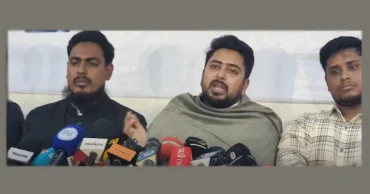
NCP joined Jamaat-led alliance to protect ‘July Generation’, says Nahid
National Citizen Party (NCP) joined an alliance led by Bangladesh Jamaat-e-Islami and other like-minded parties, citing the need for a broader unity to protect the generation that actively participated in the July uprising, NCP Convener Nahid Islam said on Sunday (December 28, 2025).
Nahid made the announcement at an urgent press conference held at NCP’s temporary office in the city's Banglamotor in the evening.
“We initially intended to contest the election independently and had prepared to field candidates in all 300 constituencies. However, incidents such as the killing of Osman Hadi, spokesperson of the Inqilab Moncho, prompted us to reconsider and take a new decision,” Nahid said.
Referring to ongoing conspiracies to disrupt the February elections, he said the main aim of the defeated forces is to destroy the July generation. “To preserve the dreams of the July generation, NCP has joined hands with Jamaat”.
Read more: Mahfuj Alam rules out joining NCP over Jamaat alliance
Nahid emphasised that the alliance seeks broader unity to reform the country, ensure justice for the July mass killings, and curb hegemony and corruption. “From that perspective, we have joined this alliance to ensure a competitive election.”
The decision to ally with Jamaat has sparked mixed reactions within NCP. Central leaders such as Tasnim Jara and Tajnuva Jabeen resigned, while leaders including Samantha Sharmin and Monira Sharmin openly opposed the move.
“We have taken the decision based on the majority opinion. The party will continue to operate according to its rules,” Nahid said.
When asked how NCP’s ideology aligns with Jamaat, he replied, “For now, the alliance is purely for electoral purposes. Post-election, we will decide whether to move forward together. The primary focus of the current alliance is the 13th national election and referendum.”
Regarding seat-sharing, Nahid said, “No final decision has been made yet. We will announce the details at a press conference on Monday.”
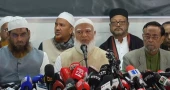
Earlier in the day, Jamaat Ameer Dr Shafiqur Rahman, at an urgent press briefing with like-minded parties, announced NCP’s formal entry into the alliance. Besides NCP, the Liberal Democratic Party (LDP) has also joined the coalition.
After the July uprising, Jamaat-e-Islami, Islami Andolan Bangladesh, Khelafat Majlis, Bangladesh Khelafat Majlis, Bangladesh Khelafat Andolon, Bangladesh Nezame Islam Party and Jatiya Ganatantrik Party (JaGaPa) began discussions to field single candidates in all constituencies through seat-sharing arrangements.
Read more: ‘I won’t resign, though NCP deviated from founding goal’: Samantha
The Bangladesh Development Party later joined the process, forming an eight-party alliance that carried out prolonged joint movements on various demands.
With the fresh inclusion of NCP and LDP in the electoral understanding, the number of parties in the Jamaat-led alliance has now risen to ten.
9 months ago
Bangladesh Polls: Nomination paper submission closes Monday; 99% yet to file
With the deadline for submitting nomination papers for the upcoming national election falling on Monday, nearly 99 percent of aspirants who collected the forms have yet to file them as they are waiting for the last day.
“A total of 2,780 nomination papers were collected to contest the election from the country’s 300 constituencies and only 31 papers were submitted till 2:30pm on Sunday,” said Election Commission Senior Secretary Akhtar Ahmed on Sunday evening.
The deadline for the submission of nomination papers will expire at 5:00pm on Monday (December 29, 2025), said EC officials.
Read more: National Election: Only 166 nominations filed out of 3,144 till Sunday; deadline Monday
Md Yunus Ali, the returning officer for Dhaka-13 and Dhaka-15 constituencies, said a total of 29 nomination papers were collected in the two constituencies, but only three papers were submitted till Sunday. “Most of the nomination papers will be submitted tomorrow (the last day),” he said.
The EC on December 11 last announced the schedule to arrange the 13th parliamentary election and the referendum on the July National Charter (Constitutional Reform) Implementation Order simultaneously on February 12 next.
According to the election schedule, the deadline for the submission of nomination papers is December 29, while the last date for the withdrawal of candidature is January 20. The election campaign will start on January 22 and continue till 48 hours before the balloting period (7:30am on February 10).
Submission of Dependents’ Tax Information Optional
The Election Commission on Sunday clarified that providing the income tax information of an aspirant's spouse, children and dependents in the nomination form would be considered as optional.
The EC issued the clarification in a letter sent to 69 returning officers, including two divisional commissioners, three regional election officers, and 64 district deputy commissioners, hours after a demand for clarification from BNP.
“Regarding income tax information in serial 10 of the affidavit: providing the income tax related information of the spouse, children, and dependents mentioned in columns 2, 3, and 4 of the income tax return section shall be considered optional,” the commission said in the letter.
Read more: No approval needed for repair, renovation of polling stations: EC
The Commission, however, said the statement of the sources of income, assets, and liabilities of fully dependent family members, which are mentioned in the serials 6 and 7 of the affidavit, must be submitted as this requirement is in accordance with the Clause 12(3)(ka)(c) of the Representation of the People Order (RPO), 1972.
The clarification came after a three-member delegation of the Bangladesh Nationalist Party (BNP), led by Standing Committee member Nazrul Islam Khan, met Chief Election Commissioner AMM Nasir Uddin on Sunday to raise concerns about the provision.
Talking to reporters after the meeting, Nazrul Islam Khan said although the Representation of the People Order (RPO) does not mention children, the nomination form requires aspirants to submit income tax details of their children, which has created widespread confusion.
“There is a question everywhere because many candidates’ children are not dependent on them. Many are self-earning, some live abroad, and many pay taxes independently. This has created complexity, which is why we wrote to the Election Commission and also discussed the matter today,” he said.
Tarique, Ziama in Voter List
Meanwhile, the Election Commission on Sunday incorporated BNP Acting Chairman Tarique Rahman and his daughter Zaima Rahman in the country’s voter list to be used in the February-12 election.
“They (Tarique Rahman and Zaima Rahman) have been included in the voter list that will be used in the February-12 elections,” EC Senior Secretary Akhtar Ahmed told UNB on Sunday evening.
Earlier in the day, the Commission approved the inclusion of their names in the electoral rolls, a day after Tarique Rahman and his daughter Zaima Rahman completed the necessary process for National Identity Card (NID) registration and voter enlistment.
Read more: Providing dependents’ income tax info in nomination form optional: EC
They went to the Election Commission’s National Identity office in the city to complete their NID registration and enlist them as a voter. Their biometric data and photographs were taken in the NID office.
Besides, the Election Commission asked the Home Ministry to recover illegal arms, prepare level-playing field, provide security to election offices and materials, containing misinformation and disinformation.
“In order to conduct the elections in a fair and peaceful manner, it is necessary to recover illegal arms from the electoral area; maintain communal harmony and provide security to minorities; plan for the deployment of law and order forces; formulate an advance budget for the deployment of law and order forces; control illegal infiltrators and prepare a level playing field for the elections; provide security for postal ballot transportation and storage sites; prevent the spread of misinformation and disinformation; and provide clearance and security for foreign observers and journalists on the occasion of their arrival in Bangladesh,” says the letter sent on Saturday.
the letter, the EC also drew attention to take necessary measures to ensure security in the transportation, storage and distribution of election materials, take effective measures to ensure the security of the office of the Returning Officer and all field-level election-related departments, and plan to deploy law enforcement forces at polling stations on election day and in the election area a few days before the election to maintain overall peace and order.
Besides, the EC also sent letters to the Cabinet Division, the Foreign Ministry, the Local Government Division, the Information and Broadcasting, the Posts and Telecommunications Division and the Cultural Affairs Ministry asking them to take necessary measures on different election activities.
Read more: Asif Mahmud picks up nomination paper for Cumilla-3
9 months ago
NCP finally joins Jamaat-led alliance, Jamaat Ameer announces new coalition
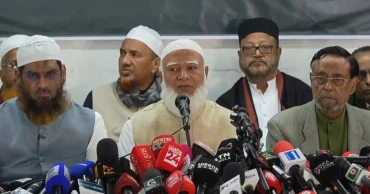
The National Citizen Party (NCP) joined the Jamaat-e-Islami-led alliance of like-minded parties, Jamaat Ameer Dr Shafiqur Rahman announced on Sunday (December 28, 2025).
He made the announcement at an emergency press conference held in the afternoon at the Jatiya Press Club, saying that NCP had agreed to be part of the alliance.
Dr Shafiqur Rahman also said the Liberal Democratic Party (LDP) joined the bloc as a new member.
Although top leaders of the eight-party alliance were present at the press conference, including LDP President Colonel (retd) Oli Ahmed, no representative from NCP attended the event.
Shafiqur Rahman said NCP Convener Nahid Islam had held discussions with the alliance leaders and expressed consent to formally join the coalition.
NCP in talks with Jamaat over electoral alliance, no final decision yet: Akhter Hossen
“Just a short while ago, our meeting with NCP concluded. Although they could not manage the time or opportunity to attend this press conference, they have informed us that after internal party discussions, they will formally announce their alliance with us by tonight,” he said.
Regarding electoral preparations, the Jamaat Ameer said seat-sharing negotiations among the alliance partners are nearing completion. “We will sit for discussions very soon and reach an understanding on seat sharing in a peaceful manner. There will be no complications over this.”
He also noted that several other parties had expressed interest in joining the Jamaat-led alliance, but due to time constraints, it was not possible to include them at this stage.
The Jamaat Ameer, however, said the alliance is interested in working with those parties after the election.
NCP to pay ‘heavy price’ if it aligns with Jamaat: Samantha Sharmin
Speaking about the 13th national parliamentary election and the referendum, Shafiqur Rahman said the alliance wants a free and fair election to be held on time. “We want the election to be held properly at the scheduled time. Under no circumstances should there be any change to the announced date of February 12.”
He also alleged that a level playing field has not yet been ensured for the election.
“Ensuring a level playing field is the responsibility of the government and the Election Commission. We expect both to fulfill their constitutional duties. Any failure in this regard will not be accepted by the people of the country,” he warned.
After the July uprising, Jamaat-e-Islami, Islami Andolan Bangladesh, Khelafat Majlis, Bangladesh Khelafat Majlis, Bangladesh Khelafat Andolon, Bangladesh Nezame Islam Party and Jatiya Ganatantrik Party (JaGaPa) began discussions to field single candidates in all constituencies through seat-sharing arrangements.
Tajnuva Jabeen quits NCP over alliance-forging concerns
The Bangladesh Development Party later joined the process, forming an eight-party alliance that carried out prolonged joint movements on various demands.
With the fresh inclusion of NCP and LDP in the electoral understanding, the number of parties in the Jamaat-led alliance has now risen to ten.
9 months ago

Tarique Rahman collects nomination paper for Dhaka-17
BNP Acting Chairman Tarique Rahman on Sunday (December 28, 2025) collected his nomination paper to contest the upcoming national election from the Dhaka-17 constituency.
On behalf of Tarique, BNP Chairperson’s Private Secretary ABM Abdur Sattar collected the nomination form from the office of Dhaka Divisional Commissioner Sharf Uddin Ahmed Choudhury at around 11:10am, said BNP media cell member Sayrul Kabir Khan.
Earlier on Saturday night, BNP Standing Committee member Salahuddin Ahmed told UNB that Tarique Rahman will contest the 13th parliamentary election, scheduled for February 12 next year, from two constituencies—Bogura-6 and Dhaka-17.
Snubbed Rumeen Farhana collects nomination form
“Our party’s Acting Chairman Tarique Rahman will contest the election from two seats. One is Bogura-6 and the other is Dhaka-17. This is a party decision,” Salahuddin said.
Responding to questions about campaign activities suggesting that Bangladesh Jatiya Party (BJP) Chairman Barrister Andaleeve Rahman Partho, a BNP ally, would contest from Dhaka-17, Salahuddin said Partho will not run from that seat.
“He will contest the election from his home constituency, Bhola-1, using his party’s own election symbol,” the BNP leader said.
Read more: Tarique Rahman to contest polls from Bogura-6, Dhaka-17
9 months ago
Tarique Rahman to contest polls from Bogura-6, Dhaka-17
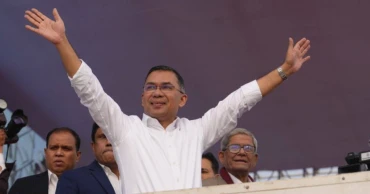
BNP Acting Chairman Tarique Rahman will contest the 13th parliamentary election billed for February 12 next year from two constituencies: Bogura-6 and Dhaka-17.
BNP Standing Committee member Salahuddin Ahmed confirmed the decision while speaking to UNB on Saturday night (December 27, 2025).
“Our party’s Acting Chairman Tarique Rahman will contest the election from two seats. One is Bogura-6 and the other is Dhaka-17. This is a party decision,” he said.
BNP demands release of teacher held over offensive remarks about Tarique
Salahuddin said BNP Chairperson Khaleda Zia will contest the election from three constituencies--Bogura-7, Feni-1 and Dinajpur-3, while Tarique Rahman will contest from Bogura-6 and Dhaka-17.
When asked about campaign activities suggesting that Bangladesh Jatiya Party (BJP) Chairman Barrister Andaleeve Rahman Partho, a BNP ally, will contest from the Dhaka-17 seat, Salahuddin said Partho is not contesting the polls from Dhaka-17.
Tarique thanks nation for warm welcome
“He will contest the election from his home constituency, Bhola-1, using his party’s own election symbol,” the BNP leader said.
9 months ago

EU deploys election observation mission to Bangladesh
In response to a formal invitation by Bangladesh authorities, the High Representative/Vice President of the European Commission Kaja Kallas has decided to deploy an EU Election Observation Mission (EOM) to observe the parliamentary elections scheduled for 12 February 2026.
The High Representative has appointed Ivars Ijabs, Member of the European Parliament, as its chief observer.
Read more: IRI pre-election observation team meets EC Sanaullah
"I am honoured to lead this EU Election Observation Mission to Bangladesh, which will deliver an independent and impartial assessment of the electoral process," Chief Observer Ijabs said on Tuesday.
10 months ago

Press Secretary sees no possibility of AL’s participation in election
Apparently ruling out the possibility of the Awami League’s participation in the upcoming national election, Chief Adviser’s Press Secretary Shafiqul Alam on Monday (December 15, 2025) said that no democratic country in the world would allow an organisation led by such a ‘terrible criminal’ to engage in any form of activity, let alone taking part in elections.
“This (AL) party leader (Sheikh Hasina), is a fugitive from justice, sentenced to death for crimes against humanity, and is calling for terrorist attacks against Bangladesh,” he told UNB when asked whether the Awami League would be permitted to participate in the next general election.
The much-sought national election and a referendum on the July National Charter (Constitutional Reform) Implementation Order 2025 will simultaneously be held on February 12 (Thursday) under a non-political government after 18 years as the Election Commission announced the schedule on Thursday evening.
Read more: No uncertainty over national election, reaffirms CEC
Chief Election Commissioner AMM Nasir Uddin announced the schedule in his pre-recorded speech telecast by state-owned Bangladesh Television and Bangladesh Betar recently.
According to the election schedule, the deadline for the submission of nomination paper is December 29, while the scrutiny of nomination paper is on December 30-January 4 and the last date for the withdrawal of candidature is January 20.
The election campaign will start on January 22 and continue till 48 hours before the balloting period (7:30am on February 10).
Read more: Jamaat Ameer warns against return to ‘fascist past’
10 months ago