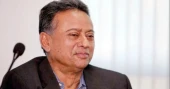
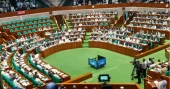
Finance Minister Amir Khosru
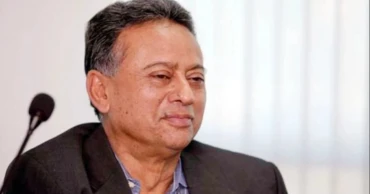
Several proposals centring free textbooks for 2027 receive cabinet's nod
The Cabinet Committee on Government Purchase (CCGP) on Thursday approved several proposals involving the printing, binding and supply of free textbooks for primary, Ebtedayee, secondary, Dakhil and technical education levels for the 2027 academic year.
Finance Minister Amir Khosru Mahmud Chowdhury presided over the meeting held at Bangladesh Secretariat.
The committee gave the approval of a proposal from the Ministry of Primary and Mass Education for printing, binding and supplying textbooks for students of Classes I to V under 106 lots out of 110 tenders.
Under the proposal, 7.35 crore copies of textbooks will be printed through 63 selected institutions at a cost of Tk 404.02 crore.
The committee also approved a proposal from the Secondary and Higher Education Division for printing, binding and supplying free textbooks for Ebtedayee level (Classes I to V).
The proposal involves printing 3.18 crore copies of textbooks through 35 institutions under 35 tenders at a cost of Tk 153.91 crore.
Besides, the committee recommended approval of separate proposals for printing textbooks for Class VI and Class VII students under the secondary, Dakhil and technical education streams.
The Class VI textbook printing proposal covers Bangla and English versions of secondary-level books, Dakhil and technical education books. Under the proposal, 4.11 crore copies of textbooks will be printed through 63 institutions under 70 tenders at a cost of Tk 183.58 crore.
For Class VII, the committee recommended approval of a proposal involving printing, binding and supply of 3.84 crore copies of textbooks through 59 institutions under 69 tenders.
The cost of the Class VII textbook printing proposal is Tk 206.59 crore.
The CCGP approved the proposals following recommendations from the relevant authorities to ensure timely supply of free textbooks among students ahead of the 2027 academic year.
2 months ago

Purchase body clears proposals for Tk 704.7 cr fertiliser, sulphur imports
The Cabinet Committee on Government Purchase on Wednesday approved procurement proposals worth more than Tk 704.7 crore including the import of urea fertiliser and sulphur for the country's agricultural and industrial needs.
The decisions were taken at a meeting of the committee atSecretariat with Finance Minister Amir Khosru Mahmud Chowdhury in the chair.
Import of 40,000 metric tonnes of urea fertiliser through the Direct Procurement Method (DPM) at a cost of Tk 348.56 crore was among the proposals.
The proposal submitted by the Ministry of Industries involves the purchase of urea from UAE-based Delta Star Trading FZ-LLC through its local agent Ibedita Trading, Dhaka.
The per-metric-tonne price has been fixed at US$707.01.
The committee also recommended approval of another fertiliser import proposal under a government-to-government arrangement.
Under the proposal, 25,000 metric tonnes of bulk granular urea will be imported from Saudi Arabia's SABIC Agri-Nutrients Company .
The Ministry of Industries estimated the procurement cost at Tk 185.13 crore, with the fertiliser to be supplied at a price of US$600.83 per metric tonne.
The committee approved another proposal for importing 15,000 metric tonnes of rock sulphur/bright yellow sulphur for TSP Complex Limited (TSPCL) at a cost of Tk 171.01 crore.
The proposal was also submitted by the Ministry of Industries, with Seychelles-based M/s Fabsco Construction Limited selected as the supplier.
According to the proposal, the sulphur may be sourced from a range of internationally recognised producers and refiners, including Formosa Petrochemical Corporation of Taiwan, Turkmengas of Turkmenistan, Mongstad Refinery of Norway, ADNOC of the UAE, Duqm Refinery of Oman, SOMO of Iraq and Reliance Industries of India, among others.
3 months ago
Govt pursuing welfare state through sweeping economic reforms: Khosru
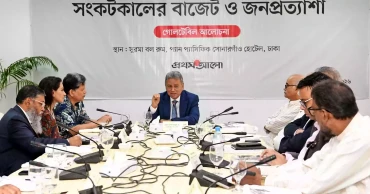
Finance Minister Amir Khosru Mahmud Chowdhury on Thursday said the government has undertaken an all-out reform programme to establish a welfare state by moving away from an ‘oligarchic and patronage-driven’ economic system.
The minister said democratization of the economy is not merely a slogan but the core philosophy of the present government, he said while addressing a roundtable discussion titled “Budget in Times of Crisis and Public Expectations” at a hotel in Dhaka.
He said special emphasis is being placed on bringing marginalised groups including rural blacksmiths, potters and weavers into the mainstream economy after they remained outside the budgetary framework for decades.
The finance minister said the upcoming national budget would include special projects and fund allocations to promote and monetise the creative economy, including theatre, culture, music, painting and artificial jewellery.
He also announced plans to establish “theatre districts” in major cities beyond Dhaka and said Bangladesh’s culture, films and music would be branded and promoted globally to strengthen the country’s soft power, following examples set by neighbouring countries.
Amir Khosru said the government is taking strict measures to reduce the cost of doing business, including excessive charges and bureaucratic harassment at ports and across the supply chain.
He said the number of approvals required for business operations and project implementation would be reduced to 13, down from what he described as an excessively complicated system.
The minister added that the entire economic and administrative system would be brought under digital automation within the next year, while initiatives are underway to introduce a “One Citizen, One Card” system for all public services.
Highlighting plans for financial sector reforms, the finance minister said the government is strengthening the capital and bond markets as alternatives to high-interest bank loans.
He said international investment bankers, fund managers and the International Finance Corporation (IFC) have shown strong interest in the initiative.
On taxation, Amir Khosru said the government would verify the actual market share of multinational and major tobacco companies, including The Coca-Cola Company and PepsiCo, to ensure fair tax collection and prevent tax evasion.
He said plans are also underway to introduce a simplified flat-rate tax system for small restaurants and shop owners to bring them under the tax net and reduce harassment by tax officials.
The finance minister said sweeping changes are being introduced in tax policymaking through a proposed bill that would establish a policy-making body comprising individuals with expertise in the global economy, local trade and human profitability, rather than focusing solely on tax collection.
Urging people to remain patient for the next two years, he said the government’s goal is not only to increase GDP growth but also to ensure that the benefits of growth improve the lives of ordinary citizens.
4 months ago
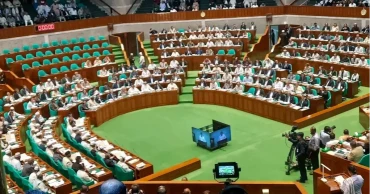
Defaulted loans reach Tk 5.45 lakh crore: Finance Minister
Defaulted loans in Bangladesh’s banking sector stood at Tk 5.45 lakh crore at the end of 2025, Finance Minister Amir Khosru Mahmud Chowdhury told Parliament on Monday.
“As of December 31, 2025, the total amount of defaulted loans in the banking sector is Tk 5,44,831 crore,” he said replying to a tabled question from NCP lawmaker Md Abul Hasnat who is popularly known as Hasnat Abdulla (Cumilla-4).
The parliament session resumed at 3:30 pm with Deputy Speaker Barrister Kayser Kamal in the chair.
The Minister also placed the list of top 20 loan defaulters in the House.
The 20 top loan defaulters are S. Alam Super Edible Oil Limited, S. Alam Vegetable Oil Limited, S. Alam Refined Suger Industries Limited, S. Alam Cold Rolled Steels Limited, Sonali Traders, Bangladesh Export Import Company Ltd, Global Trading Corporation Limited, Chemon Ispat Limited, S. Alam Trading Company Private Ltd, Infinite CR Strips Industries Limited, Keya Cosmetics Limited, Deshbandhu Sugar Mills Limited, Power Pac Mutiara Keranigonj Power Plant Ltd, Power Pac Mutiara Jamalpur Power Plant Ltd, Pacific Bangladesh Telecom Limited, Karnafuly Foods (Pvt.) Limited, Murad Enterprise, CLC Power Company Limited, Beximco Communications Limited, and Rongdhanu Builders (Pvt) Ltd.
Highlighting government efforts to recover defaulted loans, the finance minister said banks with more than 10 percent classified loans will be reviewed quarterly and action plans will be adopted to identify and address obstacles to loan recovery.
He said progress in recovering dues from the top 20 defaulters will be monitored at each bankers’ meeting organised by Bangladesh Bank and guidelines will be formulated for banks with high levels of classified loans.
“Banks have been instructed to strengthen the existing legal team/law department of the bank,” said the minister.
He said banks have been instructed to set a target of cash recovery of at least 1% of the defaulted loan balance of each bank by June 30, 2026 following Alternative Dispute Resolution (ADR).
The finance minister said an action plan has also been adopted to resolve the problem of non-performing loans.
According to the action plan, Bangladesh Bank is currently working to amend the existing laws including Bank Company Act, Negotiable Instrument Act, Orthro Rin Adalat Ain and Bankruptcy Act to resolve the problem of non-performing loans.
Other proposed measures include reviewing agricultural loan rescheduling policies, publishing lists of defaulters and wilful defaulters, strengthening incentives for regular borrowers, identifying good borrowers to promote a stronger credit culture, and setting borrowing limits across the banking sector, said the minister.
Further steps include legal reforms to deal with wilful defaulters involving experienced bankers in money loan courts, preventing misuse of writ petitions to delay recovery, and enacting laws to establish private-sector Asset Management Companies (AMCs), he added.
The minister also informed the House that loans taken from banks and financial institutions by members of parliament and their related entities amount to Tk 11,117.31 crore.
6 months ago
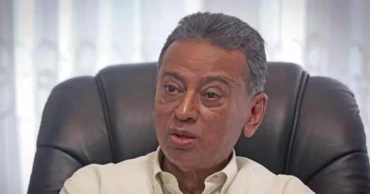
Finance Minister Amir Khosru unveils ambitious reform plan on day one
Finance Minister Amir Khosru Mahmud Chowdhury on his first day in office on Wednesday laid out an ambitious reform agenda centred on institutional recovery, deregulation and broad-based economic participation.
“Government’s ability to deliver depends fundamentally on the strength and efficiency of its institutions,” he said while speaking to reporters after assuming charge at the ministry.
He said that state institutions are currently in a poor condition and require urgent attention. “Our primary problem (right now) is that the state institutions are in a very bad shape. We have to address this first. The institutions must be improved.”
Amir Khosru stressed that restoring professionalism, transparency and efficiency within public institutions would be the first priority.
According to him, without these core elements, even the most ambitious economic programmes would fail to produce meaningful results.
“We have to bring professionalism into the institutions. We have to ensure transparency. We have to ensure efficiency. This is the most important issue,” he said, adding that in the absence of these qualities, no major initiative would work effectively.
The finance minister described institutional reform as the ‘number one’ task before the ministry, underscoring that rebuilding governance structures is a prerequisite for sustainable economic management.
Turning to broader economic policy, he said the country must move away from what he described as a patronage-driven economic model and instead democratise the economy.
“The economy of Bangladesh must be for all people,” Amir Khosru said, emphasising the need for ensuring a level-playing field.
Amir Khosru said every citizen should have an opportunity to participate in economic activity and to benefit from its outcomes, reiterating that wider participation in the economy is essential for inclusive growth. Ensuring that the benefits of economic growth reach every segment of society would be a key benchmark of success under his leadership.
On regulatory reforms, the finance minister renewed his call for serious deregulation and liberalisation, arguing that Bangladesh has become an over-regulated country over time.
Amir Khosru attributed this trend to years of patronage-based politics, which, in his view, resulted in layers of regulations that have increased the cost of doing business and limited fair competition.
“Bangladesh has become over-regulated,” he said.
“To make this successful, we must undertake serious deregulation. We have to liberalise and create a level playing field so that everyone has equal rights to participate in the economy and its benefits reach all.”
Economy suffering from ‘overregulation’, says Amir Khosru
The minister argued that excessive regulation often creates opportunities for corruption and rent-seeking, adding that rationalising the regulatory framework would reduce barriers, improve competitiveness and enhance investor confidence.
When asked to summarise his priorities, he responded succinctly that the economy would remain his central focus, with institutional reform, deregulation and inclusive participation forming the core pillars of his agenda.
7 months ago