Ukraine negotiator talks with Russia
Ukraine negotiator describes tense talks with Russia
A senior Ukrainian negotiator has offered a rare insight into what it is like to sit face to face with Russian representatives amid ongoing efforts to halt the war, saying military-level talks are largely pragmatic but stopping the conflict ultimately depends on political will in Moscow.
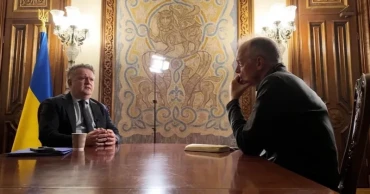
Sergiy Kyslytsya, a member of President Volodymyr Zelenskyy’s delegation, told the BBC that recent military-to-military discussions with Russia were generally business-like and free from the ideological rhetoric often heard from the Kremlin in public forums.
“The military has a better understanding of what is happening on the battlefield,” Kyslytsya said during an interview at the presidential palace. He added, however, that it remains uncertain whether Russian officers accurately convey realities on the ground to their political leadership.
His comments come ahead of a possible new round of US-mediated talks in Geneva later this week, following several previous discussions that have failed to produce a breakthrough nearly four years after Russia’s full-scale invasion of Ukraine.
Kyslytsya said the complexity of disengagement is heightened by conditions on the battlefield in eastern Ukraine, where thousands of drones operate across a vast so-called grey zone and about 200,000 civilians still live in heavily fortified Donbas cities. Any ceasefire, he stressed, would require detailed rules, clear protocols and reliable verification mechanisms.
Much of the technical groundwork for such arrangements has already been completed, he said, with significant input from US officials. Kyslytsya praised Washington’s role, noting that American representatives actively participate in discussions rather than merely observing.
He also spoke positively about the involvement of US figures including Jared Kushner and Steve Witkoff, describing them as experienced and constructive participants in the process.
According to Kyslytsya, the United States is expected to play a central role in monitoring any future ceasefire, using satellite imagery and other advanced technologies. He said a credible and authoritative third party would be essential to adjudicate violations.
Previously, this role was held by the Organization for Security and Co-operation in Europe, but Kyslytsya said its limited resources and lack of enforcement power left it unable to prevent escalation before the 2022 invasion.
A former Ukrainian ambassador to the United Nations, Kyslytsya said he has long experience dealing with Russian diplomats. He recalled being at an emergency UN Security Council meeting on February 23, 2022, when he learned Ukraine was under attack. He said Russian ambassador Vassily Nebenzia declined to contact Foreign Minister Sergei Lavrov for assurances as the invasion loomed.
Kyslytsya said that moment marked a turning point, after which he remained at the UN for three more years before returning to Kyiv.
Looking ahead to possible talks in Geneva, he said negotiations continue to focus on the mechanics of a ceasefire but argued the war could end swiftly if Russia’s leadership chose to act.
“The war could be stopped by just one call,” he said, adding that Russian President Vladimir Putin has so far shown no readiness to take that step.
With inputs from BBC
7 months ago