Israel-Tehran
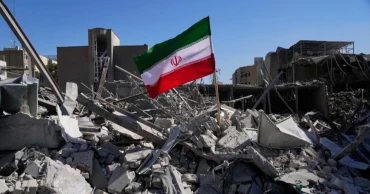
Israel intensifies Tehran strikes as Iran expands retaliation across region
Israel said Tuesday it carried out fresh airstrikes targeting Iranian missile launchers and a nuclear research facility in Tehran, as Iran broadened its counterattacks against Israel and across the Gulf, including drone strikes on U.S. diplomatic missions and disruptions to energy supplies and air travel.
On the fourth day of the conflict, which US President Donald Trump indicated could continue for weeks, the death toll in Iran has climbed to nearly 800. Among those killed, Trump said, were individuals the United States had viewed as possible future leaders of the country.
Blasts were reported Tuesday in Tehran and in Lebanon, where Israel said it launched retaliatory strikes against Hezbollah fighters. Drone attacks targeted the U.S. Embassy in Saudi Arabia and the U.S. Consulate in the United Arab Emirates. Iran has fired dozens of ballistic missiles at Israel since the fighting began, though Israeli defenses have intercepted most of them. Eleven people have been killed in Israel.
The Pentagon also confirmed that four U.S. Army Reserve soldiers were killed in a drone strike Sunday on a command facility in Kuwait. Two additional service members died in the same attack.
The escalating exchanges have fueled uncertainty over how and when the conflict might conclude. US officials have outlined a range of objectives, including dismantling Iran’s missile capabilities, destroying its naval assets, preventing it from acquiring nuclear weapons and halting its support for allied armed groups in the region.
Although the initial US-Israeli assault killed Iranian Supreme Leader Ali Khamenei and Trump at one stage encouraged Iranians to rise up against their government, senior officials have since clarified that regime change is not an official goal of the campaign.
Speaking from the Oval Office on Tuesday, Trump appeared to temper expectations that the war would bring an end to Iran’s clerical leadership. He suggested that a successor emerging from within the existing system might be the most viable option once military operations conclude.
Trump also said that Reza Pahlavi, the son of Iran’s former shah living in exile, has not been seriously considered by his administration as a potential leader.
Regarding possible alternatives inside Iran, Trump said, “The people we had in mind are dead,” adding that there was a risk that any replacement could prove as hardline as the previous leadership.
Iranian authorities are now moving to select a new supreme leader following Khamenei’s 37-year rule. It marks only the second such transition since the 1979 Islamic Revolution. Those seen as potential successors range from staunch hardliners advocating continued confrontation with the West to reformists favoring diplomatic engagement.
7 months ago