women’s leadership
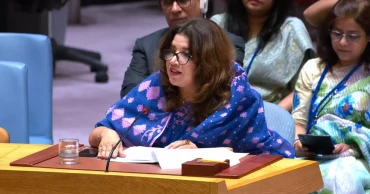
UN Forum: Bangladesh calls for stronger humanitarian action, women’s leadership in peacebuilding
Bangladesh has called for strengthened humanitarian assistance, greater protection of civilians and enhanced women’s participation in peacebuilding as global crises continue to deepen.
Addressing the 2026 ECOSOC Humanitarian Affairs Segment, the State Minister for Foreign Affairs Shama Obaed Islam reaffirmed Bangladesh’s commitment to humanitarian principles, said the Ministry of Foreign Affairs on Thursday.
She also highlighted Bangladesh’s ongoing efforts to expand social protection, strengthen disaster preparedness, empower women and support vulnerable communities under the leadership of Prime Minister Tarique Rahman.
At the UN Security Council Open Debate on Women, Peace and Security (WPS), the State Minister underscored the important role played by women in peacebuilding and praised the contributions of Bangladeshi women peacekeepers serving in UN missions.
The State Minister expressed concern over the plight of women and children in the conflict situations and called for closing the financial gaps.
She also urged for sustained international support for the Rohingya refugees’ repatriation to their own country.
The State Minister will also participate in High-Level Panel Discussion 2 of the 2026 ECOSOC Humanitarian Affairs Segment and lead the Bangladesh delegation in a bilateral meeting with Sima Bahous, Under-Secretary-General and Executive Director of UN Women at United Nations Headquarters in New York.
4 months ago
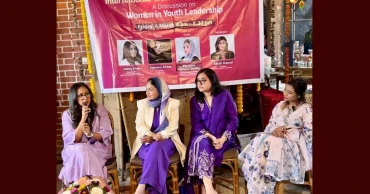
International Women’s Day: Speakers call for stronger women’s leadership, AI awareness and legal reform in Bangladesh
Women leaders from different sectors on Friday stressed the need for stronger representation of women in leadership, responsible use of AI, integrating technology with the legal system and more inclusive media narratives to empower women and youth in Bangladesh.
They shared their experiences and perspectives at a discussion on Women in Youth Leadership programme organised in Dhaka to mark International Women’s Day.
The programme was organised by National Business Chamber for Women, Women’s Indian Chamber of Commerce & Industry, (WICCI) in cooperation with Deshi Bhalobashi, an e-commerce platform promoting local products and initiatives.
Executive Editor of United News of Bangladesh (UNB) and Founder and Managing Director of Solis Group Nahar Khan, Walton Group Director Tahmina Afrose, and Deputy Attorney General and Advocate of the Appellate Division Barrister Tasnuva Shelley spoke at the event.
Mantasha Ahmed, founder president of the Association of Fashion Designers of Bangladesh, founder of SAARC Business Council, Bangladesh and founder of Deshi Bhalobashi, delivered the welcome address.
The event was moderated by Sarah Kamal.
Speaking at the event, Nahar Khan emphasised the critical role of the media in shaping public perception and amplifying the voices of women and young people.
Media does not solely reflect reality; it also construct it, she said.
“Media platforms are architects of narratives and storytelling. The editorial choices we make, who we quote, the topics we front-page, the language we use, and how we frame women in leadership positions play a crucial role in shaping public imagination of what women leadership looks like” Nahar said.
She noted that women leaders are often judged on issues unrelated to their professional capabilities.
“When we consistently frame women leaders through the lens of their appearance, their tone, or their 'likability' rather than their policy positions and decisions, we shrink the public imagination of what leadership looks like” she said.
Highlighting the need for diversity in newsrooms, Nahar Khan said greater representation of women in editorial decision-making roles is essential to ensure balanced and accurate storytelling.
“What I've come to believe is that change doesn't start with individual coverage - it starts with who's in the room making editorial decisions,” she said.
Responding to the responsibility journalists carry in representing youth voices accurately, she said youth representation in media coverage is critical.
“Nearly two-thirds of Bangladesh’s population is under the age of 35, with a median age of around 26 or 27. That is not a future statistic - that is Bangladesh right now. If we are not representing the voices, ideas and experiences of young Bangladeshis, then journalism is not covering Bangladesh,” she said.
Nahar Khan also pointed out that many young people are now receiving information through social media platforms such as Instagram and TikTok, making it important for credible media institutions to remain relevant and trustworthy.
She said failing to engage with young audiences could create space for misinformation and disinformation.
“The youth are not just the future—they are Bangladesh today. They are innovators, change-makers and leaders in sectors like startups, technology and industry,” she said.
Advocate of the Appellate Division and Deputy Attorney General Barrister Tasnuva Shelley said the growing use of artificial intelligence (AI) has created serious risks for women as the technology often reflects gender bias and is increasingly being misused for harassment and exploitation.
Tasnuva said AI can be a powerful tool for both good and harmful purposes depending on how it is used.
“Without responsible regulation, AI can amplify harm—through deepfakes, bias, and misinformation—disproportionately targeting women and young people and silencing their participation in public life,” she said.
She urged women to be cautious while sharing personal images or information online and stressed the importance of digital awareness and education.
“The law can act after the damage is done, but once an incriminating image is already shared, the harm cannot be undone,” she said.
Emphasising the need for proactive measures, Shelley said governments, institutions and citizens must work together to ensure ethical use of technology.
Barrister Tasnuva said integrating technology with the legal system is crucial to improving access to justice.“True access to justice will be possible only when technology and law work together.”
International Women's Day arrives with call to 'Accelerate Action'
She stressed that legal technology must be adopted more widely, pointing out that many countries have already embraced such systems.
Citing cybercrime cases as an example, she said nearly 90 percent of them are dismissed due to a lack of evidence, highlighting the urgent need for stronger digital systems and better evidence management.
Director of Walton Group, Tahmina Afrose said women can succeed in any sector if they prioritise work, develop the right mindset and receive proper support and training.
Tahmina said her professional life was strongly influenced by her surroundings, where family members and friends were highly work-oriented.
“My family environment was such that whenever we sat together at the dinner table or attended any event, discussions were always about business. That environment shaped my mindset from an early age,” she said.
She said her motivation to start working came when she realised the importance of financial independence.
“At one point I saw my friends earning—some were teaching, some were doing different jobs. That made me feel I should also earn my own money. I did not want to depend on anyone for my personal expenses,” she added.
Tahmina said her father encouraged her to begin working but also emphasised that success would depend on her own efforts.
Inclusive AI can drive progress: Nahar Khan tells Global South Media Forum in Kunming
“He told me he would support me but would not make my work easy. I had to do the work myself,” she said.
She started her professional journey while studying at university, initially looking after a small department.
“At that time I did not even have my own office room. I would just go to the office with my father and take care of a small department. That was the beginning of my journey,” she said.
“I believe success depends largely on a person’s mindset and dedication to work. If someone receives opportunities but fails to perform, they cannot sustain that position for long,” she said.
However, she acknowledged that environmental challenges still exist for women in certain sectors, particularly in large-scale manufacturing.
Bangladesh’s economy is still largely manufacturing-based, and many women hesitate to enter sectors involving heavy operational work, she said.
“In areas such as factory management, logistics, land acquisition or civil works, we rarely see female applicants. In many cases, 99 percent of the applicants are men,” she said.
China-Bangladesh healthcare partnership entering a new era: Cosmos Health CEO Nahar Khan
She noted that the absence of women in these operational roles creates a perception that such work cannot be done by women.“That mindset needs to change,” she added.
Tahmina Afrose emphasised that improving training opportunities, workplace safety and support systems would encourage more women to participate in large industries.
She also highlighted the need to change social perceptions about gender roles in work.
“In rural areas, for example, we often see women doing intricate work like sewing quilts, but when it comes to professional tailoring or industrial work, it is mostly dominated by men. These perceptions need to evolve,” she added.
The discussion concluded with a call for stronger collaboration among media, legal institutions, businesses and civil society to create an enabling environment where women and young people can participate more actively in leadership and decision-making.
Speakers emphasised that empowering women requires not only policy reforms but also changes in social attitudes, institutional practices and media narratives.
They also stressed the importance of responsible use of emerging technologies, inclusive storytelling and improved access to justice to ensure that women’s voices are heard and protected in an increasingly digital society.
Marking International Women’s Day, participants reaffirmed their commitment to advancing gender equality and creating opportunities for women and youth to contribute meaningfully to Bangladesh’s development.
7 months ago