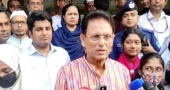
Ehsanul Hoque Milon
No primary school in 2,839 villages: Education Minister
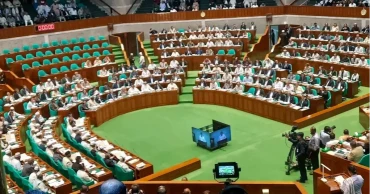
Education Minister ANM Ehsanul Hoque Milon on Wednesday told Parliament that 2,839 villages across the country still do not have any primary school.
“No, not every village in the country has a primary school. The number of villages without primary school is 2,839 throughout the country,” he said while replying to a tabled question from treasury bench lawmaker Joynal Abdin (Feni-2).
The Minister said the number of villages without primary school is 717 in Dhaka Division, 818 in Chattogram Division, 355 in Rajshahi Division, 37 in Rangpur Division, 341 in Khulna Division, 45 in Barishal Division, 260 in Sylhet Division and 266 in Mymensingh Division.
He said the government would take steps to establish schools in these villages if proposals are received, considering all necessary conditions.
In reply to another tabled question from opposition (Jamaat) lawmaker Gazi Enamul Haque (Jashore-5), the education minister said there are 24,320 educational institutions under the Secondary and Higher Education Division throughout the country.
Of these, the number of institutions without building (structures) constructed with government finance is 4,059. But the government has been implementing the infrastructural development in the unprivileged educational institutions gradually, he said.
Ehsanul Hoque said a decision was taken to construct Bhaban (structure) in one school, one collage and one non-government Madrasha or non-government technical educational institution in every constituency in the current fiscal year.
Responding to a scripted question from ruling party lawmaker Md Salim Bhuiyan (Cumilla-2), the education minister said the total number of educational institutes that are not listed under the Monthly Pay Order (Non-MPO schools) is 6,179 in the country.
Of these, 3,798 non-MPO institutions –2,712 schools, 223 schools and colleges and 863 colleges—are under the Secondary and Higher Education Division. The remaining 2,381 ones – 1,092 Madrasas and 1,289 technical institutions—are under the Technical and Madrasa Division, he said.
Ehsanul Hoque said the government has been taking steps to gradually include non-MPO educational institutions in the education sector in order to spread quality education and ensure financial security for teachers and employees.
In this regard, the decision to include institutions in the list of MPO is taken in the context of receiving applications, verification and selection as per the policies, and the necessary financial resources, he said.
Govt is positive about non-MPO institutions: Ehsanul Hoque
In reply to another scripted question from opposition (Jamaat) lawmaker Md Amir Hamza (Khustia-3), the Education Minister said the government is positive to include the non-MPO educational institutions in the list of MPO.
He said the process to bring non-MPO educational institutions under the Monthly Pay Order (MPO) system in phases to expand education and improve quality at the secondary and higher secondary levels across the country.
Through this process, eligible and necessary institutions are being brought under the purview of government financial assistance, so that the stability in the education system, including the payment of teachers' salaries and allowances, can be ensured, he added.
"The government is positive about the fresh inclusion of non-MPO schools and colleges in the MPO. However, the institutions are selected subject to proper compliance with the specific policies and conditions for MPO inclusion - such as number of students, results, infrastructure, number of teachers, geographical requirements," he said.
Ehsanul Hoque said that necessary measures will be taken to gradually include non-MPO educational institutions that meet all the conditions, subject to the government's policy decision.
6 months ago
Govt considers recruiting 9,000 religion teachers for primary schools: Milon
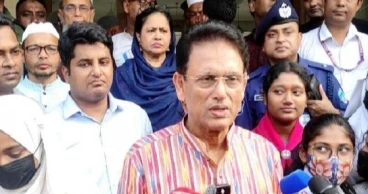
The government is considering the recruitment of around 9,000 religion teachers in primary schools as part of efforts to strengthen moral and religious education, Education Minister A N M Ehsanul Hoque Milon told Parliament on Sunday.
The government has placed renewed emphasis on primary education and is preparing a number of reforms under a 180-day programme initiated by the government, he said responding to a question raised by MP Monirul Chowdhury from Cumilla.
He said primary education received significant attention during the tenure of former Prime Minister Begum Khaleda Zia and the current government is again prioritising the sector.
The minister said the government has already received directives to introduce major changes to the primary education system, with particular attention to strengthening moral values and religious awareness among students.
However, he noted that there are some complications regarding the certification of teachers particularly those who have studied in Qawmi madrasha system.
The subject of Qira’at (Qur’anic recitation) which many Qawmi graduates specialise in, does not formally exist in the mainstream madrasha curriculum, creating administrative complexities in recognising qualifications, he added.
“The ministry is working to resolve these certification issues so that qualified candidates can be recruited as Islamic Studies teachers.”
Milon also said religion education would not be limited to Islam alone. “We are moving forward by giving importance to the religious sentiments of followers of all faiths,” he said.
Earlier, MP Monirul Chowdhury raised concerns about what he described as a deterioration in the education system over the past 15 to 17 years, despite improvements in school infrastructure.
He said many primary schools now have good buildings but a shortage of students citing examples where the number of teachers exceeds that of pupils.
The MP also urged the government to make moral education, Qur’anic education, the history of the Liberation War and the July uprising mandatory in the national curriculum to restore values among students.
6 months ago