Drug smuggling through Lalmonirhat border
Drug smuggling surges through Lalmonirhat border ahead of Eid despite crackdowns
With Eid approaching, drug smuggling and sales have surged again in Lalmonirhat, exposing the limits of ongoing crackdowns in a district long plagued by cross-border smuggling.
Despite a declared zero-tolerance stance and repeated anti-drug drives, authorities are struggling to rein in the flow of narcotics, as organised networks adapt quickly to enforcement measures.
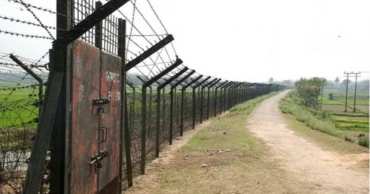
Bordering India for nearly 281 kilometres across five upazilas, parts of Lalmonirhat remain vulnerable due to unfenced stretches and porous points, allowing smugglers to exploit gaps with ever-evolving tactics.
Even in fenced areas, traffickers continue to bring in contraband under the cover of darkness, said locals.
Law enforcers and locals said a wide range of drugs—including Indian liquor, heroin, phensedyl, cannabis, yaba and tapentadol—are regularly smuggled into Bangladesh through these routes.
Once across the border, the consignments are stored in makeshift hideouts near frontier villages before being distributed nationwide, said police.
Border villages turn into drug hubs
Locals said drugs are now alarmingly accessible in many border villages, where transactions often take place discreetly at tea stalls, roadside intersections and even railway stations.
As evening sets in, the influx of outsiders seeking drugs increases, turning otherwise quiet localities into hotspots of illicit activity.
According to locals, a handful of identified dealers control much of the trade, often maintaining close ties with influential figures.
Safe routes and resilient network
Certain points in Aditmari and Kaliganj upazilas have emerged as key smuggling corridors, particularly for Indian liquor.
In 2021, a police investigation centre was established in Goral Union of Kaliganj to curb the situation.
Although enforcement drives have since intensified they have failed to dismantle the deeply rooted networks.
Locals allege that some influential individuals continue to dominate the trade despite facing multiple criminal cases.
A union parishad member in Goral Union, who reportedly has over a dozen drug-related cases against him, admitted to past involvement in drug trading but claimed he had since quit.
Another elected representative from Chandrapur Union and his associates are accused of being actively involved in the narcotics business.
Crackdowns yield limited success
Following a change in government, law enforcement agencies stepped up surveillance, leading to a temporary dip in smuggling and sales.
However, ahead of Eid, smuggling has picked up again.
Police say they are continuing operations but acknowledge the challenge posed by well-organised networks.
In February alone, district police arrested 22 alleged drug dealers in 20 cases. Courts have also handed down life sentences in several cases, yet the deterrent effect appears limited.
“Repeated drives, overnight operations—nothing seems enough against these powerful networks,” said a local resident, describing the situation as an ‘invisible darkness’ engulfing border communities.
Cycle of crime and weak deterrence
Sanjay Kumar, a school teacher said many individuals publicly pledge to leave the drug trade, sometimes even taking oaths before senior police officials, but often relapse after transfers of key officials.
“Symbolic surrender is not enough. There must be consistent and effective application of the law,” he said.
A 3.6km road, 54 years of waiting in Lalmonirhat
Tapash Kumar, a college teacher , emphasised the need to ensure that arrested traffickers cannot exploit legal loopholes to secure release.
“Many return to the trade with greater intensity after getting out on bail, partly to cover legal expenses,” he said.
Call for awareness alongside enforcement
Religious leaders and community members stress that law enforcement alone cannot solve the crisis.
Safawqn Hossain, a local imam said drug abuse is destroying the youth and awareness campaigns including discussions during Juma prayers are essential to address the social problem.
Authorities vow stronger action
Lalmonirhat Superintendent of Police said anti-drug operations had slowed somewhat ahead of the national elections due to law-and-order duties, contributing to a temporary rise in smuggling.
However, he said the situation is now improving with renewed drives and revised strategies.
“We are conducting drives round the clock, often jointly with the Border Guard Bangladesh,” he said, reiterating a ‘no compromise’stance against drugs.
6 months ago