Safety culture
‘Safety culture key to workforce excellence’
Engineer Mohammad Riazul Islam (Rizu), President of the Institution of Engineers, Bangladesh (IEB), has said Bangladesh has many laws and regulations on paper, but their practical implementation remains inadequate.
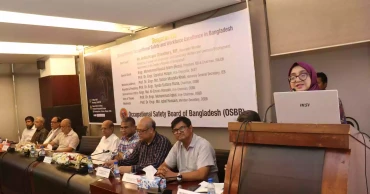
He made the observation while addressing a programme titled “Strengthening Occupational Safety and Workforce Excellence in Bangladesh” organised by the Occupational Safety Board of Bangladesh (OSBB) under the IEB at its headquarters as the chief guest on Thursday.
Referring to road safety, Riazul, also Chairman of Rajdhani Unnayan Kartripakkha (RAJUK), said many motorcyclists still ride without helmets, while passengers often avoid wearing them even if drivers comply with safety rules. Likewise, many drivers do not use seat belts, increasing the risk of severe injury during accidents.
He also pointed to poor fire safety practices in buildings, saying emergency exits are frequently blocked by stored materials, making evacuation difficult during emergencies and increasing the risk of major disasters.
“Enacting laws alone is not enough; strict enforcement is equally important,” the IEB President said, adding that the government, professional bodies, social institutions, and media must work together to raise awareness and strengthen safety practices across society.
In his welcome remarks, Prof Dr Engineer Md Sabbir Mostafa Khan,honorary General Secretary of IEB, highlighted weak occupational safety standards in Bangladesh’s shipbuilding industry.
He said many workers continue to operate in hazardous environments without adequate protective equipment, leaving them vulnerable to accidents and fatalities.
Sabbir Mostafa emphasised the importance of building a long-term safety culture, beginning with education at an early age.
“Children should be taught safety awareness from an early stage so that responsible behaviour becomes part of their everyday practice,”he said.
The IEB honorary General Secretary also stressed the need for regular training for workers and related personnel, particularly in the use of modern safety equipment, risk management, and emergency response procedures.
Presenting the keynote paper, Prof Dr Engineer Syeda Sultana Razia, Chairman of OSBB who also presided over the programme, said skilled manpower and safe working environments are critical to Bangladesh’s economic progress, particularly in sectors such as ready-made garment,construction, power and energy, agriculture, and manufacturing.
However, workplace accidents, fire hazards, occupational health risks, and skills shortages remain major challenges, she said.
Sultana Razia urged industries to arrange regular safety training, drills, and awareness programmes and ensure mandatory use of personal protective equipment such as helmets, gloves, masks, and protective
clothing.
She said lack of skills and inadequate training remain among the leading causes of workplace accidents in Bangladesh.
The OSBB Chairman stressed the importance of technology-driven training, technical education, and sector-specific skills development to prepare workers for the demands of the Fourth Industrial Revolution.
“Workers must develop expertise in automation, artificial intelligence, and digital technologies to remain globally competitive,” she said.
4 months ago