US-Bangladesh
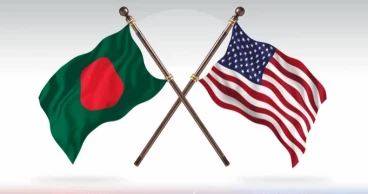
US-Bangladesh ART deal paves way for export surge, boom for businesses using American cotton
Bangladesh’s garment industry is pfor a major export breakthroughoised in the United States following the signing of the landmark Agreement on Reciprocal Trade (ART).
Under the new agreement, the general reciprocal tariff on Bangladeshi exports has been reduced from 20 percent to 19 percent. However, the most significant gain lies in a specialized ‘zero-duty’ clause:
Apparel manufactured in Bangladesh using US-sourced cotton or man-made fibers will be exempt from the 19 percent reciprocal tariff. Experts say it will unlock unprecedented opportunities in Bangladesh’s largest single export market, where RMG comprises over 80% of the basket.
BGMEA welcomes landmark Bangladesh–USA tariff agreement
This effectively brings the reciprocal duty down to ‘zero’ for these products, providing a massive cost advantage for Bangladeshi exporters over regional competitors.
The United States is the primary destination for Bangladeshi apparel, currently absorbing nearly 19 percent of the country’s total garment exports. Data from the Office of Textiles and Apparel (OTEXA) of USA highlights the scale of this potential:
From January to November 2025, the US imported $7.6 billion in apparel from Bangladesh. Of this, $5.18 billion consisted of cotton-based products.
Analysts suggest that by pivoting to US cotton, Bangladesh can convert a significant portion of its current $8 billion annual export volume to the US into duty-free shipments, drastically increasing its market share.
The agreement also targets the high-growth non-cotton (synthetic) segment. Currently, non-cotton products account for roughly 30 percent of Bangladesh’s total US exports. With the ART providing incentives for using US-produced man-made fibers, Bangladesh has a golden opportunity to expand into high-value categories like active wear and technical outerwear, where demand in the American market is surging.
“This agreement marks a new height in our economic relations,” said Sheikh Bashir Uddin, Bangladesh’s Commerce Adviser.
"It not only lowers trade barriers but also solidifies Bangladesh’s position as a premier, high-value partner in the global supply chain," he said.
Agreement grants zero tariff access for Bangladeshi RMG using American cotton into US market
Industry leaders believe the deal will encourage local spinning mills to integrate more American raw materials to capitalize on the zero-tariff route. As Bangladesh works toward a total global garment export target of nearly $39 billion, the US market—bolstered by these new preferential terms—is expected to remain the cornerstone of the country's economic growth.
Faisal Samad, Director of the Bangladesh Garment Manufacturers and Exporters Association (BGMEA), emphasized that this new trade arrangement creates vital opportunities for the Ready-Made Garment (RMG) sector.
"This agreement creates significant new potential, particularly for products manufactured using US cotton and man-made fibers," Samad stated.
He noted that the provision to reduce or eliminate duties on apparel made from US-sourced fibers would directly enhance Bangladesh's competitiveness, leading to a substantial positive impact on export growth.
Echoing this sentiment, Engineer Rajib Haider, former Director of the Bangladesh Textile Mills Association (BTMA), highlighted the benefits for the primary textile sector.
He remarked that the opportunity to gain additional tariff exemptions by using US cotton to produce yarn and fabric locally would strengthen Bangladesh’s position in the global supply chain.
"If we can leverage these tariff concessions by integrating US cotton into our production, it will create a highly positive outlook for both our textile and clothing industries," Haider added.
8 months ago
.jpg)
Cyber security issues dominate US-Bangladesh meet
Top Bangladeshi and US officials argy-bargied over issues like IT and cyber security during the week-long discussions in Washington DC.
Issues like digital economy partnership, global village, protection of technology, parallel policies, infrastructure and altered technology were also discussed at theUS-Bangladesh ICT Consultation meeting held from November 14-19.
The meeting with officials of the US Commerce Department was fruitful, said Hasanul Haque, head of the Bangladeshi delegation.
READ: Huawei renews cyber security cooperation MoU with Indonesia
"Discussions on what we need to do now to establish the freedom of speech on the internet as well as the security of individuals, society and the state were made," he said.
"From this we got a clear idea about the role of stakeholders and the responsibility of the state. Besides, we've got some guidelines to ensure the safety of the inhabitants of the global village and their equal opportunity in the digital economy."
In the global context of the fourth industrial revolution, the Data Privacy Act, cross-border e-commerce trade policy, coordination among different ministries in national security, advance security technology, security ranking of different countries, public-private partnerships and digital trade agreements between different countries; above all, necessary policy, law, infrastructure and technical security issues for Bangladesh came up in the meeting.
E-Cab General Secretary Abdul Wahed Tamal said that senior officials of several organisations working on cyber security and trade policy with the US Department of Commerce and representatives of various organisations, including Google, Facebook, Visa and MasterCard, discussed the policies with Bangladesh delegation.
"Important discussions were held on various policies for establishing trade relations between the US and Bangladesh, including cyber security, data protection, cross border trade."
On the other hand, Director General of Internet Governance Forum Mohammad Abdul Haq Anu said, "We had a great experience at the meeting."
READ: Rotary Club of Uttara signs MoU with Backdoor, LegalX to promote cyber security campaign
"It has become clear to us how information can play a big role in the development of the digital economy in the future, if we can implement information security on our digital infrastructure.
"With this experience Bangladesh will be able to accelerate the development of our cross-border digital commerce and global digital interconnection in our own culture," he said.
4 years ago

Bangladesh’s request for vaccine doses under active consideration: Miller
The United States has said it is actively considering the request made by the Bangladesh government over the supply of Covid-19 vaccine doses to meet Bangladesh’s immediate needs.
Bangladesh will get a reply of the letter, sent to US Secretary of State Antony Blinken by Foreign Minister Dr AK Abdul Momen, within the next couple of days.
“Two things he (Ambassador Miller) said. It’s (the request for vaccine doses) under active consideration and the Ambassador expects Bangladesh will get a reply as early as possible -- within a day or two,” said State Minister for Foreign Affairs M Shahriar Alam after his meeting with US Ambassador to Bangladesh Earl Miller.
While talking to a small group of journalists, including the UNB correspondent, at his office, the State Minister said they will be waiting to know the content of the reply.
Also Read:Ambassador Miller praises power of young minds in Bangladesh
Meanwhile, he said, US companies are in touch with the Health Ministry as they have a long-term plan of producing vaccines in Bangladesh.
The Ambassador informed that the US government is exploring the possibilities to produce US vaccines in Bangladeshi pharmaceutical companies.
The State Minister and the US Ambassador also discussed the ongoing cooperation between two countries in combating Covid-19 pandemic apart from the issue of providing vaccines for meeting Bangladesh’s immediate needs.
The US Ambassador informed that his government is working on this, and he has recommended having a regional approach in South Asia in distributing vaccines from the US.
Earlier, Foreign Minister Dr AK Abdul Momen said the government has sought immediate delivery of 4 million vaccine doses from the United States.
The US will share up to 60 million doses of its Oxford-AstraZeneca Covid-19 vaccine with other countries as they become available.
“We’ve sought immediate release of four million doses of vaccine (in a letter sent to the US),” he told reporters, adding that he, however, sought a total of 10 to 20 million doses of vaccine from the US.
Also Read: Miller discusses JRP, bilateral issues with Shahriar
Dr Momen said the government wants to continue the vaccination programme collecting vaccines from alternative sources.
The Foreign Minister had a meeting with US Ambassador to Bangladesh Earl Miller at his office on Thursday.
Dr Momen asked the US Ambassador whether they provided any vaccine to India. In reply, Ambassador Miller said they have provided no vaccine to India yet.
The Foreign Minister said the US government needs permission from the Food and Drug Administration to export vaccines which is a time-consuming process. “But we need it immediately.”
Dr Momen said they have also written to Indian External Affairs Minister Dr S Jaishankar requesting for 3 million doses of vaccine to address Bangladesh's immediate needs.
Bangladesh has received 7 million of Oxford-AstraZeneca covid-19 vaccine doses produced by Serum Institute of India (SII) through its contract. Bangladesh also received 3.3 million doses of vaccine as a bilateral partnership gift. This is the largest amount sent from India to any country.
5 years ago

US-Bangladesh Business Council to be launched April 6
US Chamber of Commerce will virtually launch US-Bangladesh Business Council on Tuesday to strengthen the trade, commerce and investment relations between the two countries.
Senior Official for Economic Growth, Energy, and the Environment of the U.S. Department of State Ambassador Marcia Bernicat and US Ambassador to Bangladesh Earl Miller will discuss the strategic and commercial outlook of Bangladesh and the US in the 21st century.
Also read: Dhaka-Washington ties to get stronger under Biden Administration: Ambassador Miller
Leaders from the government and private sector of both countries will talk on the future of the US-Bangladesh economic partnership.
With a rapidly-growing middle class, skilled workforce, and resilient economy, Bangladesh presents an unparalleled opportunity for investment and business partnerships, said the US Embassy in Dhaka.
Also read: US-Bangladesh relations: A little less pious talk, please
The country’s investments in human capital and physical and digital infrastructure are poised to transform the country over the next decade, it said
With the launch of the U.S.-Bangladesh Business Council, the Chamber is demonstrating its continued commitment to fostering bilateral business ties and creating an expanded platform for business advocacy, said the host country.
Also read: Promoting respect for rights a global effort, says US
5 years ago
Climate Change: Kerry discusses possible Bangladesh-US collaboration
Foreign Minister Dr AK Abdul Momen and US Special Presidential Envoy for Climate John Kerry have agreed that displacement due to climate change would be a vital security issue for everybody.
5 years ago
.jpg)
US urged to invest in Bangladesh's health sector, economic zones
Bangladesh has urged the United States to invest in Bangladesh's health sector under their IDFC Fund.
6 years ago