Bangladesh’s LDC graduation

Bangladesh’s LDC graduation debate intensifies amid ‘economic risks’
Bangladesh’s scheduled graduation from Least Developed Country (LDC) status in 2026 faces growing uncertainty, with experts warning that deep structural weaknesses and an inadequate transition strategy pose serious risks to the economy.
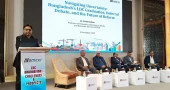
The remarks were made at a seminar on ‘LDC Graduation: Challenges & Prospects’ held on Sunday (9th November 2025) at a city hotel, organised by the Bangladesh-Malaysia Chamber of Commerce and Industry (BMCCI).
Senior policymakers, economists, and industry leaders to discuss strategic imperatives for the post-LDC transition, including trade competitiveness, institutional readiness, and inclusive development joined the seminar.
Commerce Secretary Mahbubur Rahman attended it as the guest of honour, while Professor Dr Selim Raihan, Executive Director of SANEM, delivered the keynote presentation. Economist Dr Zaidi Sattar, Chairman of the Policy Research Institute (PRI), chaired the seminar.
Read more: Tarique for urgent steps to tackle post-LDC graduation challenges
Other speakers included Dr Khondaker Golam Moazzem, Research Director at the Centre for Policy Dialogue (CPD); Dr A Razzaque, Chairman of Research and Policy Integration for Development (RAPID); Anwar-Ul-Alam Chowdhury (Parvez), President of the Bangladesh Chamber of Industries (BCI); and Faruque Hassan, former President of the Bangladesh Garment Manufacturers and Exporters Association (BGMEA).
Commerce Secretary Mahbubur Rahman said, “We request the United Nations General Assembly (UNGA) to visit Bangladesh to assess the latest situation ahead of the potential graduation. In addition to the EU and the USA, the government is in talks with Canada, Australia, Japan, South Korea, and other countries to boost bilateral trade and diversify export destinations.”
Dr Raihan highlighted that Bangladesh’s readiness for LDC graduation is under scrutiny amid global economic volatility and concerns over losing LDC-specific international support measures.
“The core risk lies in the trade sector, given Bangladesh’s heavy reliance on Ready-Made Garment (RMG) exports and duty-free, quota-free (DFQF) market access. The erosion of these trade privileges could cost the country billions in lost earnings and place additional pressure on foreign reserves,” he said.
Read more: Encouraged to see advanced preparation in Bangladesh for post-LDC graduation era: ADB Vice President
He pointed to persistent domestic structural challenges, including macroeconomic stress from low foreign reserves, fiscal gaps, high inflation, and global volatility; structural flaws such as weak tax collection, a fragile banking sector, high export concentration, and limited foreign direct investment (FDI); and reform deficits driven by entrenched ‘rent-seeking networks’ among political, business, and bureaucratic elites that continue to obstruct meaningful policy change
Dr Raihan also critiqued the government’s Smooth Transition Strategy (STS), describing it as ‘overly broad’ with an ‘overextended vision’ that risks becoming an unenforced policy document.
While the private sector advocates for a three-year deferral to gain ‘critical breathing space’ for compliance and to fast-track stalled reforms, securing a delay would be diplomatically challenging.
The UN Committee for Development Policy (CDP) requires evidence of ‘unforeseen and unmanageable’ shocks—not merely delayed reforms or poor preparedness—to grant a deferral. Experts also caution that seeking a delay could signal economic weakness, undermine investor confidence, and entrench complacency rather than promote essential reforms.
Dr Raihan concluded, “The real question is not timing but political will. Any deferral request must be transparent, evidence-based, and paired with a credible, time-bound reform agenda to ensure post-LDC resilience, rather than serving as a retreat.”
Read more: Munshiganj contingent of Advisory Council joins district-level consultation on LDC graduation
11 months ago

Postpone Bangladesh’s LDC graduation by 5-6 years: Business leaders
Bangladesh’s leading entrepreneurs and trade bodies on Sunday called on the government to seek five to six years more before officially being graduated from the Least Developed Country (LDC) status as they said adequate preparation is needed to tackle post-graduation challenges.
“Our entrepreneurs and business chambers strongly support graduation. However, we stress the need for a 5-6 years’ extension. This will allow both the government and private sector to prepare properly avoiding potential problems,” said ICC Bangladesh President Mahbubur Rahman.
He made the remarks at a press briefing titled ‘LDC Graduation: Challenges Ahead’, organised by ICC Bangladesh in collaboration with major national trade organisations at a city hotel.
He emphasised the importance of diversifying Bangladesh’s export basket, developing human capital for Industry 4.0, attracting quality foreign direct investment (FDI) and building resilience in a volatile global economy.
Business leaders urge six-year extension for Bangladesh’s LDC graduation
“Successful graduation requires smart trade diplomacy to secure deals with the EU, the UK, Asean and Gulf countries to offset potential US tariff shocks. Reforms in financial governance, logistics, energy and technology-driven competitiveness are also essential,” he added.
Highlighting economic concerns, Rahman pointed to external debt stress, declining FDI, global trade tensions, currency devaluation, energy shortages and post-July 2024 economic pressures. “The debate is not ‘if’ we graduate, but ‘how we graduate,” he said.
He stressed that reforms, particularly in the financial and banking sectors, must be urgent but cannot happen overnight.
Commerce Adviser cautions LDC graduation a 'Time Bomb’
BGMEA President Mahmud Hasan Khan warned that the readymade garment sector, the biggest beneficiary of graduation, could suffer if the process is rushed.
ICC Vice President Naser Ezaz Bijoy said ongoing global supply chain disruptions, political instability, and climate vulnerabilities reinforce the need for an extension.
Bangladesh has already met the UN’s three criteria for graduation—Gross National Income, Human Assets Index and Economic Vulnerability Index—in two consecutive reviews, putting it on track for official graduation in November 2026.
Rahman cited examples of countries like Maldives and Vanuatu, which delayed their graduation due to economic and political realities, saying a similar approach could benefit Bangladesh.
Several top business leaders, including ICC Vice President A.K. Azad, DCCI Senior Vice President Razeev H Chowdhury, MCCI President Kamran T Rahman, FICCI Board Member Rubaba Dowla and BGMEA Vice Presidents, attended the briefing.
The LDC graduation process, overseen by the United Nations Committee for Development Policy (UN-CDP), allows eligible countries to move out of the LDC category after meeting income, human asset, and economic vulnerability benchmarks.
Graduating countries typically receive a three-year transition period to prepare for potential changes in trade access and concessional financing.
1 year ago

Business leaders urge six-year extension for Bangladesh’s LDC graduation
Business leaders on Thursday called for extending Bangladesh’s graduation time from the Least Developed Country (LDC) category by six years, warning that moving ahead with the transition next year would be a ‘mistake’ which may harm the country’s private sector.
Speaking at a seminar titled ‘LDC Graduation: Some Options for Bangladesh’ organised by the International Chamber of Commerce, Bangladesh (ICCB), they said the country is not yet prepared for the shift.
In his opening remarks, ICCB President Mahbubur Rahman said Bangladesh still lacks preparations for LDC graduation for weak capacity in free trade negotiations, limited export diversification, shortage of skilled human resources in industries, insufficient foreign investment inflow, inadequate institutional capacity and the absence of climate resilience.
Bangladesh moves toward LDC graduation amid concern over preparedness
“Moving ahead without addressing these issues will only expose the economy to serious risks,” he warned.
The ICCB president pointed out that the first blow of graduation would come from tariff hikes and losing Generalised System of Preferences (GSP) and other trade benefits could shrink exports by 6–14 percent.
Sanya Reid Smith, Legal Adviser and Researcher at the Third World Network, presented the keynote paper, pointing out that several countries, despite being eligible, postponed their LDC graduation.
Sanya said Angola withdrew from the process just a week before its scheduled graduation, while Myanmar, set to graduate in 2024, chose not to proceed.
President of the Bangladesh Association of Pharmaceutical Industries (BAPI) Abdul Muktadir said the pharmaceutical sector is already under pressure, with 30 percent of the top 100 companies struggling to survive.
Without current patent exemptions, the prices of essential medicines would skyrocket after graduation — for example, the hepatitis B vaccine, now costing a few hundred taka, could rise to USD 1000, Sanya said.
CA Prof Yunus seeks quick, coordinated actions for LDC graduation
He alleged that the BAPI already holds a list of medicines likely to be affected, along with their expected post-graduation prices, yet has shown no interest in engaging with industry stakeholders.
“The pharmaceutical industry now earns USD 3 billion annually from exports; with proper attention, this could be doubled,” he said.
Bangladesh Garment Manufacturers and Exporters Association (BGMEA) President Mahmud Hasan Khan Babu said the country will graduate eventually, but not now, stressing the need for more preparation. “If we proceed without addressing the current crisis in the energy sector, the garment industry will face a collapse,” Babu warned.
While reserves have grown and there are sufficient dollars to import LNG, Bangladesh lacks the capacity to import enough of it, he said. Deep-sea ports, essential for easing LNG imports, are still not ready, he added.
Leather goods and footwear exporters echoed similar concerns.
Syed Nasim Manzur, President of the Leather goods and Footwear Manufacturers and Exporters Association of Bangladesh (LFMEAB), described graduation before six years as ‘suicidal’ for the country.
He urged the government to wait until 2032, citing growing competitiveness challenges in the global market and high shipping costs that neighbouring countries do not face.
President of the Dhaka Chamber of Commerce and Industry (DCCI) Taskeen Ahmed said 90 percent of the country’s exports come from pharmaceuticals, garments, and leather — sectors whose leaders are unanimously calling for a six-year delay.
“If the government has a better proposal, it should discuss it with businesses,” he added.
Supporting the call, Executive Director of the South Asian Network on Economic Modeling (SANEM) Selim Raihan stressed the need for coordination among the government, bureaucrats, and businesses.
He suggested Bangladesh also align with Nepal, which is scheduled to graduate next year.
“Other than the banking sector, no significant reforms have taken place in the economy,” he said, adding that many recommendations from the White Paper Committee have been ignored.
Without reforms, graduation could jeopardise free trade agreements and investment opportunities.
Centre for Policy Dialogue (CPD) Executive Director Fahmida Khatun said Bangladesh’s progress toward LDC graduation has been driven more by political considerations than economic readiness.
She warned that an agenda of political success alone would not ensure positive outcomes without adequate preparation.
Bangladesh is set to graduate from LDC status on November 24, 2026.
Once it does, the country will lose tariff and patent-related privileges currently enjoyed as an LDC.
Both business leaders and economists stressed the importance of completing necessary preparations before making the transition.
1 year ago
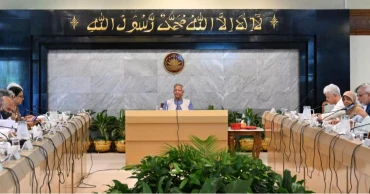
High-profile meeting on Bangladesh’s LDC graduation held
A high-level review meeting on Bangladesh’s preparation for graduation from Least Developed Country (LDC) status was held on Wednesday.
Govt working to deliver ‘inclusive, credible’ election: Prof Yunus
Chief Adviser Professor Muhammad Yunus presided over the meeting, which began at 11:00 am at the Chief Adviser’s Office in Tejgaon, Dhaka, said his Deputy Press Secretary Abul Kalam Azad Majumder.
1 year ago

LDC graduation: High-level committee starts working over possible challenges
A high-level committee has started working out strategy and plan to overcome the possible challenges of Bangladesh’s graduation from the status of a least developed country (LDC).
Prime Minister Sheikh Hasina on April 26 last formed the 22-member committee, headed by Principal Secretary Dr Ahmad Kaikaus, for preparation, planning, implementation and monitoring in tackling the possible challenges of Bangladesh’s LDC graduation.
The committee sat in its first meeting virtually on Wednesday. Dr Ahmad Kaikaus presided over the meeting, joining it from the Prime Minister’s Office.
The meeting discussed different possible negative impacts on the country’s economy, socioeconomic and other areas, especially in the export oriented sectors like RMG and pharmaceuticals during the post-graduation period.
Also read: Bangladesh’s LDC graduation: Govt has its plan to face next challenges
Economic Relations Divisions (ERD) Secretary Fatima Yasmin made a power-pint presentation in the meeting.
The committee decided to sort out the possible challenges in different sectors within a month. To this end, a six-member subcommittee was formed under senior secretary of Commerce Ministry Dr Md Jafar Uddin.
“The subcommittee was asked to identify the sector-wise challenges and prepare an action plan within one month,” PMO Secretary Md Tofazzel Hossain Miah told reporters after the meeting.
Noting that Bangladesh would lose different international supports during the post-graduation period, he said duty free and quota free access and concessional loan facilities from bilateral or multilateral sources for Bangladesh would be narrowed for Bangladesh following the graduation.
Also read: Work together to tackle negative impacts after LDC graduation: Speakers
Besides, the issue of intellectual property rights would shrink any time after 2033, he said.
In the meeting, the committee also took the decision to arrange a large-scale seminar with experts of different sectors and academicians as early as possible to receive their views and opinions over the post-LDC challenges.
The committee will sit in a meeting every month regularly.
The committee members are Principal coordinator (SDGs Affairs) at the PMO (Zuena Aziz), senior secretary of ICT Division, Senior secretary of Finance Division, NBR chairman, the member (GED) of the Planning Commission, Senior secretary of Commerce Ministry, PMO secretary, ERD secretary, foreign secretary, industries secretary, agriculture secretary, environment secretary, BIDA executive chairman, chairman of Bangladesh Trade and Tariff Commission, liberation war affairs secretary, Planning Commission’s member Sharifa Khan, FBCCI president, BGMEA president, DCCI president, Bangladesh Association of Pharmaceutical Industries (BAPI) president, director general (Executive Cell and PEPZ) at PMO (member secretary of the committee) joined the meeting.
Also read: Swedish development cooperation to continue past LDC graduation
Bangladesh has started its LDC graduation journey with the initiative of Prime Minister Sheikh Hasina. She participated in the 4th LDC related summit of the United Nations held on May 9-13, 2011, where “Istanbul Plan of Action” was adopted.
Since then, Prime Minister Sheikh Hasina took the action plan for the LDC graduation of Bangladesh, and she has been giving directives to this end constantly, said the PMO Secretary.
5 years ago

NEC approves Tk 197,643-cr revised ADP
The National Economic Council (NEC) on Tuesday approved Tk 197,643-crore revised Annual Development Programme (RADP) for the current fiscal year, downsizing the original ADP size of Tk 2,05,145 crore.
5 years ago

Bangladesh’s LDC graduation: Govt has its plan to face next challenges
Prime Minister Sheikh Hasina on Saturday said the government has its own plan about the next move as Bangladesh’s new status as a developing country will pose new challenges for it.
5 years ago

Bangladesh’s LDC graduation: Govt has its plan to face next challenges
Prime Minister Sheikh Hasina on Saturday said the government has its own plan about the next move as Bangladesh’s new status as a developing country will pose new challenges for it.
5 years ago
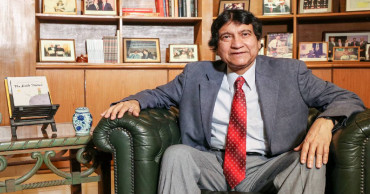
‘Bangladesh can have an innovation system driven by young talents’
Haider A. Khan , a professor of economics at the Josef Korbel School of International Studies at the University of Denver, has said Bangladesh can have an “innovation system” driven by talented and hardworking young people within the next 10 years taking Bangladesh to the next stage of development.
6 years ago