COVID

BMU sounds alarm as Covid, Dengue cases surge, urges scientific response
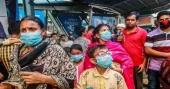
Amid a sharp rise in Covid-19, dengue and other viral fevers across Bangladesh, Pro-Vice Chancellor (Admin) of Bangladesh Medical University (BMU) Prof Dr Md Abul Kalam Azad on Tuesday warned of growing pressure on the country’s healthcare system and emphasised the urgent need for a scientifically guided and well-coordinated response.
Speaking at a Continuing Medical Education (CME) seminar hosted by BMU, Prof Azad said, “We are entering a critical period. Covid-19 and dengue cases are surging simultaneously, and if we fail to act now—guided by medical evidence—we risk overwhelming our hospitals and frontline services.”
He called for heightened surveillance in border areas to prevent further spread of Covid-19 and reminded the public to continue adhering to health safety protocols, including wearing masks, maintaining hygiene, and avoiding unnecessary gatherings.
“This is not a time for complacency. Our preparedness must match the evolving threats,” he cautioned.
Covid-19: 3 more deaths, 19 new cases reported in 24hrs
The seminar, titled ‘An Overview of Current Fever Trends in Bangladesh’, was held at the Super Specialised Hospital auditorium and brought together leading physicians, researchers and medical faculty.
Vice-Chancellor Prof Dr Md Shahinul Alam attended as chief guest and echoed the call for calm, not panic, urging strict adherence to evidence-based dengue treatment guidelines.
Associate Prof Dr Fazle Rabbi Chowdhury, in his presentation on Covid-19 Trend 2025, said infections are rising, largely driven by Omicron sub-variants XFG and XFC.
Though not categorised as Variants of Concern by the WHO, they are being closely monitored due to their rapid spread, including among vaccinated individuals. “Those with weakened immunity—especially patients with diabetes, kidney disease, cancer, or those undergoing dialysis—are at high risk,” he said.
Covid-19: 2 more deaths, 4 new cases reported in 24hrs
Dr Rabbi said co-infections involving Covid-19 and seasonal flu, popularly known as ‘flurona’, are being observed, heightening the risk of complications for vulnerable groups.
He urged such people to wear surgical masks in public, eat nutritious meals, hydrate frequently, and avoid crowded places.
On dengue, Associate Prof Dr Md Nazmul Hasan shared updated guidance under Dengue Guideline 2025.
He strongly warned against the use of antibiotics and steroids, emphasising they are not only ineffective but potentially harmful in viral infections. “Paracetamol, fluids, rest and timely hospital visits remain the most effective treatment,” he said.
Dr Hasan also rejected unproven remedies like papaya leaf juice, saying there is no scientific basis for its use in raising platelet counts and warning of potential liver complications from misuse.
He stressed that platelet transfusions should only be considered in specific, clinically justified cases.
According to data presented, more than 1,800 patients have been hospitalised with dengue so far this month, with at least seven deaths reported from Dhaka and Barisal.
Internal Medicine specialist Dr Abed Hossain Khan added that chikungunya is also making a comeback, with 161 confirmed cases in recent months and significant post-viral symptoms affecting patients’ daily lives.
Prof Azad urged all hospitals—government and private—to activate fever clinics, ensure adequate supplies of IV fluids and emergency care, and prepare healthcare workers through updated training. “We must rely on facts, not fear. Our strength lies in coordinated, guideline-driven response,” he said.
The CME was organised by BMU’s Internal Medicine Department and moderated by Assistant Prof Dr Khaled Mahbub Morshed Mamun.
Also present were Pro-Vice Chancellor (Research and Development) Prof Dr Md Mujibur Rahman Hawlader, faculty deans, department heads and senior clinicians.
1 year ago
Bagerhat upazila hospitals crippled by lack of Covid test kits amid nationwide spike
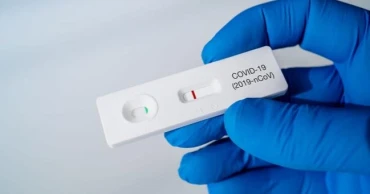
Amid a fresh wave of Covid-19 infections across the country, all upazila-level health complexes in Bagerhat district have run out of rapid antigen test kits, leaving local hospitals unable to conduct coronavirus tests.
As a result, patients showing symptoms such as fever, cough and body aches are being referred to Bagerhat District Hospital or Khulna Medical College Hospital for testing, sources said.
Despite repeated requests sent to the Directorate General of Health Services (DGHS) for testing kits, none had arrived at the upazila health complexes as of Thursday, the sources added.
Meanwhile, the 250-bed Bagerhat General Hospital has received only 150 antigen rapid test kits, which doctors say are insufficient given the current demand.
Health experts are urging people to strictly follow health safety guidelines to curb the spread of the virus.
The shortage of testing kits comes at a time when public concern is mounting over a new wave of Covid-19 infections and deaths being reported from various parts of the country, with locals expressing anxiety over the inability to access testing services.
During a visit to Bagerhat General Hospital on Thursday afternoon, this correspondent found crowded corridors, packed outpatient areas, and a lack of social distancing.
People of all ages—men and women—were seen jostling for space inside the hospital premises, with little to no adherence to Covid safety protocols.
Several patients reported experiencing persistent fever, headache, cough, and body pain, prompting them to seek medical attention.
Doctors provided prescriptions based on symptoms, but testing was not possible in the absence of kits.
Patients said they had approached their local health complexes for Covid-19 tests after developing symptoms but were turned away due to the unavailability of test kits. In most cases, doctors resorted to symptom-based treatment.
Dr Moni Shankar Paik, Resident Medical Officer (RMO) of Kachua Upazila Health Complex, told UNB that an average of 40 to 50 fever patients visit the complex daily.
"But we are unable to conduct Covid tests due to a lack of kits. We are referring suspected cases to Bagerhat District Hospital," he said.
The physician also said his hospital requested 1,000 antigen rapid test kits from the DGHS, but none had been received as of Thursday.
Dr Md Shaheen, Health and Family Planning Officer at Mongla Upazila Health Complex, said a patient showing Covid symptoms came to the hospital on Thursday.
"We suspect it could be a Covid case, but without testing kits, we couldn't confirm. The patient was referred to Khulna Medical College Hospital for testing and was treated based on symptoms," he added.
Two days earlier, another suspected Covid patient was also turned away due to the kit shortage.
No vaccine for new Covid sub-variants, 3.2 million old doses in stock
Dr Shaheen confirmed that Mongla Health Complex had submitted a requisition for 1,000 antigen test kits to the DGHS on June 10, but no kits had arrived by Thursday afternoon.
Dr Asim Kumar Samaddar, Superintendent of Sadar hospital, said 150 antigen test kits were delivered to the hospital on June 16. However, none of them had been used as of Thursday, due to the need for selective testing amid limited supply.
“We are conducting tests only for those with strong indications of Covid infection. For RT-PCR testing, we are sending patients to Khulna Medical College Hospital, Satkhira Medical College Hospital, or Jessore University of Science and Technology,” he said.
Dr Samaddar warned that the new Covid variant appears to be more dangerous and has a higher mortality rate. “The elderly and children are particularly at risk. Everyone must remain alert and follow health safety guidelines,” he advised.
The hospital has allocated 20 beds for potential Covid patients, and if more kits are supplied, testing will be expanded as needed, he added.
Dr ASM Mahbubul Alam, Civil Surgeon of Bagerhat, said that none of the nine upazila health complexes in the district currently have antigen rapid test kits.
“We have sent requests to the health directorate from every upazila. Currently, only the district hospital has 150 kits,” he said.
Khulna medical prepares 40 beds for COVID patients
“Due to the limited number of kits, we are instructing doctors to screen patients carefully before conducting tests,” Dr Alam added.
According to data from the district health department, Bagerhat tested 32,714 samples for Covid-19 up to June 2023.
Of these, 8,022 were confirmed positive. So far, 144 people have died from Covid in the district, while 7,878 have recovered.
1 year ago

Bangladesh sees 159 more Covid cases in 24 hrs
Bangladesh reported 159 more COVID-19 cases in 24 hours till Monday morning as the cases keep rising in the country.
With the new numbers, the country's total caseload rose to 2,039,130, according to the Directorate General of Health Services (DGHS).
However, the official death toll from the disease remained unchanged at 29,446 as no new fatalities were reported.
Meanwhile, the daily case test positivity dropped to 5.13 percent from Sunday’s 5.50 percent as 3,099 samples were tested.
The recovery rate stands at 98.39 percent. However, the death rate remained unchanged at 1.44 percent.
Also read: Covid-19: Bangladesh logs 9 more cases
Bangladesh registered its highest daily caseload of 16,230 on July 28 in 2021 and highest number of fatalities of 264 on August 10 the same year.
3 years ago
Covid-19: Bangladesh records 24 more cases
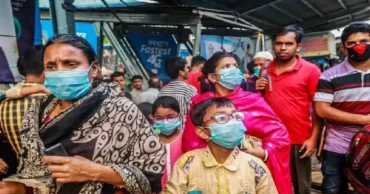
Bangladesh recorded 24 more Covid-19 cases in the 24 hours till Sunday morning.
With the new numbers, the country's total caseload rose to 2,038,430 according to the Directorate General of Health Services (DGHS).
However, the official death toll from the disease remained unchanged at 29,446 as no new fatalities were reported.
The daily case test positivity dropped to 1.24 percent from Saturday ’s 1.64 percent as 1933 samples were tested.
Also read: Bangladesh reports 18 more Covid-19 cases
The recovery and death rates remained unchanged at 98.40 percent and 1.44 percent, respectively.
3 years ago

Covid-19: Bangladesh reports 23 more cases
Bangladesh reported 23 more Covid-19 cases in the 24 hours till Sunday morning.
With the new numbers, the country's total caseload rose to 2,038,338 according to the Directorate General of Health Services (DGHS).
However, the official death toll from the disease remained unchanged at 29,446 as no new fatalities were reported.
The daily case test positivity dropped to 2.07 percent from Saturday’s 2.96 percent as 1,111 samples were tested.
The recovery rate decreased to 98.40 percent. However, the death rate remained unchanged at 1.44 percent.
Bangladesh registered its highest daily caseload of 16,230 on July 28 in 2021 and highest number of fatalities of 264 on August 10 the same year.
3 years ago

Bangladesh logs 15 more Covid-19 cases
Bangladesh reported 15 more Covid-19 cases in the 24 hours till Saturday morning.
With the new numbers, the country's total caseload rose to 2,038,315 according to the Directorate General of Health Services (DGHS).
However, the official death toll from the disease remained unchanged at 29,446 as no new fatalities were reported.
The daily case test positivity increased to 2.96 percent from Friday’s 2.18 percent as 507 samples were tested.
The recovery and death rates remained unchanged at 98.41 percent and 1.44 percent, respectively.
Bangladesh registered its highest daily caseload of 16,230 on July 28 in 2021 and highest number of fatalities of 264 on August 10 the same year.
3 years ago

Bangladesh sees another Covid death, six cases in 24hrs
Bangladesh reported one more Covid-linked death and six new cases in 24 hours till Tuesday morning.
With the new numbers, the country's total fatalities rose to 29,446 and caseload to 2,038,014, according to the Directorate General of Health Services (DGHS).
The daily case test positivity rate drop to 0.37 percent from Monday’s 0.63 percent as 1,428 samples were tested.
Also read: Bangladesh logs 4 more Covid cases: DGHS
The death and recovery rates remained unchanged at 1.44 percent and 98.47 percent, respectively.
3 years ago

Bangladesh reports 6 more Covid-19 cases in 24 hrs
Bangladesh reported six more Covid-19 cases in 24 hours till Sunday morning.
With the new number, the country's total caseload rose to 2,037,969, according to the Directorate General of Health Services (DGHS).
However, the official death toll from the disease remained unchanged at 29,445 as no new fatalities were reported.
The daily case test positivity rate rose to 0.49 percent from Saturday’s 0.31 percent against the tests of 1,215 samples.
Also read: Bangladesh registers 7 more Covid-19 cases in 24 hours
The recovery and death rates remained unchanged at 98.47 percent and 1.44 percent, respectively.
Bangladesh registered its highest daily caseload of 16,230 on July 28 last year and highest number of fatalities of 264 on August 10 the same year.
3 years ago

Bangladesh registers 5 more Covid-19 cases in 24 hours
Bangladesh reported five more Covid-19 cases in 24 hours till Friday morning.
With the new number, the country's total caseload rose to 2,037,959, according to the Directorate General of Health Services (DGHS).
However, the official death toll from the disease remained unchanged at 29,445 as no new fatalities were reported.
The daily case test positivity rate rose to 0.31 percent from Thursday’s 0.27 percent against the tests of 1986 samples.
The recovery and death rates remained unchanged at 98.47 percent and 1.44 percent, respectively.
Bangladesh registered its highest daily caseload of 16,230 on July 28 last year and highest number of fatalities of 264 on August 10 the same year.
3 years ago

Bangladesh reports 9 more Covid-19 cases in 24 hrs
Bangladesh reported nine more Covid-19 cases in 24 hours till Wednesday morning.
With the new number, the country's total caseload rose to 2,037,947, according to the Directorate General of Health Services (DGHS).
However, the official death toll from the disease remained unchanged at 29,445 as no new fatalities were reported.
The daily case test positivity rate remained same to 0.55 percent as Monday against the tests of 1,650 samples.
The recovery and death rates remained unchanged at 98.47 percent and 1.44 percent, respectively.
Bangladesh registered its highest daily caseload of 16,230 on July 28 last year and highest number of fatalities of 264 on August 10 the same year.
3 years ago