Ministry of Primary and Mass Education
While the world embraces music education, Bangladesh seen stepping backwards
Police blocked a musical procession by Udichi Shilpigoshthi, the cultural collective, on Sunday, organized to demand reconsideration of the government’s decision to cancel recruitment of music and physical education teachers in public primary schools.
The march, which began in front of the National Press Club, was stopped by police near the Shilpakala Academy in Segunbagicha.
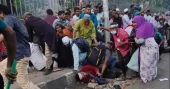
Udichi artists said they intended to proceed to the Chief Adviser’s residence at Jamuna Gate to present their songs. After some discussion, police initially allowed the march to continue, but stopped it again two minutes later after it crossed the Dhaka Range DIG office, preventing further progress. During this time, the artists performed songs while sitting on the road.
DU teachers, students protest abolition of music, physical-training teachers’ posts
The amended rules, published on November 2, removed the opportunity for recruitment of music and physical education teachers.
According to the Secretary-level Committee, the Ministry of Primary and Mass Education has stepped back from the plan. The committee noted that recruiting such a small number of teachers would be ineffective at the primary level and could create inequality, given that there are 65,569 primary schools nationwide. Cluster-based deployment would require a single teacher to serve 20 or more schools, making workload management impossible.
Earlier, in late August, the government issued the Government Primary School Teacher Recruitment Rules, which included positions for music and physical education teachers. Just two months later, the rules were amended.
Udichi hosts nationwide event against 'conspiracy centring national anthem'
The revised rules sparked widespread criticism. The Human Rights Forum Bangladesh (HRFB) stated that the decision is not only unreasonable but reflects succumbing to pressure from a small group, removing two important subjects from primary education. The National Rabindra Sangeet Sammilon Parishad also protested.
In a statement Parishad said, "When a small section of society opposes this using a narrow-minded, distorted interpretation of religion, the government abolished assistant teacher posts for music and physical education through a new notification.”
On Saturday afternoon, the cultural organization Chhayanaut also requested reconsideration of the cancellation by performing songs collectively.
Teachers and students of Dhaka University’s Music Department held a protest on campus on Wednesday demanding reinstatement of the posts. The rally took place in front of Aparajeyo Bangla, with participants singing the national anthem and raising placards. Dr. Priyanka Gope, Chairperson of the Music Department, read out a memorandum. Teachers from various departments—including Dance Department’s Laboni Banya and Clinical Psychology Department’s Kamal Uddin Ahmed Chowdhury—along with students, spoke at the event.
Leaders from Dhaka University Central Students’ Union (DUCSU), including the Literary and Cultural Affairs Secretary and cultural secretaries from different halls, expressed solidarity.
Students from Chittagong University protested the decision, stating that it poses a major threat to future artistic practice and cultural development in Bangladesh. Students from Jagannath University protested through music.
Two steps backwards
Globally, music education is emphasized even in countries with large Muslim populations. Saudi Arabia, the spiritual center of Islam, recently hired over 9,000 teachers to introduce music education in public schools as part of Vision 2030 reforms, led by Crown Prince Mohammed bin Salman, promoting arts, entertainment, and education. The kingdom is now qualifying thousands of kindergarten teachers in music skills. In late 2022, over 12,000 female teachers in government and private kindergartens were trained, and the new phase will train about 17,000 female teachers.
Other Muslim-majority countries, including Malaysia, Indonesia, Turkey, and Egypt, also retain music in their national curriculum.
In Malaysia, formal music education became compulsory in all elementary schools in 1983, with primary-level music as an intra-curricular subject since 1982.
In Indonesia, home to over 240 million Muslims, music has been compulsory in primary schools since the 1970s and remains under the 2022 curriculum.
In Turkey, primary school students receive one hour of music lessons from 1st to 8th grade, with additional two-hour elective lessons from 5th to 8th grade.
In Egypt, music has been part of government school curricula, including Arab and Western music, since 1931.
In the United Kingdom, comprising England, Northern Ireland, Scotland, and Wales, music is compulsory with variations in age and enforcement.
In Europe, a meNet study covering 20 countries showed music is compulsory at the primary level; secondary education often offers it optionally. Germany, Japan, Australia, and South Africa also mandate music and dance in primary schools.
In the United States, according to the NCES (January 2025), 73% of public schools require students to take at least one arts course, most commonly music (84%) and visual arts (82%).
In China, music is a compulsory subject during the nine years of mandatory education and part of the quality-oriented education push, with increased curriculum emphasis in recent standards.
But In Bangladesh, despite global trends highlighting the importance of music education, several religious organizations and political parties, including Bangladesh Jamaat-e-Islami and Islami Andolon Bangladesh, oppose music teacher recruitment. They demand religious instructors instead and have threatened street protests if the decision is not reversed, in a seminar held in September at the auditorium of the Institution of Diploma Engineers.
MIT study suggests music education
A new wave of research from the world-renowned Massachusetts Institute of Technology (MIT) scientists suggest that music lessons may do far more to boost brain development and overall intelligence.
The study reveals that learning music-whether through playing an instrument, singing, or reading musical notes, activates and strengthens areas of the brain responsible for memory, attention, problem-solving, and language skills. These neural networks overlap with those used in math and reasoning, giving children a deep cognitive workout that coding lessons can't yet match. Music education engages both hemispheres of the brain simultaneously, forging connections that sharpen focus and enhance long-term learning abilities.
Music combines creativity, pattern recognition, and emotional expression, creating a richer and more versatile mental environment. Children who play instruments or participate in music programs often show stronger academic performance, improved verbal abilities, and better emotional regulation.
Researchers also emphasize the social and emotional benefits of music. Playing in an ensemble or practicing with others fosters teamwork, patience, and communication-skills critical for success in any field, including technology. By developing these qualities early, children gain confidence and adaptability that can help them thrive in a rapidly changing world.
10 months ago
Primary teachers call off strike following govt assurance
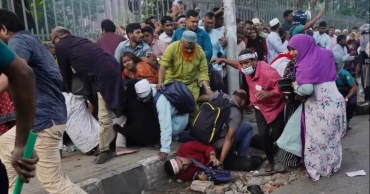
Leaders of primary school teachers have called off their work abstention following assurances from the Ministry of Primary and Mass Education that their demands will be communicated to the Finance Ministry and resolved as soon as possible.
The decision was announced by the ministry on Sunday (Nov 9).
Read more: Primary school teachers protest at Shaheed Minar, demand implementation of 10th grade salary scale
A meeting was held between senior officials of the ministry and leaders of the Primary Teachers’ Demand Implementation Council and the Primary Assistant Teachers’ Unity Council, where the teachers’ demands were discussed in detail.
Abu Taher Md Masud Rana, Secretary of the Ministry of Primary and Mass Education chaired the meeting.
The key demands of the teachers include: upgrading the pay scale of assistant teachers from grade 13 to grade 10, resolving complications regarding higher grades after 10 and 16 years of service, and ensuring 100% departmental promotion from assistant teacher to head teacher.
Read more: Primary teachers continue protests for pay upgrade, advisers’ resignation
11 months ago
Primary schools reopen
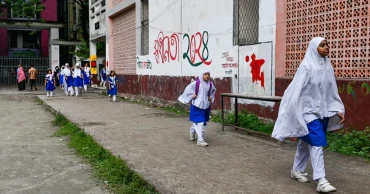
Primary schools across Bangladesh have reopened after around one month of closure.
Students were seen going to schools in the capital in the morning (August 14, 2024).
All government primary schools under eight city corporation areas of the country were declared closed for an indefinite period on July 17 amid tension over students’ demonstrations for quota reform.
August 15 public holiday canceled
2 years ago

Heatwave forces closure of schools until Thursday
Due to the ongoing severe heatwave, the Ministry of Primary and Mass Education has announced the closure of all government primary schools, child welfare trust schools, and learning centers under the education bureau until Thursday.
Senior Information Officer of the ministry, Mahbubur Rahman Tuhin, signed the notification on Monday, emphasising that the decision was made to ensure the health and safety of children.
Additionally, educational activities at all institutions below the secondary level and vocational educational institutions in Dhaka, Chuadanga, Jashore, Khulna, and Rajshahi districts were suspended for Monday.
Guidelines issued for primary schools reopening tomorrow amid heatwave
A separate notice from the Education Ministry, signed by MA Khayer, public relations officer, was issued on Sunday following consultations with the Health Ministry and the Bangladesh Meteorological Department.
However, educational institutions equipped with air conditioning were allowed to remain open. Despite the ongoing heatwave, which began in the first week of April, schools and colleges had initially resumed classes on Sunday after the Eid-ul-Fitr holidays and their subsequent extension due to the heat.
Primary schools conducted classes on Monday since no directive had been issued by the concerned authorities until Sunday night. This reopening came even though there has been no significant relief from the heatwave, raising concerns among parents, particularly those with young children.
Heat wave: Assembly at all govt primary schools suspended
Originally, schools and colleges were set to reopen on April 21 after the Eid holidays, but the persistent extreme temperatures prompted authorities to extend the closure until April 27. The Ministry has advised parents and guardians to stay informed through official updates as the situation develops.
2 years ago

Coronavirus: Primary schools, kindergartens to remain shut until May 29
The recent spurt in Covid-19 cases has forced the government to extend the closure of primary schools and kindergartens until May 29 to protect the students from virus infection.
The decision was taken Sunday, said a handout from the Ministry of Primary and Mass Education.
But classes will continue online during the closure, it said.
Read: Bangladesh extends lockdown until May 23
Students have to abide by health guidelines and regulations issued from time to time by the Prime Minister's Office, Cabinet Division, Ministry of Public Administration and Health Services Department.
The government also extended the closure of secondary and higher secondary level educational institutions until May 29.
Covid-19 situation in Bangladesh
Bangladesh recorded 363 new Covid-19 cases in 24 hours until Sunday morning as the number of sample tests declined drastically since the beginning of Eid holidays.
Only 5,430 samples were tested during the period. The number was much higher before the Eid-ul-Fitr.
Besides, the country recorded 25 deaths, taking the death toll to 12,149, according to a handout of the Directorate General of Health Services (DGHS).
Read: Bangladesh sees only 363 new Covid cases as sample testing falls amid Eid
The mortality rate rose to 1.56 percent from Saturday’s 1.55 percent while the infection rate is 6.69 percent.
So far, 7,80,159 coronavirus cases have been confirmed in the country.
The government has extended the ongoing lockdown until May 23 considering the overall situation.
5 years ago

No decision yet over reopening schools: Senior Secy
Senior Secretary to the Ministry of Primary and Mass Education Akram Al-Hossain said no decision has been taken over reopening schools as a suitable situation is yet to be created.
6 years ago

Guideline prepared to run schools
The Ministry of Primary and Mass Education has prepared a guideline for running schools maintaining proper health protocols amid the risk of coronavirus infections.
6 years ago

Schools to remain closed until situation improves: State Minister
State Minister for Primary and Mass Education Zakir Hossain on Sunday said the schools of the country will not be reopened until the Covid-19 situation gets normal and the safety of children is ensured.
6 years ago

Govt bets big on transformation of education sector
The government has planned to spend Tk 2836.96 billion for education sector over the next three fiscal years under a mid-term plan as it has given utmost importance to building skilled manpower to be equipped with modern knowledge of science and technology.
6 years ago
.jpg)
No PEC, Ebtedayee exam this time: Zakir Hossain
There will be no Primary Education Completion (PEC) and its equivalent Ebtedayee examination for 2020 and the students will be promoted to the next class through class assessment instead.
6 years ago