political parties
Inclusive opinions to be taken for an acceptable constitutional amendment: Salahuddin
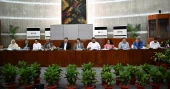
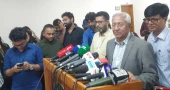
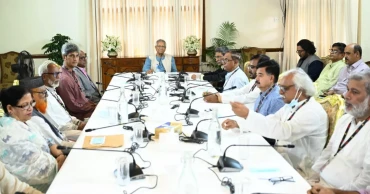
Chairman of the parliamentary special committee on constitutional amendment and Home Minister Salahuddin Ahmed on Tuesday said the body will recommend an "acceptable" constitutional amendment, taking opinions from political parties and people from all walks of life.
“We want to prepare an acceptable amendment proposal with the opinions of people from all classes and professions, including political parties,” he told reporters, coming out from the committee's first meeting in the midway.
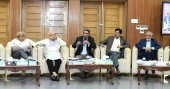
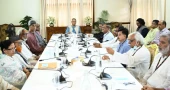
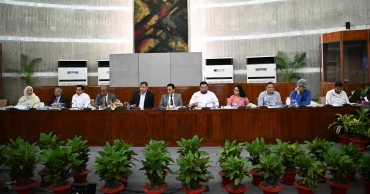
The first meeting of the committee began around 12:30 pm and concluded at about 1:30 pm at the Cabinet Room of the Jatiya Sangsad Bhaban.
Salahuddin said the committee would adopt an open and inclusive approach in formulating its recommendations.
"As we are liberal and open, we will listen to everyone. We will incorporate all necessary proposals for amendments and prepare our report accordingly," he said.
He said the committee's recommendations would later be translated into a constitutional amendment bill, which would be placed before Parliament.
"The bill will be discussed in Parliament, and we want to adopt the amendment through understanding so that it reflects public expectations," he said.
The chief of the parliamentary special body said the committee would also seek to incorporate the state structure related promised democratic reforms into the proposed amendments.
He said the committee sat in its first meeting to discuss the preparation of a list of persons and organisations to be consulted, as well as fixing a schedule for the consultations.
It plans to seek opinions from constitutional experts, lawyers, political parties, professional bodies and other stakeholders.
Salahuddin said any person or organisation interested in offering suggestions would also be given the opportunity to do so.
He, however, could not specify when the committee would submit its report, saying the timeframe has yet to be determined.
On the opposition's absence from the committee, Salahuddin said the government requested the opposition to nominate five representatives, but the names have not yet been received.
"We still hope they will reconsider and submit the names. We will also hold discussions with them," he said.
He added that even if the opposition does not nominate members, the committee will seek opinions from all opposition lawmakers.
Suggestions may be submitted during committee meetings or in writing outside the meetings, he said.
"We want to bring forward an acceptable amendment that reflects public aspirations. We want to adopt a report through discussions with everyone," Salahuddin added.
The committee will review 48 constitutional reform proposals included in the July National Charter.
Proposals on which political parties reached consensus will be incorporated into the amendment recommendations, while issues where the BNP registered dissent will be considered as notes of dissent, he said.
Salahuddin said the committee would also examine constitutional reform commitments included in the BNP's election manifesto, but not reflected in the July National Charter.
Referring to the 2024 July mass uprising, the Home Minister said public expectations have risen significantly following the uprising.
He stressed the need to rebuild Bangladesh in line with the aspirations of those who sacrificed their lives in the July uprising.
July charter to be followed word by word: Law minister
Law Minister Md Asaduzzaman said the constitutional amendment process would move forward by upholding both the July National Charter and the spirit of the July uprising.
"We cannot move merely on emotions by bypassing the July National Charter or imposing any political ideology or agenda. We will bring a constitutional amendment proposal before Parliament by following the July Charter word-by-word,” he said.
The committee will place a proposal to implement for building a new Bangladesh as dreamt by the July martyrs.
Responding to a question on whether the amendment process would remain credible if the opposition did not join the committee, the law minister said the government would make every effort to obtain the opposition's recommendations.
He said the recommendations of the opposition are already reflected in the July National Charter, which was signed by 33 political parties.
He said the committee has taken several policy-level decisions at its first meeting on how to proceed with the constitutional amendment process.
As part of its consultation, the committee will hold discussions with families of those killed in the July uprising, July warriors, leaders of the Anti-Discrimination Student Movement, representatives of different professions, journalists, members of the Supreme Court Bar Association, retired judges and other stakeholders.
Chief Whip Nurul Islam Moni, also a member of the committee, expressed hope that the opposition would finally join the constitutional amendment committee. “The door remains open for them at all times," he said.
Moni said there is no difference between constitutional amendment and reform, as any change made to the Constitution amounts to reform.
Committee members who attended the meeting also include Chairman of parliamentary standing committee on home ministry Zainul Abedin, Chairman of parliamentary standing committee on the law ministry Andaleeve Rahman, State Minister for Planning Zonayed Abdur Rahim Saki, State Minister for Expatriates' Welfare and Overseas Employment Nurul Haque, State Minister for Land Mir Mohammed Helal Uddin, State Minister for Social Welfare Farzana Sharmin, Shakila Farzana and Mahmudul Hoque Rubel.
Besides, another committee member Islami Andolan Bangladesh lawmaker Md. Oli Ullah didn’t attend the meeting.
2 months ago
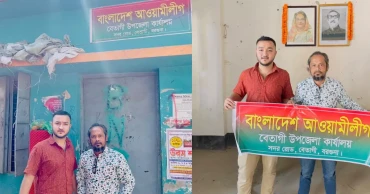
AL activists defy ban, reopen party office in Barguna
The local office of the Bangladesh Awami League was reopened in Betagi Upazila of Barguna on Monday, around 18 months after its activities were declared banned.
The office, located at Betagi Bazar, was unlocked around noon by leaders of the banned Bangladesh Chhatra League, witnesses said.
The reopening was carried out under the supervision of former Chhatra League joint general secretary Asaduzzaman Nadim.
RAB detains two JMB members in Borguna
Photographs of Sheikh Mujibur Rahman and ousted prime minister Sheikh Hasina were also displayed inside the office.
Among those present were Betagi Upazila Chhatra League general secretary Sifat Sikder and former upazila general secretary Mostafa Jamal Shamim, along with a number of other leaders and activists.
Eyewitnesses said leaders and activists of Jubo League and the banned Chhatra League gathered in front of the office and chanted slogans.
Later, a banner reading “Reopening of Betagi Upazila Awami League office after 18 months” was hung inside and outside the office.
U-16 Women’s Football: Borguna, Magura make good start
No immediate reaction from the local administration was available in this regard.
7 months ago
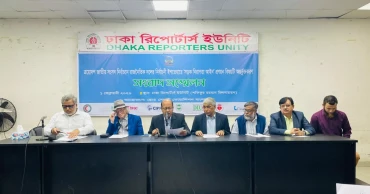
Political parties urged to pledge separate road safety law in election manifestoes
Road safety campaigners on Sunday urged major political parties to include a clear commitment to enact a separate and comprehensive Road Safety Law in their election manifestos ahead of the 13th national parliamentary election.
The call came at a press conference organised by Road Safety Coalition Bangladesh at Dhaka Reporters Unity.
They said the existing legal framework is inadequate to curb the country’s growing number of road crash deaths.
Road safety expert M Khalid Mahmud read out a written statement at the press conference.
Speakers recalled that Bangladesh’s first transport-related law, the Motor Vehicles Ordinance of 1983, lacked essential road safety provisions, resulting in long-standing legal and enforcement gaps.
Although a draft Road Transport and Road Safety Act was finalised in 2016 it was not enacted at the time.
Following the 2018 student-led movement sparked by the deaths of two students of Shaheed Ramizuddin Cantonment College, the government repealed the 1983 ordinance and enacted the Road Transport Act, 2018 but many critical road safety components were omitted.
They noted that implementation of the law was further delayed due to the absence of rules until the Road Transport Rules, 2022 were issued on December 27, 2022.
Even then, road safety issues were addressed only briefly, leaving major legal ambiguities unresolved.
Road crashes remain one of the leading causes of death and injury in Bangladesh, speakers said.
Official data from agencies such as the BRTA and Bangladesh Police show that around 5,000 people die and more than 10,000 are injured every year.
However, estimates from the World Health Organization, non-governmental organisations and media reports suggest the actual figures are several times higher.
Read More: 7,359 people killed in road accidents in 2025: Road Safety Foundation's count almost static
The coalition said Bangladesh continues to lag behind global best practices and the UN Decade of Action for Road Safety 2021–2030, as the current law focuses mainly on transport regulation rather than comprehensive safety measures.
They highlighted major gaps, including inadequate attention to risky road user behaviour, insufficient protection for vulnerable road users such as pedestrians, cyclists, children, women, the elderly and persons with disabilities, the absence of a standardised crash investigation and data system, and the lack of a legally recognised lead agency to coordinate multi-sectoral road safety efforts.
Calling for adoption of the UN-endorsed Safe System Approach, speakers said a separate Road Safety Law is essential to ensure safer speeds, roads, vehicles and road users, along with effective post-crash response. They noted that many countries have significantly reduced road fatalities by implementing this science-based approach.
The event was moderated by Kazi Borhan Uddin, Road Safety Project Manager at the Centre for Injury Prevention and Research, Bangladesh.
Among the speakers were Dr Md Shariful Alam, Country Coordinator of the Global Health Advocacy Incubator; Ranjan Karmakar, Executive Director of Steps Towards Development; AHM Bazlur Rahman, CEO of BNNRC; Dr Mahfuzur Rahman, Programme Director at the National Heart Foundation of Bangladesh; Md Sharafat-e-Alam of the Bangladesh Red Crescent Society; Sharmin Rahman of Dhaka Ahsania Mission; and Swarnil Mondal of Dhaka International University, along with other coalition leaders.
8 months ago
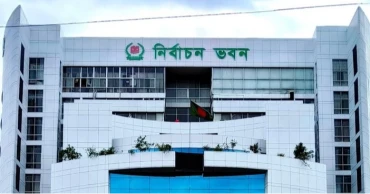
EC to sit with 12 more political parties on Sunday
The Election Commission will sit with 12 more political parties on Sunday as part of its ongoing electoral dialogue ahead of the next general election.
The Commission will exchange views with six parties in the morning session and with another six parties in the afternoon session on November 16, said EC’s (Public Relation) Assistant Director Asadul Haque.
The six parties who are being invited for the Sunday’s morning session are Gonoforum, Gono Front, Islamic Front Bangladesh, Islami Oikyajote, Bangladesh Supreme Party (BSP) and Bangladesh Jatiya Party.
The six other parties for the afternoon session are Bangladesh Jatiya Samajtantrik Dal-Bangladesh Jasod, Bangladesh National Awami Party-Bangladesh NAP, Trinomul BNP, Krishak Sramik Janata League, Bangladesh Khelafat Majlis and Islami Andolan Bangladesh.
The Election Commission opened its much-talked-about pre-election dialogue with registered political parties on Thursday by holding discussions with six parties in the first session of the day.
EC’s pre-election dialogue starts with 6 parties in opening batch
On the opening day, the Commission held talks with a total of 12 registered political parties in two separate sessions.
The 12 parties are Liberal Democratic Party-LDP, Bangladesh Congress, Bangladesh Muslim League, National People's Party, Bangladesh Khelafat Andolan, Jamiyate Ulamaye Islam Bangladesh Communist Party of Bangladesh-CPB, Jatiya Samajtantrik Dal-JSD, Bangladesher Samajtantrik Dal-Basod, Revolutionary Workers Party of Bangladesh, Bangladesh Nationalist Front-BNF and Bangladesh Nationalist Movement-BNM.
Currently, there are 53 registered political parties, excluding the Awami League, whose registration remains suspended. Besides, the EC recognised three new parties, including NCP, as registered parties.
The Commission aims to complete the dialogue with all registered political parties within this month before the announcement of the national election schedule in early December.
In late September 2025, the Commission opened a series of electoral dialogues with different stakeholders amid talks with civil society representatives on September 28.
Later, the EC held separate dialogues with the representatives of teachers, senior journalists from different media outlets, election experts and election observers.
10 months ago
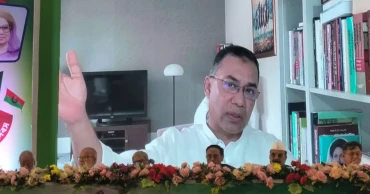
Tarique warns against political volatility, urges election participation
BNP Acting Chairman Tarique Rahman on Wednesday (12th November 2025) urged political parties not to make the country’s situation volatile by imposing various conditions, but instead to face people in next year’s national election, rather than issuing threats to the ‘fragile’ interim government.
Speaking virtually at a discussion, he also said it is up to the interim government to decide whether it will implement the aspirations of any particular political party or prioritise holding the February election to establish a government accountable to the people of the country.
“As preparations are underway to establish a government accountable to the people through their direct votes and to restore citizens’ rights, we have observed that a few political parties seem to be positioning themselves against the restoration of the political rights of democracy-loving people, taking advantage of the weaknesses of the interim government,” he said.
Tarique said many of BNP’s allies from the anti-fascist street movement are expressing doubts about the February election next year.
“I would like to draw the attention of our allies present here today that, instead of issuing threats to the interim government, let us face the people in the upcoming February election. Let us all come forward and stand before the people,” he said.
Read more: Tarique Rahman likely to return home by end of November: Salahuddin
BNP arranged the discussion at the Bangladesh-China Friendship Conference Centre to mark the ‘National Revolution and Solidarity Day’, commemorating the civil-military uprising on November 7, 1975, which marked 50 years.
Senior leaders of different political parties, including Jamaat-e-Islami, addressed the programme and stressed the need to maintain unity among the anti-fascist political parties to ensure the restoration of democracy through the next national election, removing differences of opinion among them.
Tarique Rahman warned that if any political party, seeing the interim government as weak, tries to get whatever it wants or uses tricks to deny the BNP a victory, such actions could ultimately lead to political disaster for that party.
“I urge our allies on the streets --and anyone trying to muddy the waters--please do not try to make the situation volatile,” he said.
The BNP leader said the international community has made it clear that without an elected government, they will not release funds.
He said at this critical juncture--when the economy is struggling, unemployment is rising, and everything seems to be falling apart--some political parties are setting various conditions.
“Some of those who once stood with us on the streets are now trying to obstruct the national election by attaching various preconditions. Creating complications over holding the election essentially means either trying to seize control of the state machinery without participating in the election or paving the way for the return of a fallen, defeated, and fugitive dictator,” Tarique said.
He said associates of the runaway autocrat recently carried out arson attacks even in the capital. “This should serve as a warning for all forces that once fought against fascism.”
In the past, the BNP leader said, some leaders of a party took shelter under the fascist umbrella to save themselves from repression as part of their political strategy.
“In today’s changed circumstances, it seems the fallen and defeated autocrats are now trying to find refuge under the umbrella of that very party which once stood against fascism. It is time for everyone to take a hard look and think seriously about this situation,” he said.
Tarique also expressed concern that a party may be trying to create scope for the rehabilitation of fallen, fugitive forces into politics under the guise of a referendum before the national election. “I call upon all democracy-loving people of the country to remain vigilant against such moves.”
He said the people do not expect complete success from a short-term interim government in all areas, and it is not the interim government’s primary responsibility to fulfil every demand of the people.
“The interim government has set the schedule for the national election in February. Now the government has to decide whether it will fulfil the aspirations of a particular political party or prioritise the February election to establish a government that is accountable to the democracy-loving people of the country,” the BNP leader said.
He said the BNP has remained fully committed to maintaining unity in the anti-fascist alliance.
“If we review the Consensus Commission’s discussions, it will be seen that the BNP has presented a positive stance on most points. Our position is very clear: the commitments made in the July Charter, which we signed, will be fully upheld by the BNP, and we remain strongly committed to fulfilling them,” Tarique said.
He said over 1,500 people were martyred during the July–August movement, and students, the general public, women and men, farmers, and workers took to the streets.
“The people took to the streets to assert their rights in the state and in politics. As a political activist, I believe that surely the people did not sacrifice their lives to create an opportunity for a particular political party or group to establish its rights or to engage in political bargaining,” the BNP leader said.
BNP Secretary General Mirza Fakhrul Islam Alamgir said the politics of reconciliation initiated by Zia is now much needed in Bangladesh.
Tarique Rahman likely to return home by end of November: Salahuddin
He said an unnecessary crisis has been created with the motive to obstruct the election, which is necessary for reforms and the restoration of democracy, and to prevent uncertainty over the people’s future.
The BNP leader urged all political parties to work together to resist any plots and ensure the restoration of democracy under the leadership of Tarique Rahman.
Liberal Democratic Party (LDP) President Col (Retd) Oli Ahmed recounted how BNP founder Ziaur Rahman came to politics and initiated various reforms to develop the country as a true patriot.
“Ziaur Rahman was fully devoted to Bangladesh and worked only for the country and its people. He began reforms but could not complete them. I urge Tarique Rahman to continue from where your father and mother left off. We will provide our support,” he said.
Jamaat's Assistant Secretary General Ehsanul Mahbub Zubair, Jatiya Party (Zafar) Chairman Mostafa Jamal Haider, Gonoforum President Subrata Chowdhury, NPP Chairman Fariduzzaman Farhad, Labour Party Chairman Mostafizur Rahman Iran, Biplobi Workers Party General Secretary Saiful Haque, AB Party Chairman Mojubur Rahman Monju, and Gono Odhikar Parishad General Secretary Rashed Khan, educationist Prof Mahbub Ullah, among others, addressed the programme.
BNP Standing Committee members Khandaker Mosharraf Hossain, Gayeshwar Chandra Roy, Dr Abdul Moyeen Khan, Amir Khosru Mahmud Chowdhury, Salahuddin Ahmed, Selima Rahman, Hafizuddin Ahmed, and Dr AZM Zahid Hossain also addressed the programme.
Read more: Violence cannot halt elections, says Amir Khosru
10 months ago
Moyeen Khan rejects proportional representation system
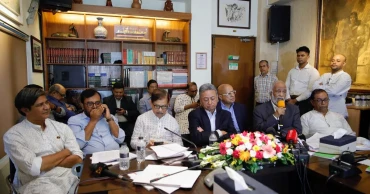
Strongly opposing the introduction of a proportional representation (PR) system, BNP senior leader Dr Abdul Moyeen Khan on Saturday said it would only strengthen political parties while weakening the link between people and their elected representatives, ultimately causing suffering for the public.
“PR basically weakens the position of an individual representative and strengthens the party instead,” he said while speaking at a seminar.
The seminar, titled ‘Election 2026: A Critical Look at Proportional Representation’, was arranged by Cosmos Foundation, the philanthropic arm of Cosmos Group, at the Cosmos Centre in the capital’s Moghbazar area. United News of Bangladesh (UNB) was the media partner of the event.
Under the PR system, Dr Moyeen, a BNP Standing Committee member, said people would vote for a party, not an individual, and the party would then decide who becomes a member of parliament. “This goes against our fundamental democratic spirit, where people elect their own representatives who are directly accountable to them.”
He warned that making parties stronger while weakening individuals would create a “self-contradictory system,” noting that in Bangladesh, people have always wanted to prevent political parties from becoming too powerful.
“Whenever political parties became too strong in the last 54 years, it ultimately brought suffering for the people,” the BNP leader said.
Dr Moyeen Khan also observed that Bangladeshis are not yet mentally or intellectually prepared for such a complicated electoral process. “People here want a simple system where they can clearly understand who represents them and who they are voting for.”
11 months ago
Multiple proposals in pipeline if July Charter not agreed: Prof Riaz
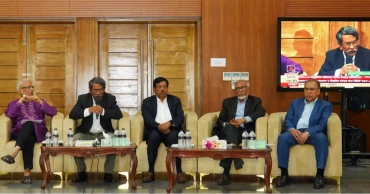
NCC Vice-Chair Prof Ali Riaz said on Sunday that the Commission will submit several proposals to the government on implementing the July National Charter 2025 if political parties fail to reach a consensus.
“If the political parties cannot come to an agreement on how to implement the July Charter, the Commission will make more than one proposal before the interim government,” he said while chairing the dialogue between the NCC and political parties in the capital.
The discussion, held at 11:45am at the Foreign Service Academy, aimed to determine the process for implementing the July National Charter 2025, particularly the Constitution-related reform recommendations.
Prof Ali Riaz said the decision to implement the July National Charter ultimately rests with the interim government and the political parties. “If a consensus or a sort of agreement can be reached among you, the implementation will be easier and faster,” he said.
Mentioning that the Chief Adviser of the interim government and also the head of the Commission held a meeting with the NCC members on Sunday morning, Prof Riaz said the Chief Adviser asked them to move forward swiftly and make the Charter acceptable to all by transforming it into a political document endorsed by every party.
He said the Commission held the discussion with political parties for a specific reason — to discuss more concrete, well-defined and concise proposals regarding the implementation of the July Charter, if the political parties place.
Prof Yunus happy over National Consensus Commission’s progress
“If the political parties can present clear and concise proposals on the implementation process, we will consolidate and incorporate them in our submission to the interim government,” he said.
“Our goal is to complete this process by October 15 next as the national election is approaching,” said the NCC Vice Chair, adding that they do not want to disrupt the electoral process or the electoral preparation of the political parties.
“The Commission’s tenure ends on October 15, so we must complete the task before that,” Prof Riaz said, adding, “We know that you (political parties) have already held talks among yourselves. Based on that, if you can give a collective proposal beyond partisan considerations, we will discuss it further…..This is our sincere request to you.”
Some 30 political parties and alliances, including BNP, Jamaat-e-Islami, and NCP, joined Sunday’s dialogue.
Consensus Commission reviews final phase preparations for July Charter
Earlier, the NCC sat with political parties on September 17 to explore ways to implement the July Charter.
In the last discussion, the Commission presented before the political parties the final advice of its legal experts on the implementation of the July National Charter 2025, but the parties failed to reach a consensus over the enactment of a constitution order which may be endorsed by a referendum to be held simultaneously with the upcoming national election.
The panel of legal experts advised that the interim government may enact a Constitution Order (CO) with immediate effect, incorporating the core reforms envisaged by the July Charter 2025.
The CO may thereafter be put to a referendum to be held on the same date as the next general election. The CO may include the provision for referendum.
If the CO receives the assent of the people through a referendum, it will be validated with effect from the date of its enactment, said the legal expert panel.
Then, no dialogue was held with the political parties as NCC Vice Chair Prof Ali Riaz went to the USA on September 20 and returned on Tuesday last.
The NCC has so far held three rounds of dialogue with political parties — from March 20 to May 19, from June 2 to July 30, and now the third round on the implementation of the charter since September 14 last.
National Consensus Commission tenure extended till October 15
The Consensus Commission, formed on February 15 last under the Chief Adviser of the Interim Government Prof Muhammad Yunus, to prepare a reform charter by July 15, 2025.
Later, its tenure was extended on several occasions. Now the NCC will need to find a mechanism over the implementation of the July Charter within the next 10 days as its extended tenure will expire on October 15.
1 year ago
Bangladesh Election: EC to start dialogue on Sept 28
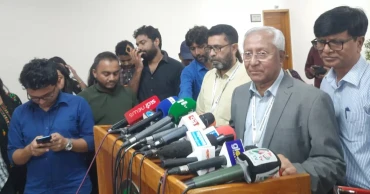
The Election Commission (EC) will start electoral dialogue with different stakeholders, including political parties and civil society members on September 28 (Sunday) ahead of the national election, said its Senior Secretary Akhtar Ahmed on Tuesday.
“The dialogue will begin on Sunday (Sept 28). The talks will first be held with civil society representatives and teachers,” he told reporters at Nirbachan Bhaban in the capital.
In the electoral roadmap unveiled last month, the EC said the dialogue with stakeholders, including political parties, civil society members, media persons, observers, election experts and July worriers, would begin in the last week of September and complete the talks within the next one and a half months.
BNP yet to approve candidates for national election: Rizvi
Turning to the amendment to electoral laws, the EC Secretary said the proposed electoral code of conduct and the rules related to electoral symbols have already been vetted and sent back to the Election Commission.
He said the ‘Shapla’ (water lily) symbol is not included in the revised list of electoral symbols. So, the National Citizen Party (NCP) must submit a fresh application to the Commission for an alternative symbol.
“As the ‘Shapla’ symbol is not in the revised list of symbols, NCP cannot get it. They have been asked to apply for an alternative symbol, but the choice must be made from the symbols that are already approved by the Commission,” Akhtar added.
1 year ago
Political parties in Bangladesh agree on PM’s term limit, independent police commission
Political parties on Sunday reached a consensus over two reform proposals – one for not allowing anyone to serve as the Prime Minister for more than 10 years in life and another is for forming an independent police commission to ensure professionalism and accountability in the police force.
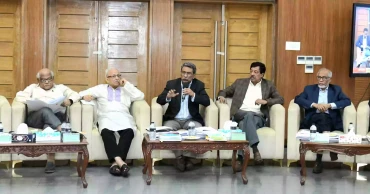
“We had reached a consensus on one matter but didn’t announce it before. It’s that the Prime Minister will not be allowed to serve more than 10 years in total,” said Prof Ali Riaz, Vice Chair of the National Consensus Commission (NCC), during the 19th session of the second-round reform dialogue with the political parties at the Foreign Service Academy in the capital.
He said the Commission will include this – maximum tenure of a Prime Minister is 10 years – in the National Charter.
Prof Riaz then asked, “Are we all agreed on this? Earlier, Mr Salahuddin Ahmed had placed a condition on this—does that still remain?”
In response, BNP Standing Committee Member Salahuddin Ahmed clarified his party’s position, saying, “We earlier proposed that no one shall remain in the post of Prime Minister for more than 10 years. I had mentioned that if there is no provision for appointments to the constitutional and statutory bodies through a committee, we won’t agree to this.”
Unresolved reform issues must be decided within 10 days: Ali Riaz
"The forum has now agreed to include such a provision in the Constitution for the Election Commission. If similar committees are discussed for appointing other bodies, the same conditions will apply,” he said, adding, “We hope you can consider it. You may announce the 10-year limit. In fact, this was our proposal.”
Earlier in the day, the NCC proposed the formation of an independent police commission aimed at ensuring professionalism and accountability in the Bangladesh Police.
Following discussion, the participating political parties agreed in principle to the formation of such a commission, though they will continue to deliberate on its structure.
Speaking about the matter, Prof Ali Riaz said, “We are in consensus on the formation of a police commission. We’ll continue discussions on its formation process. Bangladesh’s political parties have agreed in talks to establish an independent police commission that will ensure accountability, responsibility, and a people-friendly police service.”
During the placement of the proposal, Prof Riaz said the issue of forming a police commission was not among the original 166 reform proposals sent to political parties for opinion.
“We are not including this issue to waste time,” he said, adding that both political parties and citizens have consistently questioned why the formation of a police commission is not being discussed during the dialogues.
In light of the police’s role during the 2024 July–August uprising and over the past 16 years, this demand for a police commission is legitimate. That’s why, following both formal and informal consultations, the proposal has been brought to the table, he said.
Referendum needed for future changes to caretaker system in constitution: Ali Riaz
This commission will be mandated to address complaints raised by both police personnel and citizens.
A retired police official who served at least as additional IGP will be its member secretary.
The seven other members will be one representative each of the Leader of the House, the Leader of Opposition, the Speaker and the Deputy Speaker, a listed lawyer of the High Court, a human rights activist and a retired police official who served at least as additional IGP.
Of them, only the chairman and the member secretary will be permanent members, while the rest seven members will not receive any salary.
Some 30 political parties, including Bangladesh Nationalist Party (BNP), Bangladesh Jamaat-e-Islami and the National Citizen Party (NCP), are participating in the second-round dialogue.
The NCC aims to finalise a unified position on approximately 20 core reform proposals by July 31 through consensus-building with political parties.
The second round of talks began on June 2, inaugurated by Chief Adviser and Commission Chairman Prof Muhammad Yunus.
The Commission, formed on February 15, 2025 under Prof Yunus’ leadership, was entrusted with building national consensus on key state reforms. It previously held first-round talks with political parties and alliances between March 20 and May 19.
1 year ago
Prof Yunus sees signs of conspiracies, wants more visible unity
As he sees the signs of various conspiracies, Chief Adviser Professor Muhammad Yunus on Wednesday urged political parties to make their unity against fascism more visible and stronger in a bid to foil the conspiracies of the defeated forces.
“Despite differences and competition, the unity of political parties against fascism needs to be made more visible. Otherwise, the fascist forces may see this as an opportunity,” he said.
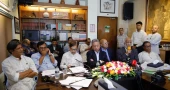
The Chief Adviser made the remarks during a meeting with 13 political parties at the state guest house Jamuna.
He said the interim government made arrangements for bringing all political parties together to remember the past in one year of the July Uprising.
“By doing so, the unity among us against fascism would have become more visible. But even before a full year has passed, signs of various conspiracies by the defeated forces have already begun appearing,” the Chief Adviser told the political leaders.
All the political parties participating in the meeting expressed support for maintaining political and mass unity against fascism.
They urged the Chief Adviser to be stricter and take a stronger stance in controlling law and order, extended full support for the reform process, the trial of fascists and the upcoming election process.
CA Dr Yunus holding meeting with 13 political parties
With the election in mind, they also requested the Chief Adviser to hold more all-party meetings regularly with political parties to stand against fascism.
A day after meeting leaders of four major political parties, Chief Adviser Professor Yunus met leaders from 13 other political parties on Wednesday afternoon.
Syed Hasibuddin Hossain from the Rashtra Sangskar Andolon, Zonayed Saki from Ganosamhati Andolon, Mujibur Rahman Manju from AB Party, Shahidullah Kaisar from Nagorik Oikya, Nurul Haque Nur from Gono Odhikar Parishad, Redwan Ahmed from LDP, Dr Ahmad Abdul Kader from Khelafat Majlis, Saiful Haque from the Biplobi Workers Party, Tania Rabb from JSD, Shahadat Hossain Selim from the 12-Party Alliance, Bazlur Rashid Firoz from Bangladesher Samajtantrik Dal (BASAD), Ruhin Hossain Prince from CPB and Dr Mizanur Rahman from Gono Forum attended the meeting.
Earlier, on Tuesday night, the Chief Adviser had a meeting with BNP Secretary General Mirza Fakhrul Islam Alamgir and Standing Committee Member Amir Khasru Mahmud Chowdhury, Jamaat-e-Islami Nayeb-e-Ameer Abdullah Mohammad Taher and Assistant Secretary General Hamidur Rahman Azad, National Citizen Party (NCP) Convener Nahid Islam and Member Secretary Akhtar Hossain, and Islami Andolan Bangladesh Presidium Member Prof Ashraf Ali Akon and Joint Secretary General Gazi Ataur Rahman.
Prof Yunus designates a site in Uttara for aircraft crash victims' burial
The leaders of the four parties urged the government to play a more proactive role in maintaining law and order, and stressed the need for ensuring a smooth path towards the upcoming national election, expected to be held in early 2026.
During the meeting, the political leaders reaffirmed to remain united in their fight against fascism.
1 year ago