World Heritage
UNESCO adds West Bank site, Lebanese castles to World Heritage List despite Israeli objections
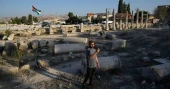
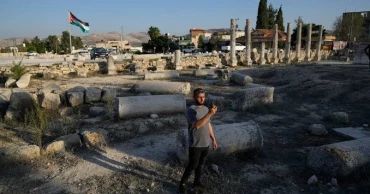
UNESCO has added the archaeological site of Sebastia in the occupied West Bank and five historic castles in southern Lebanon to its World Heritage List, despite strong objections from Israel.
The decision was taken on Friday during a meeting of UNESCO's World Heritage Committee in Busan, South Korea. The committee also placed both sites on the List of World Heritage in Danger, citing the ongoing conflicts in the Middle East.
The move came just days after Israel's Foreign Ministry urged the committee to reject the nominations, accusing those behind the proposals of using cultural heritage for political purposes.
Sebastia, located about 10 kilometres northwest of Nablus in the Israeli-occupied West Bank, is widely identified by historians as the ancient city of Samaria, the capital of the biblical Kingdom of Israel. The site contains archaeological remains from the Iron Age, Roman, Byzantine and Islamic periods. According to UNESCO, both Christian and Islamic traditions identify Sebastia as the burial place of John the Baptist.
The Palestinian delegation first nominated Sebastia for World Heritage status in 2012, arguing that the designation would help protect and preserve the site. The nomination said the area, which remains under Israeli control, needs greater conservation despite attracting visitors.
The designation comes as Israel moves to take control of large areas of land surrounding Sebastia while facing international pressure to curb violence by Israeli settlers in the occupied Palestinian territory.
The five castles in Lebanon's Mount Amel region were recognised for their architectural importance. UNESCO said the castles reflect nearly 900 years of military architecture, combining Crusader, Ayyubid, Mamluk and local influences.
Adel Naim Daoud Atieh, a member of the Palestinian delegation to UNESCO, said the recognition honours the people of Sebastia, who have protected the site for generations despite occupation, restrictions and repeated efforts to separate them from their cultural heritage.
Israel withdrew from UNESCO in 2019, accusing the agency of bias and of failing to recognise the country's historical links to the Holy Land. An Israeli delegate attending the Busan meeting as an observer said politics had undermined UNESCO's credibility and distorted history.
Earlier this week, Israel's Foreign Ministry accused the Palestinian delegation of falsely portraying Sebastia as an emergency case. It described the nomination as a political effort to ignore the site's Jewish and Christian history.
Israel also opposed the inclusion of Beaufort Castle, one of the five Lebanese castles, claiming that Hezbollah has turned it into a military base by building tunnels beneath the site and launching rockets from the area.
UNESCO and the Lebanese embassy in South Korea declined to comment on Israel's allegations. At Friday's meeting, a Lebanese delegate said the castles have been used only for cultural and tourism purposes since Israel withdrew from southern Lebanon in 2000. The delegate also accused Israeli media of misrepresenting tourist facilities as military tunnels.
Earlier this week, UNESCO also placed the ancient Lebanese city of Tyre on its List of World Heritage in Danger.
2 months ago
Mount Olympus seeks UNESCO World Heritage status for its cultural and natural value
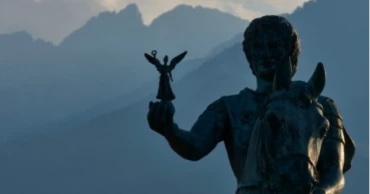
Greece is hoping to secure UNESCO World Heritage status for Mount Olympus, the country's highest peak and the legendary home of the ancient Greek gods, by highlighting its unique blend of mythology, history, biodiversity and natural beauty.
The 2,918-metre (9,573-foot) mountain, snow-covered for much of the year, has long been linked to ancient Greek mythology. According to legend, Zeus, the king of the gods, ruled from its highest peak after defeating the Titans.
Greece's nomination for Mount Olympus as a mixed cultural and natural World Heritage site will be considered during the UNESCO World Heritage Committee meeting in Busan, South Korea, running from Sunday to July 29.
"Olympus is part of our everyday life," said Evagelos Geroliolios, mayor of Dion-Olympus municipality, based in the mountain town of Litochoro. "It represents mythology, history, biodiversity, stunning landscapes and a rich cultural heritage."
Interest in the mountain may also increase with the release of Christopher Nolan's latest film, The Odyssey, based on Homer's epic, where Mount Olympus is portrayed as the home of Zeus and the Olympian gods who shape Odysseus' journey.
Archaeological discoveries have added to the mountain's historical importance. Excavations on one of its lower peaks uncovered an ancient open-air sanctuary dating back to the Hellenistic era (323 B.C. to 30 B.C.). Historians believe it may be the sanctuary mentioned by the ancient writer Plutarch, who described religious processions and animal sacrifices dedicated to Zeus.
Mount Olympus also remained an important religious site during the Christian era. It is home to what is believed to be the world's highest Orthodox Christian chapel, located on the Prophet Elias peak at 2,803 metres. The mountain also contains the remains of a monastery founded in 1542 and the Holy Cave of St. Dionysios, where a small spring is believed by many to have holy water.
Beyond its cultural and religious importance, Mount Olympus is known for its rich wildlife and plant life, including many species found nowhere else. Local officials believe this combination of natural and cultural significance makes it a strong candidate for World Heritage recognition.
"We want to preserve this place for future generations," Geroliolios said, adding that UNESCO recognition would be an achievement of global importance rather than just a local or national one.
Greece first placed Mount Olympus on UNESCO's Tentative List in 2014, the required first step before submitting a formal nomination. The application has since undergone detailed evaluations by international heritage and conservation experts.
However, the mountain's inclusion is not guaranteed. A draft agenda for the UNESCO meeting suggests the committee may ask Greece to provide additional information before making a final decision.
Despite the uncertainty, local residents remain hopeful that the mountain's exceptional natural and cultural value will earn it a place on the prestigious list.
Supporters also believe World Heritage status would strengthen efforts to protect the mountain, although it could also bring more visitors.
Mountain guide Babis Marinidis, president of the Alpine Club of Litochoro, said increasing tourism could put additional pressure on the fragile ecosystem.
"How many visitors can this mountain and its ecosystem really support?" he asked, noting that many tourists ignore restrictions such as bans on camping and swimming.
Because of the growing number of visitors, local authorities are considering measures such as entry fees and visitor registration to better manage tourism. Marinidis said he had previously opposed such restrictions but now believes limits may be necessary.
Mount Olympus remains a popular destination for hikers and climbers from around the world. Although reaching the summit does not require advanced climbing skills, rapidly changing weather and difficult terrain can make the mountain dangerous.
On July 11, a 64-year-old Greek hiker died after collapsing on a trail. In May, rescue teams recovered the body of a 25-year-old Spanish climber who went missing while attempting to reach the summit through snowy conditions.
First-time visitor Triantafyllos Giannospyros said careful planning and proper preparation are essential.
"You need to respect the mountain and always put safety first," he said.
Hotel owner Stavroula Vourou, whose business serves many hikers visiting Litochoro, shared the same view.
"People come here to conquer the mountain," she said. "But if you respect Mount Olympus, it will respect you too."
3 months ago

French baguettes, Chinese traditional tea-making added to world heritage list
The artisanal knowledge surrounding France's iconic daily bread loaf, the baguette and traditional tea-making in China have been awarded special protected status by the UN's cultural body.
They were inscribed on the Representative List of the Intangible Cultural Heritage of Humanity during a meeting this week in Morocco's Rabat.
Read more: Vietnam keen to work for development of Sylhet tea industry
Also, the culture of Ukrainian borscht cooking was placed on a list of Intangible Cultural Heritage in Need of Urgent Safeguarding.
The inscription of the baguette, one of the quintessential staples of French life, on the Paris-based UN Educational, Scientific and Cultural Organization's (UNESCO) Intangible Cultural Heritage list honours the artisanal know-how and culture surrounding the loaf.
A real baguette has just four ingredients – flour, water, yeast and salt.
France's long, crusty and delicious loaf bread requires specific knowledge and techniques. It is baked throughout the day in small batches and the outcomes vary according to the temperature and humidity.
3 years ago

UNESCO to publish Hindi descriptions of India's World Heritage Sites on WHC website
On the occasion of World Hindi Day on January 10, the Director of World Heritage Centre has informed the Permanent Delegation of India to UNESCO, Paris that UNESCO's World Heritage Centre has agreed to publish Hindi descriptions of India's UNESCO World Heritage Sites on WHC website.
Permanent Delegation of India to UNESCO, Paris organized the virtual celebration of World Hindi Day on January 10, 2022, reports ANI.
READ: 7pc Bangladesh families have to borrow to send children to school: UNESCO
Minister of State of External Affairs and culture, Meenakshi Lekhi gave a video message on World Hindi Day and emphasized the importance of Hindi.
India's ambassador/permanent representative to UNESCO, Vishal V. Sharma also highlighted the key points that Hindi attained during the last 75 years of India's independence.
For the celebrations, the delegation has received short videos on this occasion from Assistant-Director Generals for Education, Social and Human Sciences, Culture, Communication and Information and Executive Secretary of the Intergovernmental Oceanographic.
READ: Doleshwar Hanafia Jame Mosque wins UNESCO award
The Ambassadors/ permanent Delegates to UNESCO from Angola, Bangladesh, Brazil, Ecuador, France, Greece, Iran, Japan, Mongolia, Palestine, Republic of Korea, Palestine, Russian Federation, Sri Lanka, St. Kitts and Nevis, Vietnam also sent the video message on World Hindi Day.
Embassies / High commissions, Consulate Generals of India in Canberra, Wellington Georgetown, Doha, London, Riyadh, Washington D.C., Male, Kathmandu, Colombo, Kuwait, Windhoek, Suriname, Nairobi, Dar es Salaam, Dushanbe, Port Luis, Johannesburg and Gaborone also celebrated the occasion by sending the videos.
4 years ago

Turkey formally makes Hagia Sophia a mosque
Turkey has finally announced the reconversion of Istanbul’s sixth-century Hagia Sophia into a mosque and opened it for worship, drawing huge outcry across the world.
6 years ago