Import
2,100 tonnes of rice imported through Benapole Port
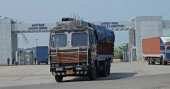
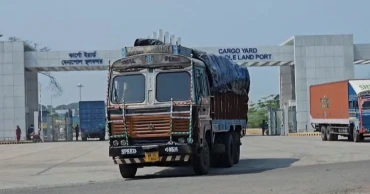
A total of 2,100 metric tonnes of non-basmati coarse rice have been imported through Benapole port, over six working days.
The rice consignments, brought in through 15 separate shipments, entered the port’s 31 No. transshipment yard, said Benapole Port Director Shamim Hossain on Tuesday.
According to port sources, the imports were made between Jan 27 and Feb 17.
Earlier, 6,128 metric tonnes of rice were imported through the port during the four months from August to November last year.
Benapole Port on high alert after import of 125 tonnes of MGMCL
On January 18, the government allowed 232 importing firms to bring in 2,00,000 metric tonnes of rice, setting March 3 as the deadline for completing the imports and marketing the rice in Bangladesh.
The importing firm, Haji Musa Karim & Sons, brought the rice from India, while C&F agent M/s Bhuiya Enterprise is handling the clearance process.
Abdus Samad, proprietor of Haji Musa Karim & Sons, said they imported 2,100 metric tonnes of coarse rice from India in 58 trucks over six days.
7 months ago
Bangladesh Bank allows 270-day credit for LPG imports
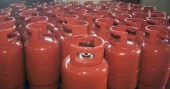
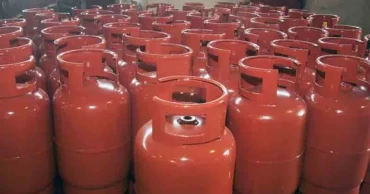
Bangladesh Bank has relaxed import rules for liquefied petroleum gas, permitting importers to use credit facilities of up to 270 days, a move aimed at easing dollar liquidity pressure and ensuring steady LPG supplies in the domestic market.
Under the new arrangement, LPG imports will now be treated as industrial raw materials, enabling businesses to import LPG on deferred payment terms through suppliers’ credit or buyers’ credit for a maximum period of 270 days, according to a circular issued by the central bank on Monday.
The circular, sent to all scheduled banks by the Foreign Exchange Policy Department of Bangladesh Bank, noted that LPG is primarily imported in bulk and subsequently bottled for distribution.
Considering the multiple stages involved in processing and marketing, the central bank has decided to categorise LPG as an industrial raw material.
Earlier, a circular issued on December 29 allowed a 270-day usance period — the timeframe for deferred payment — for industrial raw material imports. With the latest decision, LPG importers will now enjoy the same facility.
Besides, importers will be allowed to obtain buyers’ credit from foreign banks or financial institutions. They may also access bill discounting facilities through offshore banking units (OBUs) of local banks.
Bangladesh Bank said that after import, LPG requires a considerable amount of time for storage, bottling and marketing.
The extended credit period has been granted to support importers’ cash flow and accelerate the import of this essential energy commodity.
The move comes amid a severe LPG supply crunch in the domestic market that has persisted for over two weeks.
During this period, LPG prices have surged sharply, with a 12kg cylinder being sold at nearly double the government-fixed price.
A cylinder officially priced at TK 1,300 is now selling for as high as Tk2,500 in some areas.
Titas low pressure chokes gas supply across Dhaka; residents struggle
Similarly, the price of a 35kg LPG cylinder has risen to Tk5,000, compared to its regulated price of Tk3,200, causing widespread hardship for consumers.
LPG traders attributed the crisis to a shortage of vessels, complications in opening letters of credit (LCs), and the temporary shutdown of several LPG plants.
Industry insiders expressed optimism that the special facilities provided by Bangladesh Bank would play a crucial role in normalising LPG supply in the market in the coming days.
8 months ago
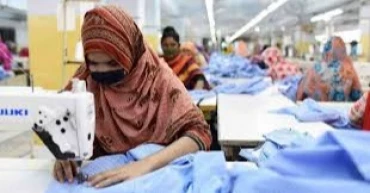
Bangladesh economy in ‘waiting vortex’; experts urge credible elections
Bangladesh’s economy is caught in a debilitating ‘waiting vortex’ of stagnant investment, high inflation and weak business confidence, with experts saying only a credible and participatory election can restore stability and drive recovery.
The prevailing consensus across the business and policy landscape is that the economy is currently ‘breathing, but unable to walk’ as it is paralysed by political uncertainty ahead of the general election expected next February.
Business owners and entrepreneurs unanimously assert that new initiatives and investments are impossible without political stability and certainty.
Professor Rashed Al Mahmud Titumir of Dhaka University, Liaquat Ali Bhuiyan, Senior Vice-President of the Real Estate and Housing Association of Bangladesh (REHAB), Inamul Haq Khan, Senior Vice-President of the Bangladesh Garment Manufacturers and Exporters Association (BGMEA), Anwar-ul-Alam Chowdhury (Parvez), President of the Bangladesh Chamber of Industries (BCI), and former Chief Economist of Bangladesh Bank Dr Mustofa K Mujeri talked to the UNB correspondent about the current economic situation in Bangladesh.
Read more: Bangladesh’s reserves still remain above $31 billion after ACU payment
The economy is sustained by political trust, and it is the government’s responsibility to restore that confidence, said economists, underscoring that without a stable political environment, the recovery process cannot begin.
This sentiment is echoed by the country’s development partners. The International Monetary Fund (IMF) has reportedly linked the disbursement of the next tranche of its $4.7 billion loan to the formation of an elected government. Similarly, both domestic and foreign investors are reluctant to take risks, preferring instead to adopt a cautious ‘wait-and-see’ stance.
Worrying Economic Indicators
Private Sector Credit Growth: Loan growth to the private sector has dropped to around 6.5 per cent — roughly half the normal rate — signalling a sharp contraction in new business activity and entrepreneurship.
Capital Machinery Imports: Imports of capital machinery, a key indicator of future industrial output, have declined by 25 per cent, casting a shadow over upcoming production and employment prospects.
Inflation and Savings: Inflation has been persistently high, hitting 8.36 per cent in September 2025, hitting hard the purchasing power of ordinary citizens, with the sales of national savings certificates falling by over Tk 6,000 crore, making it clear that many are being forced to liquidate their savings.
Foreign Investment: Foreign Direct Investment (FDI) fell by 22 per cent in the first quarter of the current fiscal year, as international investors remain cautious — with some existing firms even scaling back their operations.
Govt moves to make SMEs a driving force of economy: CA’s office
“Investment is now not just an economic question, but a question of social confidence,” one analyst observed, noting that political instability and deteriorating law and order are heavily discouraging entrepreneurs.
Social Costs and Unemployment
The economic stagnation is inflicting a deep social toll, with experts warning of rising poverty and worsening unemployment.
Professor Titumir cautioned that high inflation has “reduced the purchasing power of the common people, increased poverty, and may push another 30 lakh people below the extreme poverty line.”
The country now faces a mounting unemployment crisis, with around 13 lakh jobless youths — including one in every three university graduates.
Industry Leaders Demand Clarity
Business leaders across key sectors have emphasised the urgent need to restore political and policy clarity.
Liaquat Ali Bhuiyan said that new investment in manufacturing, real estate, banking, and services has “nearly stopped.”
Inamul Haq Khan noted that foreign buyers and partners, including the IMF, have little confidence in a temporary setup.
Dhaka’s economy driven by manufacturing sector with 56% share: DCCI
“IMF and foreign stakeholders are waiting for the new government. Only then will confidence and investment surge,” he added.
Path to Recovery
Economists argue that the top priority for the current interim administration must be to hold a swift, credible, and widely accepted national election, paving the way for an elected government to take charge.
Anwar-ul-Alam Chowdhury (Parvez) told UNB that clarity on the election timeline and assurance of a peaceful process are the most crucial prerequisites for restoring economic stability.
Dr Mustofa K Mujeri observed that the economic environment will remain fragile as long as high interest rates persist and political uncertainty continues to limit capital flow.
Ultimately, analysts suggest that the nation stands at a “historic juncture,” where it must either accept the current stagnation or move decisively towards a new economic model anchored in political stability and trust.
Read more: IMF to decide Bangladesh’s next loan installment after formation of political govt: Adviser
10 months ago
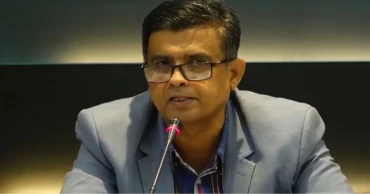
Govt laid foundation for promising new chapter in Bangladesh-US relations: Shafiqul Alam
Chief Adviser’s Press Secretary Shafiqul Alam on Sunday (9th November 2025) said one of the major accomplishments of their foreign policy over the past 15 months has been establishing strong relations with the US agricultural economy and the farm lobby.
"The interim government has laid the foundation for this promising new chapter in Bangladesh-US relations," he said.
Looking ahead, Alam said, Bangladesh will be able successfully negotiate even greater tariff reductions from the US as the trade gap shrinks.
"Our garment exporters already have the capacity to purchase the entirety of US cotton exports. Once we establish ourselves as a key U.S. trading partner, we will have no need to engage costly lobby groups in Washington — we will have the US farm lobby, which has considerable political strength, to advocate for us with US governmental entities," he said.
"Japan, China, Southeast Asian nations, and Western European countries have all prospered through robust trade with the United States. Now, we too can follow that path," Alam said in a message shared from his verified Facebook account.
Bangladesh eyes Japan’s labour market as demand for 11mn foreign workers looms
A few months after Dr Khalilur Rahman was appointed as the High Representative on Rohingya Affairs (and later as National Security Adviser, Chief Adviser) Professor Muhammad Yunus sent him to Washington DC in February to build ties with the new U.S. administration.
Dr Khalil, a veteran career diplomat and an eminent economist who spent decades at a senior level at a UN organisation specialising in global trade policy, quickly connected with key figures in the American agricultural sector, he said.
Alam said Bangladesh is a major importer of agricultural products, while the US is one of the world’s largest exporters of soybeans, wheat, cotton, and corn.
"Access to US agricultural market is potentially a crucial aspect of our food security, which is one of our key national security concerns," he said.
It also would allow us to diversify food import sources and thereby to avoid potential situations where certain sourcing countries might weaponise our food dependence on them.
Ambassador Mushfiqul promotes Bangladesh-Mexico trade ties at Querétaro
Dr Khalil helped strengthen the bridge between Bangladeshi importers and the US farm lobby — a relationship that played a crucial role in our successful recent tariff negotiations with Washington.
"Besides, his successful efforts as our lead negotiator contributed to securing competitive tariff rates that have effectively safeguarded Bangladesh’s garment industry," Alam said.
Earlier this week, Bangladeshi importers pledged to purchase over one billion dollars’ worth of US farm products — a "win-win outcome" for both countries and a milestone in Bangladesh-US relations, said the Press Secretary.
With China sourcing most of its soybeans from Brazil, Bangladesh can, in a meaningful way, help fill the gap left by Chinese importers, he said.
This growing agricultural trade partnership, Alam said, is now taking center stage in the two nations’ diplomatic engagement, a vision championed by the interim government.
Read more: Bangladesh firms ink $1.25b deal to expand US soy imports
11 months ago
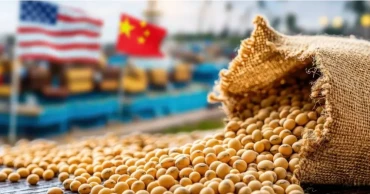
Bangladesh firms ink $1.25b deal to expand US soy imports
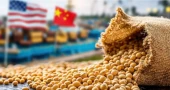
Bangladesh’s leading soy processors and feed importers have signed agreements worth over $1.25 billion to import US soybeans and soybean meal, aiming to boost the country’s protein and feed industries while narrowing the trade gap with the United States.
The deal, representing nearly 2.5 times the country’s previous US soy purchases, was signed between Bangladesh’s leading soy value chain companies and the United States Soybean Export Council (USSEC) at two ceremonies in a city hotel on Tuesday, attended by importers, mill owners, diplomats, and business leaders.
Participating Bangladeshi companies include Meghna Group of Industries, City Group, Delta Agrofood Industries Ltd, Mahbub Group and KGS Group, all of whom have committed to scaling up imports over the next 12 months.
At the signing ceremony, Kevin M Roepke, USSEC’s Executive Director for the Middle East, North Africa, and South Asia, said the move would deliver a major boost to Bangladesh’s poultry, aquaculture, and dairy sectors.
“We are very proud of our bilateral relationship,” he said, highlighting the role of U.S. soy in ensuring nutrition, quality, and sustainability in Bangladesh’s food systems.
USSEC CEO Jim Sutter echoed the sentiment, calling the agreement a ‘historic milestone’ that deepens economic and nutritional ties between the two nations.
“Our US soybeans play an integral role in the world’s food systems, providing nutrition and food security across borders,” Sutter said in a virtual address, emphasizing that US soybeans' low carbon footprint and zero-deforestation record align with Bangladesh’s growing demand for sustainable inputs.
Govt cuts palm oil price, soybean oil price unchanged
“By investing in US soy, you are shaping a better tomorrow, proving that sustainability transcends borders,” he added.
Amirul Haque, Managing Director of Delta Agrofood Industries Ltd, said the US soy deal could pave the way for $3.5 billion in total US imports if crude oil and LPG are added to the mix.
“Higher imports of U.S. products will help reduce Bangladesh's $6 billion trade gap with the USA,” he said.
MGI Director Tanjima Mostafa said Meghna Group plans to import one million tonnes of soybean products this year—the largest single import of its kind in Bangladesh.
“We’re continuing to invest in logistics and focusing on end consumers,” she added.
Echoing the optimism, City Group Managing Director Md Hasan said importing high-quality soybeans in such large quantities would bolster both nutrition and food security across the country.
Tracey Ann Jacobson, Chargé d’Affaires of the US Embassy in Dhaka, said the agreement reflects Washington’s commitment to deepening economic relations with Bangladesh.
“Between 2024 and 2025, we aim to increase agricultural exports to Bangladesh from $779 million to $1 billion,” she said, adding, “today’s signing is part of that effort.”
CAB demands strict action against Soybean oil syndicates
Jacobson added that U.S. soybean meal exports to Bangladesh had already surged—from $5 million in 2023 to $20 million in 2024, and are projected to reach $86 million this year.
*She expressed optimism that the growth would continue, citing US soy’s superior quality and its vital role in Bangladesh’s livestock and fisheries sectors.
Under the new partnership, Bangladeshi processors and importers will not only increase soy purchases but also collaborate with USSEC on sustainable sourcing, leveraging the US Soy Sustainability Assurance Protocol (SSAP) to reduce environmental impact.
The deal also supports USSEC’s Right to Protein campaign, promoting awareness about protein consumption and nutritional development in Bangladesh.
Md Taslim Shariar, Deputy General Manager of Meghna Group of Industries, hailed the agreement as a game-changer for the nation’s crushing and feed industries. “This is a milestone for Bangladesh. The more we crush, the more we achieve food security,” he said.
“It accelerates growth in the poultry, feed, and edible oil industries. Bangladesh and US soy grow together—building a legacy of economic resilience, industrial growth, and nutritional excellence for generations to come,” he added.
According to the U.S. Department of Agriculture (USDA), US soybeans ranked as Bangladesh’s No.1 agricultural import in 2024, valued at $350 million. The country has also become South Asia’s strongest market for U.S. soy, with soybean meal imports up 650% year-on-year.
In contrast, Bangladesh’s exports to the US totaled $8.78 billion last year, underscoring a dynamic and expanding bilateral trade partnership.
Consumers suffer as soybean oil crisis still persists in Dhaka
Industry insiders say Bangladesh’s processors have long preferred US soy for its consistent quality. “The quality of US soybeans is far better than other origins,” said Delta Agrofood’s Amirul.
11 months ago
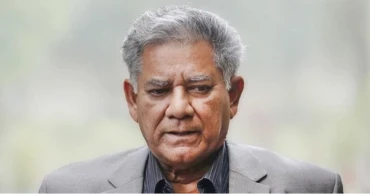
No short supply of daily essentials: Adviser Sakhawat
Shipping Adviser Brig Gen (retd) Sakhawat Hossain said on Tuesday that an adequate amount of daily essentials had been imported, eliminating the risk of any short supply.
Speaking after a cheque handover ceremony at the Secretariat, the adviser said there were no disruptions in the supply of essential goods despite some ongoing issues with edible oil.
Army chief weighs words carefully: Adviser Sakhawat
In response to a question from the press, the adviser said adequate measures had been taken to maintain the steady flow of imports, preventing any supply gaps in the market.
He added that importers who fail to collect goods from the port within the specified timeframe would be subjected to a threefold fine as part of efforts to maintain the smooth operation of the supply chain.
Earlier, he participated in a cheque handover ceremony for the families of six workers who lost their lives in the December accident involving the MV Al-Bakhira cargo vessel in the Meghna River at Haimchar, Chandpur.
27,000 Beximco workers’ dues will be settled before Ramadan: Adviser Sakhawat
The Labour Welfare Foundation provided Tk 2 lakh, while Noyapara Group, an importing company, contributed Tk 3 lakh to the victims' families.
1 year ago
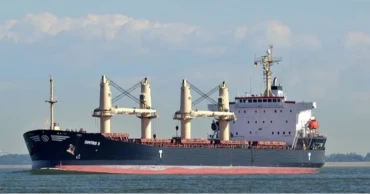
52,500 MT of Argentinian wheat arrives at Ctg Port
A consignment of 52,500 metric tonnes of wheat from Argentina has arrived at Chattogram port.
The vessel MV INDIGO OMEGA docked at the port on Thursday with the shipment, which was imported through an open international tender, according to a media release from the Ministry of Commerce.
Port officials will begin unloading the wheat after sample testing, which is scheduled for today (Thursday). “All necessary measures have been taken to ensure the quality of the consignment,” the release said.
Ship with 50,200 MT Argentine wheat arrives at Ctg port
This follows an earlier shipment of the same amount, which arrived at the port on February 5 from the South American country, reinforcing Bangladesh’s efforts to maintain a steady wheat supply through international procurement.
1 year ago
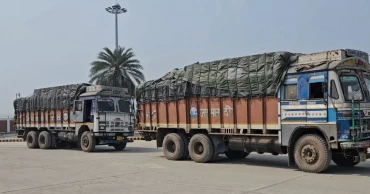
133 more fruit-carrying trucks imported thru Benapole port
Some 133 trucks of fruits have been imported in the country through Benapole land port in two days till Saturday.
Assistant Commissioner of Benapole Customs House Md Shahadat Hossain said among the trucks, 70 trucks entered on Thursday while 63 trucks till 9 pm on Saturday.
On January 9, the National Board of Revenue (NBR) issued a directive increasing the supplementary duty on fruit imports by 10%, bringing it to 30%.
Fruit imports resume after two days of suspension at Benapole
As a result, the duty per kilogram increased by Tk 15 taka, reaching Tk 116, said Abdul Mannan, an importer.
Protesting the NBR’s decision, Bangladesh Fresh Fruits Importers called strike and the import through the port remained suspended on Tuesday and Wednesday.
Considering the consumers interest, the importers resumed import of fruit on Thursday.
They also threatened to go for tougher movement if the VAT is not withdrawn by February 14.
Mohsin Millon, president of the Benapole Import and Export Association, said the halt in fruit imports through Benapole land port over the past two days caused a significant price surge in the domestic market.
However, after the resumption of fruit import the price of fruits started to drop in the local market.
Import duty hike: Importers suspend fruit import through Benapole
1 year ago

Government to import rice, LNG to meet domestic demand
The government will import rice and LNG to meet the demands of the domestic market, it's been decided.
The Advisors Council Committee on Government Purchase (ACCGP), in a meeting with Finance Advisor Dr Salehuddin Ahmed in the chair, approved two separate proposals in this regard.
As per a proposal, moved by the Ministry of Food, the Food Directorate will import 50,000 Metric Tons (MT) of non-basmati parboiled rice from India through an international open tender.
Bagadiya Brothers Limited of India will supply the bulk rice at a cost of Tk 275.30 crore, with each kg at Tk 55.06.
Bangladesh Oil, Gas and Minerals Corporation-Petrobangla will import one cargo of LNG from the international spot market through quotation.
Excelerate Energy PLC of United States will supply the LNG cargo at a cost of Tk 752.50 crore, with each MMBtu at $15.69.
After the meeting, Finance Advisor Dr Salehuddin Ahmed told reporters that the government will not bring any change in the duty structure of essential commodities until the end of the upcoming month of holy Ramadan which is expected to begin from March 1.
No change in duties until Ramadan ends: Finance Adviser
Responding to a question on ensuring adequate supply of essential commodities at affordable price during the Ramadan, the advisor said that the government had already imported chickpeas, lentils, and dates. The price of Soybean oil has come to a reasonable level.
“If necessary, the government will take further measures in regard to the price of soybean oil”, he said.
He said that the government has been giving priority on market monitoring. “The market monitoring has to be intensified. Only application of Consumer Protection Act is not enough to contain the prices”.
He mentioned that the price of onion has already come down to Tk 40 per kg from Tk 200. In our country, prices of goods frequently go up and down while prices remain stable in developed countries.
1 year ago

Pakistan keen to import medicine from Bangladesh
Pakistan has shown its keenness to import medicine from Bangladesh.
Pakistan High Commissioner to Bangladesh Syed Ahmed Maroof expressed the interest when he called on Health Adviser Nurjahan Begum at her office on Sunday.
Timor-Leste President seeks to boost trade ties with Bangladesh
Bangladesh has made significant progress in the pharmaceutical sector, and Pakistan is interested in importing medicines from Bangladesh, said Maroof.
Healthcare, trade, and overall cooperation between the two countries came for discussion during the meeting.
1 year ago